ATHENS, Ohio — Athens County nonprofits, school districts and agencies have seen governmental funding cut or paused for programs supporting nutrition assistance, education, agriculture, public health and more.
This has forced local groups to make tough choices about the futures of many popular community services: abandon projects; run operations with a skeleton crew; or pay for the projects using their own monies.
Rural Action
In spring, the federal government eliminated support for the AmeriCorps VISTA program. Rural Action coordinated the local VISTA program and had its own volunteers through the program. In early September, then-Rural Action CEO Debbie Phillips told the Independent that the agency has been trying to place regular AmeriCorps with organizations that lost their VISTAs.
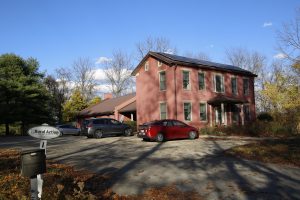
That wasn’t the only blow to the nonprofit’s programs, though. In September, the U.S. Department of Agriculture cut the funding for the Appalachian Regional Food Business Center, which Rural Action had used to provide financial support and guidance to small and mid-sized food businesses as a way to make the food system “more resilient, diverse, and competitive.”
The USDA will allow projects that were already underway to be completed, Phillips said. However, she said that they have had to furlough and lay off staff members in response to the funding cut.
Rural Action also was the regional coordinator for the USDA’s Local Food Purchase Assistance program and the Local Foods for Schools program, both of which were canceled in March 2025.
Between them, these programs distributed over $1 billion dollars nationwide each year to local charities and government agencies to purchase fresh local produce and distribute it to food banks and schools.
Elimination of those programs had a big impact on the Chesterhill Produce Auction, which Rural Action operates, as well as producers like Shagbark Seed and Mill and Snowville Creamery, Phillips said.
“So there’s been a loss of market demand for local produce because those funds are not available,” she said.
Meanwhile, work on Rural Action’s True Pigments project has resumed after the U.S. Office of Surface Mining Reclamation and Enforcement briefly froze funding last spring. According to reporting by The Hill, funding was frozen in mid-February and was the subject of a lawsuit by 22 states.
The project is building a treatment plant that will allow True Pigments to harvest metals and minerals from acid mine drainage that it processes and sells for use in paint. The treated water will be returned to the creek.

The funds, administered by the Ohio Department of Natural Resources, supported design and engineering of the project’s treatment plant, Phillips said.
“It did create some delays for the engineering firm, having to get everything moving again when it came back online,” she said.
Athens County Public Libraries
Among Athens County Public Libraries, federal funding was pulled for its popular Wi-Fi hot spot check-out program. According to Nick Tepe, director of the ACPL, the program sees 150 Wi-Fi hot spots checked out over 2,000 times each year.
In July 2024, under the Biden administration, the Federal Communications Commission approved the use of E-Rate funding to cover the costs of rental/loaner Wi-Fi hot spots. In September 2025, the FCC voted to reverse the measure, claiming that the agency lacked the legal authority and that the program invited fraud and abuse, according to reporting by the Associated Press.
In addition to the cuts to the E-Rate program, federal support for libraries through the Institute of Museum and Library Services (IMLS), disappeared in March 2025, after the institute was shut down by the Department of Government Efficiency. The IMLS distributes funding to state libraries which then uses the funding as grants for county library systems.
“The biggest [grant] that we got was actually the grant that established the Amesville locker library back in 2018,” Tepe said. “The installation of that locker library was basically 100% funded by the grant from the state library using [Institute of Museum and Library Services] funds, and that installation there allowed us to prove that this was a workable concept in Athens County.”
Tepe said IMLS funding allowed the state library to spend its money on efforts such as the interlibrary loan program. In 2024, ACPL patrons borrowed over 5,000 items using the interlibrary loan program.
The e-book program Libby is in a similar situation as the state library, as it uses IMLS funding to offset costs associated with the e-book collection.
“So in the event that IMLS funding goes away, chances are the State Library won’t be able to continue to support [Libby], or certainly not at the level that they are, which means that our patrons would see a much smaller selection of e-books available for them to check out.” Tepe said.
Tepe estimated that it would cost ACPL hundreds of thousands of dollars every year to maintain an e-book collection the size of Libby.
Hocking Athens Perry Community Action
Hocking Athens Perry Community Action (HAPCAP) has seen reduced federal and state funding for the Southeast Ohio Food Bank. In late August, Eva Bloom, then-HAPCAP director of development, told the Independent that the food bank has seen a 65% reduction in USDA funding, including the elimination of the previously mentioned local food purchasing agreement, and a 26% reduction in state funding.
The consequences for the food bank have been clear: there is less food available, fewer staff and fewer food distribution events.
Bloom told the Independent that the only HAPCAP program which has been completely canceled is their digital navigation program. The program was originally supported by non-federal sources, but HAPCAP planned to rely on federal grant funding to continue it, though that grant was ultimately cancelled. The program had helped over 300 Athens County residents develop digital literacy skills at the time of its cancellation.
“[The digital navigation program was] really like a one-on-one training program to help individuals, and many of them older adult individuals, learn how to navigate the online world,” Bloom said. “So it helps people set up email addresses, access telehealth, do banking online, so it helps them get more familiar with how to do those things.”
Meanwhile, HAPCAP’s nutrition program for local seniors has been able to maintain its federal funding and even expand thanks to a local levy passed by voters.
“We’re working very hard to maintain our current case load, because we know our seniors need [the program],” Bloom said. “We do have some good news to share, we have been able to maintain the federal funding through the Older Americans Act, which covers some of our costs for Meals on Wheels.”
Athens City-County Health Department
Jack Pepper, the administrator of the Athens City-County Health Department, told the Independent that the health department has received all of its federal grants for this year but has concerns about grant availability going forward.
Pepper estimated that roughly $350,000 of federal money flows through the Athens City-County Health Department each year and that about 25% of department staff are in positions funded by federal grants.
Pepper said that the health department did encounter some issues when it came time for the Public Health Emergency Preparedness grant to be distributed.
“The CDC sent the state of Ohio a notice saying, ‘Hey, listen, we’ve only allocated 70% of this money. We’re hopeful that the remainder of the money will come through by late ‘25 but for now, we are only funding this grant at 70%,’” Pepper said.
Pepper said that the remaining 30% of the grant funding was distributed in August.
An added problem with the Public Health Emergency Preparedness grant was that the health department wasn’t notified that they had been awarded the grant. According to Pepper, they usually know a month or two in advance if they had received the funding, whereas this year they only found out they got the grant the day the funding was going to kick in.
Another federal grant that the health department receives is the Creating Healthy Communities grant. This grant funds a health department employee and recently supported the multi-million dollar Strouds Run accessible beach project.

Athens City School District
According to Jared Bunting, the treasurer of the Athens City School District, the district lost three governmental grants during the 2024 fiscal year.
One of those was a $96,000 grant from a federal program for rural, small and low-income schools that supported professional development, STEM, curriculum, tutors and more. The other lost grant was an $86,000 Title I grant that funded a counselor at The Plains Intermediate School.
The district retained the counselor “through other funding mechanisms,” Bunting said.
“We could have decided to not continue on with that counseling position, but with the needs of our students, we felt that we needed to find a way to try to retain that position,” he said.
The third loss was a $38,000 Expanding Opportunities for Each Child grant that funded new curriculum initiatives and class credit recovery efforts for students who need to complete courses to graduate. Chad Springer, superintendent of the Athens City School District, told the Independent that the grant was an important part of supporting credit recovery following the COVID-19 pandemic.
“If you’re doing summer school, you only have a finite amount of time, whereas, with expanding opportunities, we purchased an online credit recovery system that was pretty useful on multiple levels,” Springer said.
In 2024 the Athens City School District received $1.9 million in federal funding. In 2025 that number shrunk to $1.4 million.
That number could continue to decrease. Bunting told the Independent that the district has two separate title grants that are ending this year. One is a Title IV Part A grant used to provide musical instruments and educational software for district students.
The other is a Title II Part A grant that the district uses to reduce class sizes by paying for an additional teacher.
“When that goes away, we’re going to have to decide whether we’re going to continue on with class size reduction in that grade band,” Bunting said. “That’s a significant cost burden on the district.”
Bunting added that the district is also worried about the Community Eligibility Program, which provides free breakfast and lunch to district students. Previously the program required that 40% of students be enrolled in supplemental nutrition programs or Medicaid in order for the district to be eligible to participate. That threshold was lowered to 25% in 2023 to ensure access.
Earlier this year, a leaked document suggested that Republican members of the House of Representatives were considering raising the threshold to 60%. WOUB reported that Athens, Alexander and Federal Hocking would all become ineligible for the program should the 60% threshold be implemented.
“We would have to start charging for lunches again,” Bunting said