
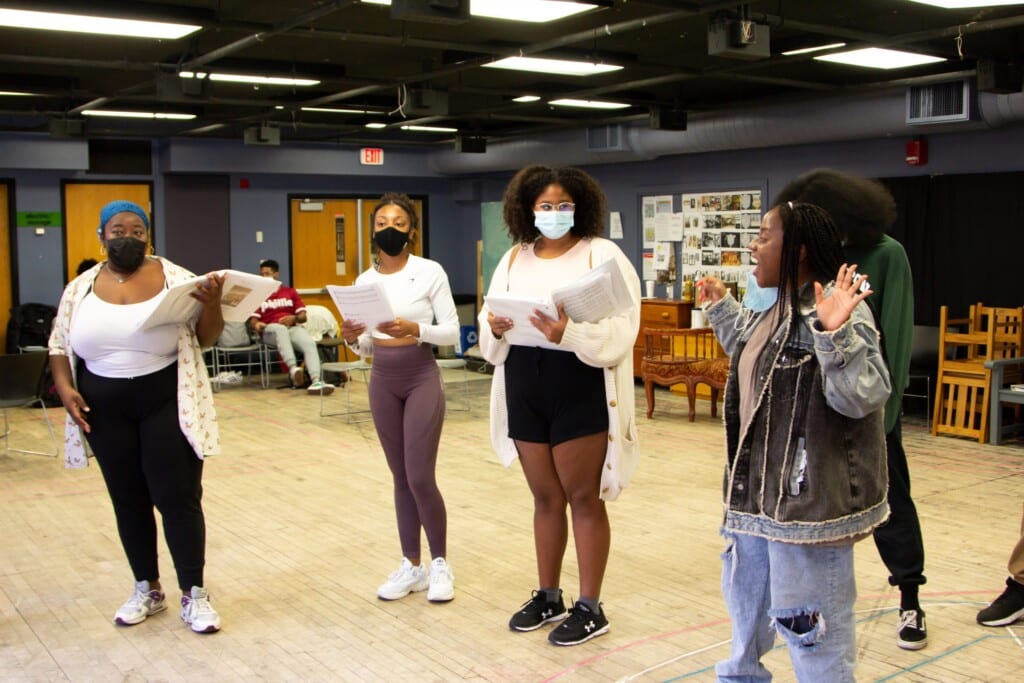
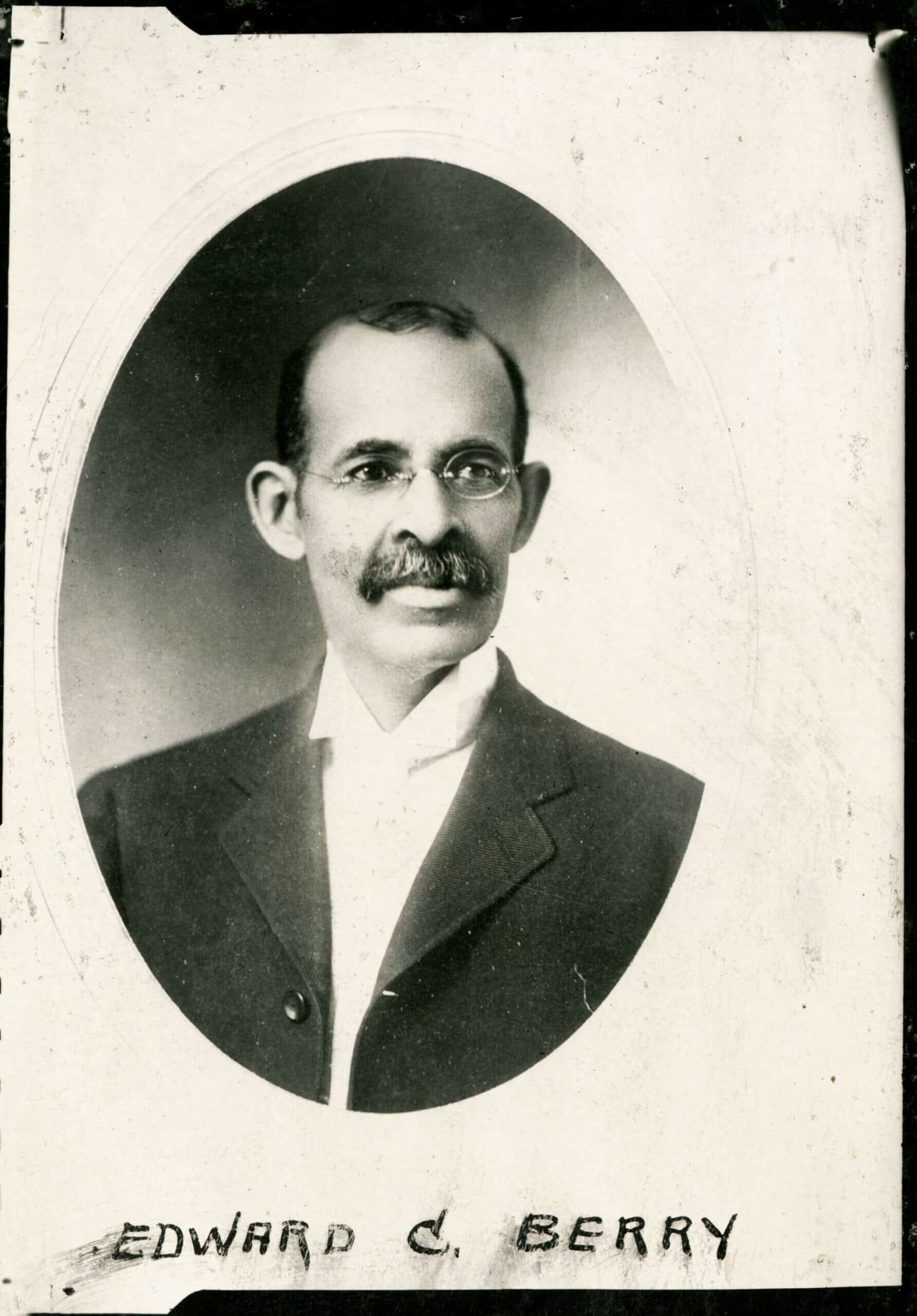
The upcoming theatrical production Hotel Berry, opening November 17, explores an integral part of Athens and Southeast Ohio’s Black history: the famed Berry Hotel and the couple who created and ran it, Edward and Martha “Mattie” Berry. The play, commissioned by Ohio University’s Tantrum Theater, focuses on the Berrys and on Eliza Davison and Andrew Jackson Davison, another Black couple who played a significant role in the region’s history.
The nearly all-Black production is “an ode to the Berrys and the Berry Hotel,” said director JaMeeka Holloway, “and what it meant to the people of Athens, the people who worked there and the people who got to visit.”
Written by Jacqueline E. Lawton, the story delves into themes like Black excellence in the face of racism, the political aspirations of Edward Berry and Andrew Jackson Davison, and the role Mattie Berry played in the development of the modern hospitality industry.
While Edward Berry was blocked from political office, he “had such bold visions and dreams to change the way the community works for the better,” said Lawton. “He might not have been in politics, making policy changes, but he made practical changes on the ground that impacted people’s everyday lives. That is so critical right now: what each of us can individually do to make life better for marginalized communities.”
“Black entrepreneurship is on the rise. It’s so important that we are highlighting the foundation [that] this isn’t something new,” Holloway noted. “We stand on the shoulders of folks like Mattie and Edward Berry, who opened doors for us that we may never have even known.”

Connections to today
Lawton used the setting and characters of Hotel Berry to illustrate “what’s relevant in this moment.” The play is set around a stay at the hotel by then-President Teddy Roosevelt during a time of rising Black organizing against racism and in favor of Black and women’s suffrage.
Andrew Jackson Davison, similarly blocked from taking political office, warns Edward about Roosevelt’s “audacity” in staying in a Black-owned hotel just after ousting over 160 Black soldiers in a real-life scandal known as the “Brownsville Affair.” Roosevelt used false claims by residents of Brownsville, Texas, that the soldiers shot civilians, despite no evidence of their guilt, to his political benefit.
Lawton sees direct parallels to today, when some politicians use racial profiling in false claims about perceived benefits of people of color to “attack” their right to vote. “They don’t want Black people in positions of extraordinary power,” Davison tells Berry in the play, according to Lawton.
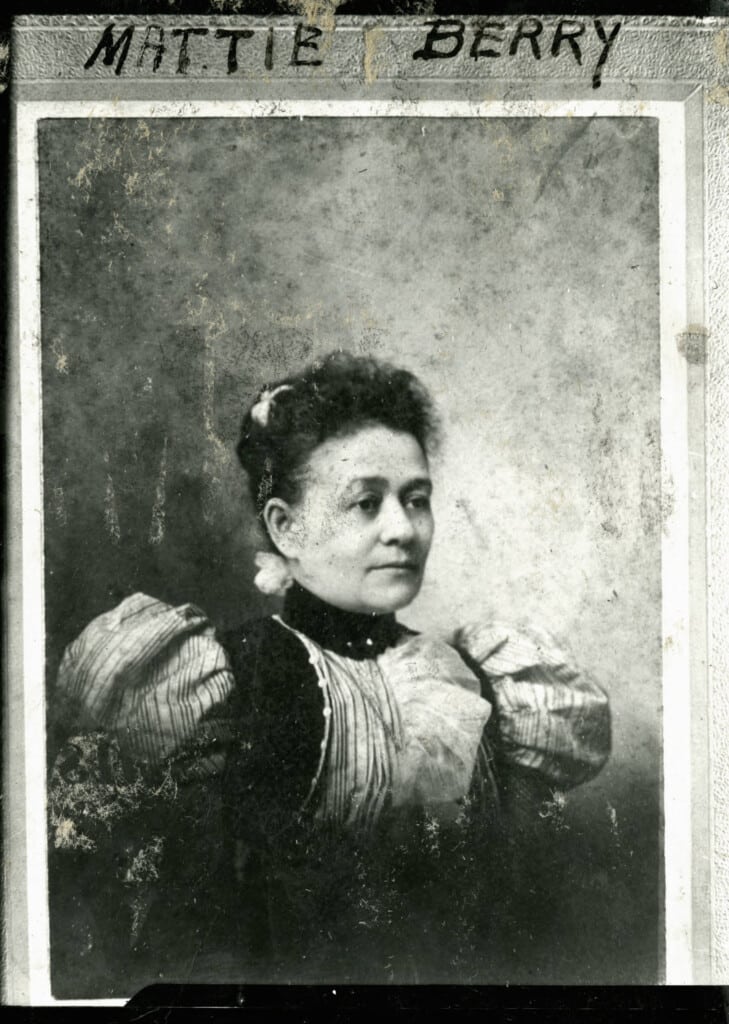
“Women’s suffrage is [also] a huge part of the story,” she added. “Feminism is part of the story. Younger characters are breaking out of the Victorian era and trying to define themselves for themselves: Black women going out into the world making a name for themselves.”
The hasty destruction of the Berry Hotel in 1974 prompted the Mount Zion Baptist Church Preservation Society to collaborate on the show. As one of the most prominent Black history organizations in Southeast Ohio, it offered its research to the creative team behind Hotel Berry and helped OU secure a $10,000 grant from the National Endowment for the Arts to support the script.
“The building’s history was erased through gentrification and general decline,” Lawton said. Thanks to the work of set designer David Russell, the local community will be able to imagine what it was like to enter the Berry. “When folks walk into that theater, they will feel like they are walking into the Berry,” Holloway said. “The opulence, the glamor, the authenticity and the care around detail.”
Read more about and see photos of the history of the Berry Hotel
A new American canon
In June 2020, a collective called We See You, White American Theater (WSYWAT) organized to address the pervasive racism of the industry, which has long featured people of color in limiting and damaging ways. “What oftentimes happens in the American theater is you get what we call trauma porn,” Lawton explained. Since then, theatermakers across the nation have begun implementing the collective’s proposals, including OU.
In fact, shortly after the WSYWAT release, OU students of color founded Vibrancy Theater as a space for them “to develop artistic leadership skills,” its mission statement reads. “Vibrancy fulfills a need that wasn’t being met before,” Roberto Di Donato, then an executive producer, told Ohio Today.
Vibrancy produced its first show — the Black-written, -directed and -starring Absentia — in November 2021 to “lay the groundwork” for lasting change at OU, Janai Lashon, a founder of Vibrancy, also told Ohio Today.
In line with these developments, Tantrum, the school’s professional theater, has also begun implementing changes. “We dropped multiple plays in the last couple years that we were planning to do because of pushback from our students, actors and guest artists,” said producing director Joshua Coy. “The university itself suffers from a lack of diversity, so the things that Tantrum’s doing are directly a response to that.”
Hotel Berry represents a critical opportunity to create a different type of American theater for Tantrum, Lawton and Holloway agreed.
“What I really strive for in my plays is the full scope of humanity,” said Lawton. “To have a play that isn’t trauma porn and still shows struggle and love at the center of the [Black] community is so significant. We need more stories that [celebrate] all that we did have: all that we were able to achieve and succeed at. Despite challenges, despite racism, despite everything going up against us.”
As for the team of primarily Black student actors bringing Hotel Berry to life, Holloway noted, “This is actually more than acting. This is, in a way, embodying the people who go through life with us. There’s a very sincere investment from these actors. We’re doing this work to really honor the spirit of this place and these people. It’s not lost on them.”
Channeling Mattie Berry, Holloway has worked to create a space for her team where everyone feels seen and cared for. “I am honored beyond belief to continue her legacy,” she said. “To be sharp and intentional and direct, but to also lead with love and compassion.”
“As we continue down this road of having more visibility and diversity in the room, we’re going to have to work harder to understand one another,” Holloway added. “I dream of a world, of an American theater, that’s driven by how we care for one another along the way.”
The play comes at a time when other efforts to account for the turbulent history of racism in Athens are developing. The Berry Hotel has recently been featured prominently in a documentary produced by the preservation society, the podcast Invisible Ground and an associated virtual marker, and The Post. In 2020, a marker was erected in remembrance of the lynching of Christopher Davis, a young Black father from Albany. That same year, a group of Athens middle schoolers founded the Andrew Jackson Davison Club.
For the production of Hotel Berry, Tantrum has been working with Invisible Ground and the middle school club to produce short podcast episodes as a “community audio project,” the podcast’s host Brian Koscho said. Those will be released over the next month as the theater gets ready for the play’s opening.
There was also so much rich history available to Lawton that she has said Hotel Berry could be part of a trilogy. For the sequel, she envisions a story set at the Berry during Christmas revolving around the Davisons.
Hotel Berry will run at OU’s Forum Theater, 19 S. College St., Nov. 17–19, Nov. 29–30 and Dec. 1–3. Livestreaming will also be available for some performances. Tickets will be available at ohio.edu/fine-arts/tantrum-theater.
Let us know what's happening in your neck of the woods!
Get in touch and share a story!



Pingback: loose leaf blunts
Pingback: ลวดสลิง