TORCH, Ohio — The Ohio Oil and Gas Commission upheld the suspension of three fracking waste injection wells in eastern Athens County, agreeing with the Ohio Department of Natural Resources that the wells threaten health, safety and the environment.
The commission’s decision means the wells’ owner, K&H Partners, had to cease operating its wells immediately. The wells are injected with a toxic fracking byproduct known as brine; ODNR determined that the wells were leaking and the fluid was migrating underground, permanently destroying Athens County drinking water sources.
Related reading from the Athens County Independent:
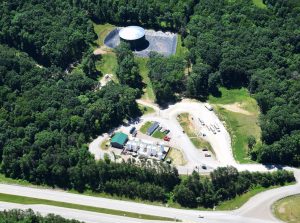
Activists have warned for years that the wells posed a danger to local people and the environment, fighting the K&H wells vigorously since the initial permitting process.
“We never backed off, we never stopped paying attention — and I’m sure that has something to do with it: the pressure from the people,” said environmental activist and former Athens County Commissioner Roxanne Groff.
The commission heard K&H’s case at a hearing in December, following the company’s appeal of a June 2023 suspension order by the ODNR Division of Oil and Gas Resources Management chief.
Related reading from the Athens County Independent:
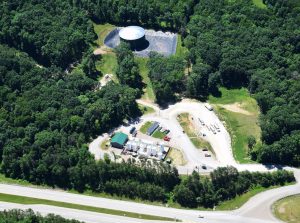
“The Division of Oil and Gas Resources Management is pleased with the decision affirming the Chief’s suspension order,” ODNR spokesperson Andy Chow said in an email.
How the decision impacts threats to water
In its decision, the commission concluded the K&H wells “are causing or are likely to cause contamination of the land, surface waters, or subsurface waters,” that the wells’ operation “are likely to endanger public health or safety,” and that the company was injecting fracking waste outside its permitted injection zone.
ODNR’s Division of Oil and Gas Resources Management reached the same conclusions almost a year ago: It first suspended the K&H wells in early June 2023, warning that the wells posed an “imminent danger” to drinking water. In October, however, a commission decision allowed the wells to operate during K&H’s appeal of the suspension, despite the division warning of “potential for calamity in Athens County.”
The division will test whether drinking water from about 33 water wells in the area has been contaminated by the K&H wells or one other nearby injection well, operated by Reliable Enterprises and also suspended in mid-2023.
Related reading from the Athens County Independent:

Chow said the division is finalizing its contract with a consultant to conduct the study.
“We have no reason to believe there has been any impact to underground sources of drinking water,” Chow said, adding that the division is conducting its groundwater study “out of an abundance of caution” and “to confirm that understanding.”
“Having the data and understanding what’s happening in the drinking water is a really important next step,” said Natalie Kruse Daniels, an Ohio University professor and groundwater expert who testified for ODNR at K&H’s December appeal hearing.
Kruse Daniels said the commission’s decision in the K&H appeal somewhat eases her concerns about the threat to drinking water from the K&H wells.
“Ceasing injection does slow down the movement of fluid,” she said. “It doesn’t stop the movement of fluid — there will still be fluid flow in the underground. But, it eases up on the pace; it eases up on the speed.”
Kruse Daniels emphasized that any testing conducted by ODNR will represent only a moment in time, and said it will be necessary to continue monitoring well water in the area. She also called on ODNR to offer a clear way for community members to communicate concerns about their water.
The commission weighs the merits
In its decision, the commission cited reports dating as far back as 2014 that, it said, should have put K&H on notice that it may have been injecting brine outside its permitted zone. Although K&H had these reports for almost a decade, it did not submit the information to ODNR until its appeal of the suspension order, according to ODNR’s post-hearing brief.
The commission also cited pressure readings taken by the Division of Oil and Gas Resources Management at oil and gas production wells that apparently were affected by brine migration from the K&H injection wells.
These readings showed pressure increases and decreases correlating with times when K&H started and stopped injecting brine into its wells. This suggests that brine from the K&H wells was traveling underground to reach the production wells.
In its post-hearing brief, K&H argued that evidence the division presented to support its suspension order was “incomplete and inconclusive,” and that the suspension order was “simply inexplicable and draconian.”
The company suggested the division was motivated by a petition from multiple environmental and civil rights organizations to the U.S. Environmental Protection Agency. The petition seeks to strip Ohio of its regulatory authority over class II injection wells, the kind operated by K&H.
The commission was evidently unconvinced. (The body generally comprises five members appointed by the Ohio governor, at least two of whom must represent industry, though only three members heard K&H’s case.)
What’s next for K&H?
K&H has two options now: It could appeal its case to the Franklin County Court of Common Pleas, or it could work with the ODNR to correct the issues with its wells.
“The Division stands ready to defend the Chief’s orders and challenge an appeal should one be filed,” Chow said.
Representatives for K&H did not directly address questions about the company’s plans.
“K&H is adhering to the ODNR ruling,” said Bernice Pavlicek, a corporate communications officer for Tallgrass Energy, parent company to K&H.
Pavlicek’s statement may simply mean that K&H has stopped injection for now. She didn’t respond by press time to the Independent’s request for clarity.
Mike Stahl, director of water operations at Tallgrass Energy, said at the company’s December appeal hearing that meeting the division’s standards would require the company to drill substantially deeper injection wells. He estimated this would cost the company $4 million, which he said was not economically feasible.
In court documents, the company valued its operation in Torch at $43 million. Tallgrass Energy is owned by the trillion-dollar hedge fund Blackstone, Inc., which claims to be the “world’s largest alternative asset manager.”
Groff said that K&H working with ODNR to correct its wells is “not sufficient at all” in terms of consequences for the company.
Likewise, Kruse Daniels said she “would have concerns” about K&H operating again “given their past performance.”
“They knew they were injecting outside of their permitted zone for a really long time, and they vehemently denied it,” Kruse Daniels said.
The company continues to deny it injected outside its permitted zone, despite the commission’s finding that K&H knew or should have known since 2014 that it may have been doing so.
K&H “maintains the position that its brine water is contained within its permitted zone” and is “incapable of impacting drinking water,” Pavlicek said.
Kruse Daniels said that if K&H does resume operating again in some form, “There’s a strong onus on [the ODNR] in terms of oversight. And so, I guess that begs the question, is [the ODNR] prepared to provide that level of oversight? And I don’t have the answer.”
Groff, a signatory on the petition to revoke Ohio’s regulatory authority over class II wells, says the answer is no.
“ODNR does a minimal job at best at oversight and enforcement,” Groff said.
Chow said, “The Division is confident in the strength of Ohio’s regulatory framework and its ability to protect public health and safety, and the environment — including the protection of underground sources of drinking water.”
Chow added that the petition to revoke Ohio’s regulatory primacy over class II injection wells isn’t warranted.
Groff, meanwhile, argued that ODNR doesn’t have enough staff and cannot dole out adequate consequences to bad actors — issues she said stem from state law and should be handled by the legislature.