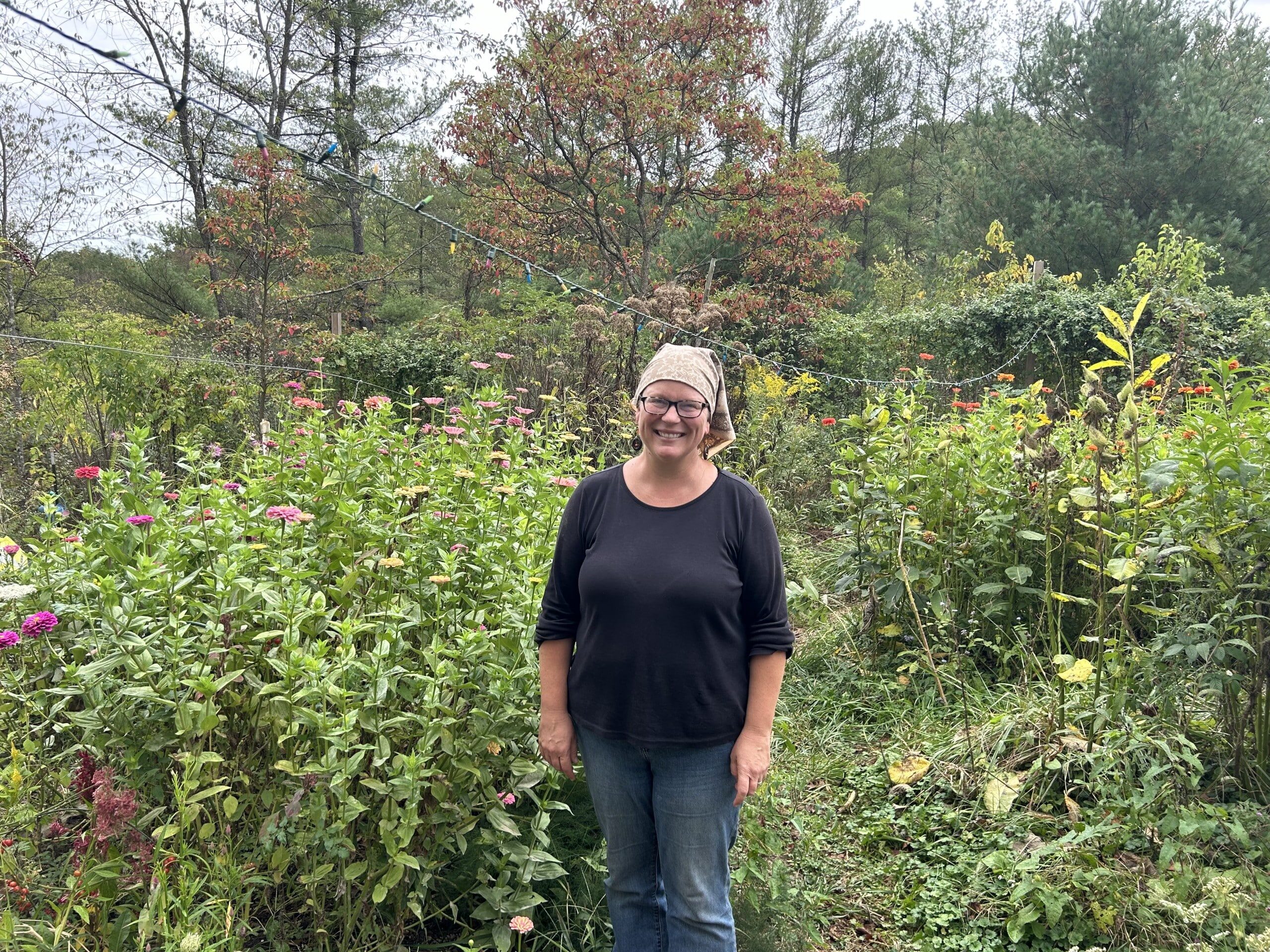
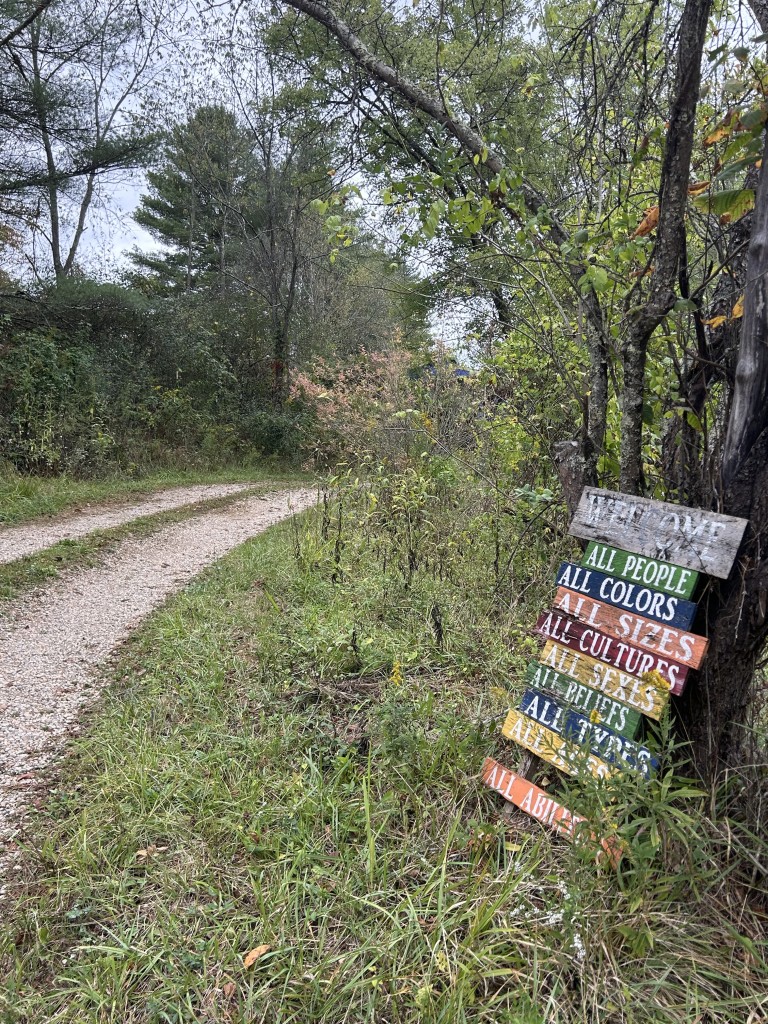
MILLFIELD, Ohio — Margaret Hoff’s backyard native flower farm attracts pollinators through sustainable farming practices and passive land management.
Hoff leaves most of her 20 acres of field and forest untouched, with less than half an acre that serves as her flower farm. Hoff describes her farming techniques as similar to “organic,” though she is not certified to use an organic label. For Hoff, this means no pesticides, a focus on regenerating the soil and leaving some flowers to grow just for pollinators.
“I don’t prefer the capitalistic model of grow, grow, grow,” Hoff said.
Hoff opened The Flowering Farm in 2017 with her former farming partner, Betti Calhoun, with the goal of improving the land and attracting pollinators. Calhoun returned to her teaching career in 2020, leaving Hoff to manage the farm with help from her daughter, Acadia, and husband, Shannon Cook.
The farm operates as Community Supported Agriculture, where customers pay an established price and “subscribe” to receive flowers weekly or biweekly during the summer season, according to The Flowering Farm’s website.
Hoff handles each flower with a gentle touch. She cares for the plants like a fairytale queen cares for her loyal subjects, stopping to say hello to each patch of flowers. Her faded jeans, plain black long-sleeve, dirty boots and tan bandana decorated with white flower imprints over her head serve as her dress, slippers and crown.
Her bouquets include non-native flowers — zinnias in August and September — as the focals and a variety of local plants and flowers, such as mistflower, black-eyed Susans, sedum and ironweed.
Most cut flowers sold in the U.S. are imported from other countries, such as Ecuador, which provided about 37% of cut flower and nursery stock value from 2018–2022, according to the U.S. Department of Agriculture.
Those imported flowers are typically the best-sellers, which includes roses, chrysanthemums, lilies and carnations, and they are grown year-round in greenhouses rather than open fields, according to a Utah State University study. However, most U.S. flower farms operate on 1-5 acre fields and produce more fragile flowers that may not ship well, like mums and dahlias, according to the study.

She crouches next to a bed of tangled, dead straw and flattened grass. She says the patch was once filled with veronica, a cone-shaped purple native, but pressure from bugs and the drought wiped the entire bed out.
Athens County entered a drought in mid-June, in the U.S. Drought Monitor’s lowest ranking, and by the last week of August, it reached “exceptional drought,” the highest ranking.
Despite the dead patch, Hoff laughs and continues to point out each flower — or lack thereof — making sure to mention which bug enjoys the plant. The wasps love chives, the hummingbirds love zinnias, the bees love asters and Hoff loves the pollinators, so she often leaves flowers to grow just for them.
In the early evening, her backyard is a symphony of bugs: cicadas hiss, crickets chirp and katydids warble in perfect harmony — occasionally interrupted by the off-key crow of her rooster, Oreo.
Originally, Hoff was working the farm part-time, with accounting as her main job, and realized she needed a change. “(Accounting) wasn’t feeding anything in my soul,” Hoff said while twirling a flower in her hand.
She grew up in West Union, Ohio, as the preacher’s daughter with dreams of moving away and becoming a writer. She shrugs and smiles; “Life gets in the way.” But writing is not out of the picture, Hoff said she has considered returning to school for a Master of Fine Arts in writing once her daughter is finished with homeschool in five years.
She pauses at a patch of brown, egg shaped pods attached to the tops of tall, green stalks: milkweed. Her smile shrinks. “We’ve had like five monarchs this year, and usually we would have hundreds,” Hoff said.
Thirteen of Ohio’s native milkweed species are host plants for monarch caterpillars, according to the Ohio Department of Natural Resources. Their populations are in decline because of lack of grassland and prairie habitats where wildflowers, like milkweeds, grow.
Hoff’s open fields offer the perfect sanctuary for them, and her family gets to enjoy the beauty, too. “This show of yellow flowers is so awesome; it just makes me so happy,” Hoff said, referring to the sea of Canada goldenrod that dominates her backyard fields.
The preserved natural habitat goes further than “No Mow May,” a catchy name for the movement that encourages land and lawn owners to not mow, or mow less, during springtime. Spring is the start of the growing season, and thus the return of hungry pollinators who find food in lawn weeds like dandelions.
There are approximately 62,500 square miles of lawn grass in the U.S. — over 1.5 times the size of Ohio, according to the USDA. Regularly mowing and chemically treating those lawns with pesticides reduces available habitat and food for hungry pollinators across the U.S.
A 2016 study conducted in the suburbs of Massachusetts found that lawns cut biweekly supported the highest abundance of bees, with a quarter of Massachusetts’ documented bee species recorded. The research suggests that semi-untreated U.S. lawn land could help dwindling populations of pollinators who help food crops grow.
Carolyn Conley, Hoff’s friend of nearly 20 years, has watched the farm, and Hoff, grow since the start. “She’s very compassionate, very passionate about what she does and how she does it,” Conley said.
Conley says she sees that passion in her farming and bouquets. The farm is not acres of bloomed flowers, instead its partial blooms next to dead patches, and the flower gardens themselves are two small plots, guarded by metal fencing. “The flowers are there, but it’s not until she puts the artistic spin on it that their beauty really shines through,” Conley said.
Moreover, Conley says Hoff’s work emulates her strong beliefs about caring for the land and its native species. “Her arrangements are so beautiful and, I don’t know, reflective of who she is and her inner soul,” Conley said.
“I wanted to do something to benefit the land and to improve its quality,” Hoff said. She had previous experience with produce farming at the nearby Green Edge Organic Gardens, but she felt that the local organic produce market was “flooded;” however, the flower market was not.
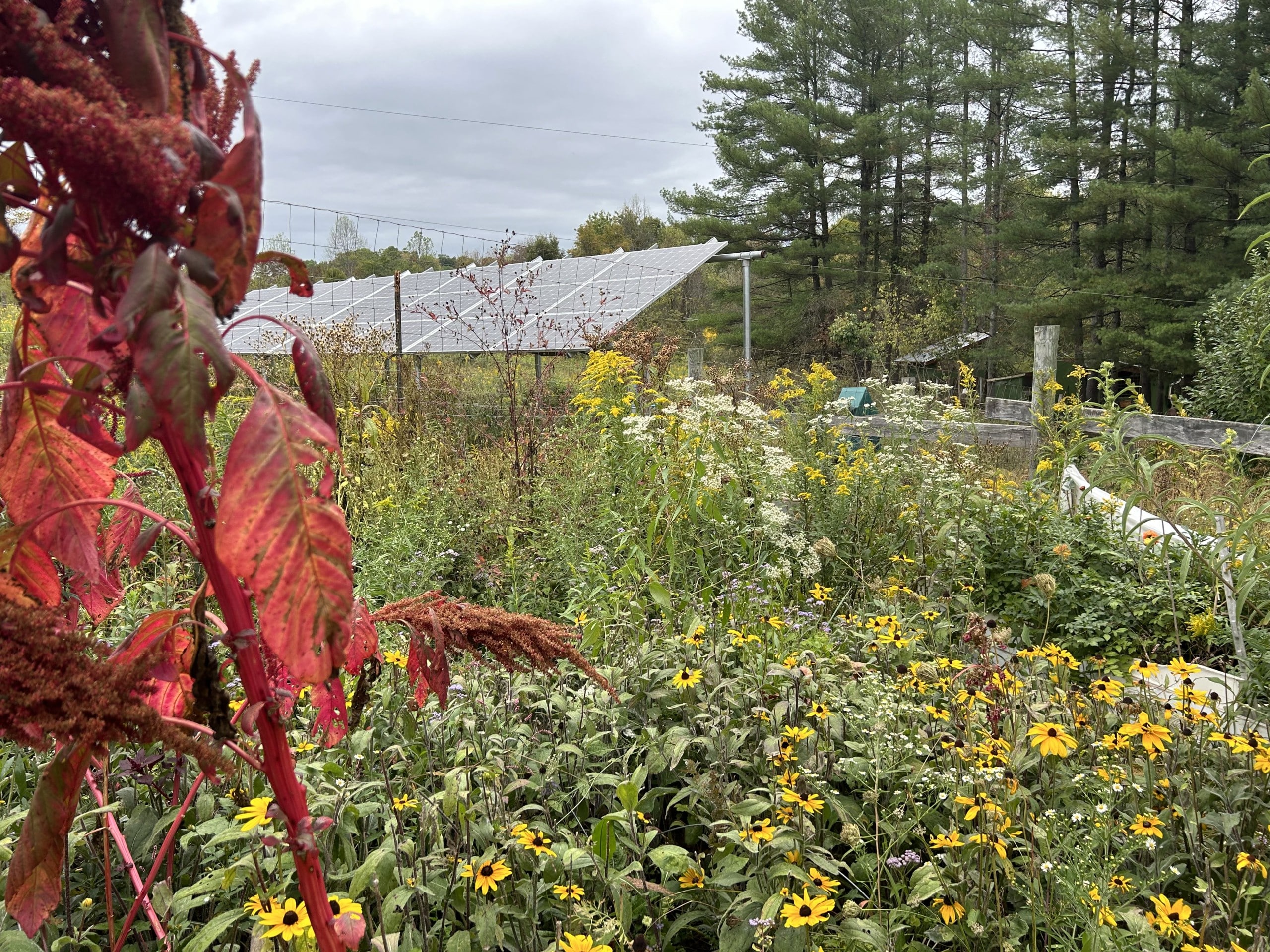
“We wanted to focus on environmental issues when we were doing this (farming),” Hoff said. For Hoff, this means using recycled milk jugs to sprout plants, regenerating the solid-clay soil with her animals’ manure as natural fertilizer and recycling mason jars in her bouquet deliveries. Her house also runs on solar power.
Their two goats, Mocha and Teeka, help eat some of the invasive species and Georgy, a horse born on George Washington’s birthday, helps to fertilize the flowers.
The animals are a part of the family, Hoff said. In addition to Georgy and the goats, the family includes Pangy, a gray tabby cat; Joey, an orange tabby, Akela; the German shepherd, Alobar, labrador-husky mix; Norbert and Hedwig, parakeets; and two broods of chickens: one named after beetle species, the other named after dinosaurs.
The chickens are used for eggs only, and Hoff said the rotten ones can be used to help the plants grow.
Though Hoff imagined life as a full-time writer, she doesn’t regret where she finds herself.
“I don’t think it’s (her life) anything opposite of what I would have pictured for myself,” Hoff said. Hoff still enjoys writing poetry in her free time and plans to write a novel about a woman who finds identity in fixing her land: a character whom she echoes.
Hoff also ponders writing a children’s book. Perhaps someday she’ll tell the tale of “The Native Flower Queen,” the story of a ruler who invites earth’s creatures to find refuge in her kingdom of flora, and in doing so, brings peace to the queen and the land.