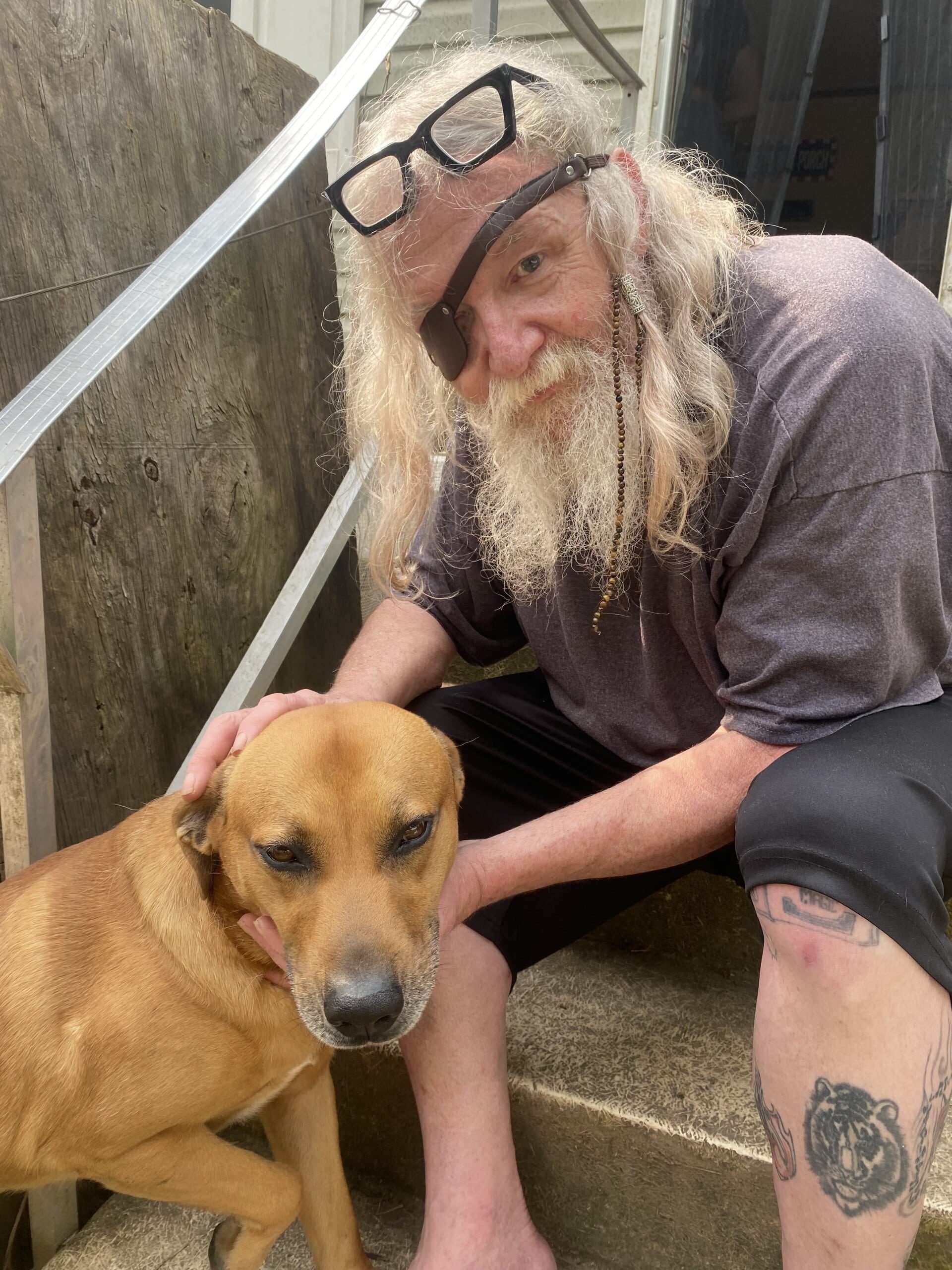
POMEROY, Ohio — A federal court officially entered a judgment against a former Meigs County sheriff’s deputy on July 17 and ordered Meigs County to pay $60,000 to a Pomeroy man and his son, who sued the sheriff’s office over alleged police misconduct.
The judgment entry in the U.S. District Court for the Southern District of Ohio followed an offer made by Meigs County to resolve the case on June 2, which was accepted by the plaintiffs.
The lawsuit centered on a December 2022 incident in which former Meigs County Sheriff’s Office deputies visited the home of Charles “Chuck” Ellis and his son, Caleb Ellis, to investigate a reported physical altercation between the son and a neighbor.
The suit claimed that then-deputies Marty Hutton and Joshua Golsby entered the Ellis’ home without a warrant and deployed a Taser against one of the family’s dogs. Both the father and son were arrested, although charges against Chuck Ellis were dismissed.
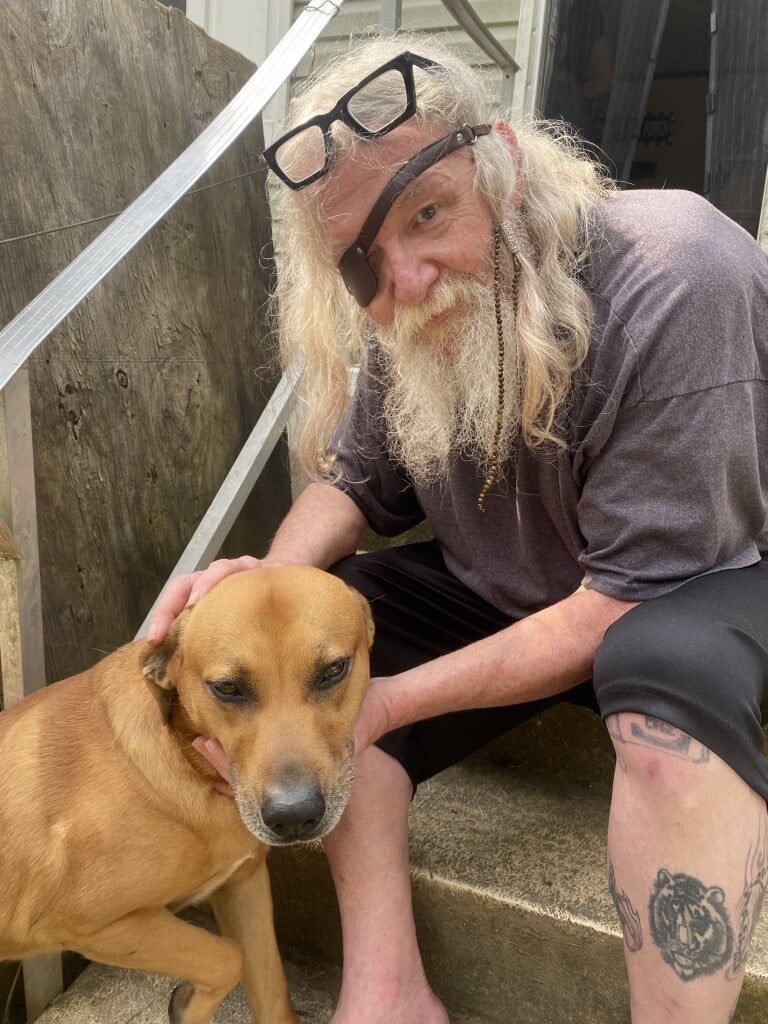
Chuck Ellis told the Independent he has struggled since the incident with post-traumatic stress and depression, which has adversely affected his previously existing chronic health problems.
“I just felt like my life wasn’t worth anything to anybody at that point, because they could do whatever they wanted to, they could do anything they wanted to me,” Chuck Ellis said. “It didn’t matter whether I was right or wrong, once he did it, because it happened.”
Chuck Ellis and Caleb Ellis filed a lawsuit on June 5, 2024, against the deputies involved, as well as against Meigs County and MCSO leadership.
“Deputies disregarded the right to be free from unreasonable search and seizure by unlawfully, and without justification, entering the home of both Plaintiffs,” the lawsuit argued. “This unlawful action by the government resulted in the violent arrest of Plaintiff Charles Ellis in his own home for the offense of asserting his constitutional rights.”
The Ellises amended their lawsuit to include a First Amendment claim for having been allegedly targeted by a ban on commenting on the MCSO Facebook page, before the page shut down comments for everyone.
Commenting remains turned off on the page, and Fitch said the office has no intention of turning them back on.
The case resolved with a $60,000 payout to the plaintiffs as part of an offer of judgment, a formal proposal to resolve a case before trial with terms offered by defendants; those offers may be accepted or rejected by plaintiffs, according to federal civil procedure.
A judgment was entered against Hutton, but claims against all other defendants were dismissed with prejudice, meaning they cannot face additional claims over the same incident.
Scott Petroff, who represented the Ellis family in the suit, said he did not know why judgment was entered against Hutton in particular. The defendants’ attorney did not respond to the Independent’s multiple requests for comment.
Regardless, Petroff said, “They’re essentially admitting that they’ve done wrong. They’re just conceding.”
Meigs County Sheriff Scott Fitch told the Independent, “[Golsby and Hutton] obviously could have de-escalated things a little quicker and just handled it a little more professionally.”
Chuck Ellis said he was not happy with the amount he and his son ultimately received through the offer of judgment. However, Petroff told the Independent that the administrative rule that governs offers of judgment could have stuck his clients with excessive legal fees even if they ultimately won the case at a trial. Therefore, Petroff said he felt it was in his clients’ best interest to accept the $60,000 offer of judgment.
Chuck Ellis initially demanded $500,000 to settle the case.
A quick escalation
On the evening of Dec. 21, 2022, Golsby and Hutton responded to a report of an altercation between Caleb Ellis and his neighbor.
Bodycam footage provided to the Independent by Petroff shows deputies speaking with one of the Ellises’ neighbors. The neighbor said that he approached Caleb Ellis after Caleb Ellis allegedly revved the engine of his vehicle. They “got into it,” the neighbor said, and Caleb Ellis “shoved me down several times.”
Hutton told the neighbor that Caleb Ellis would probably be charged with assault and would potentially be arrested — even though he had not yet spoken to Caleb Ellis for his account of the incident.
Continuing their conversation, Hutton and the neighbor talked about Chuck Ellis, whom Hutton referred to as a “grumpy old man.” The neighbor alleged that Chuck Ellis had previously reacted negatively to law enforcement.
Earlier in 2022, Chuck Ellis was charged with disorderly conduct for alleged “gross and abusive language” directed toward police officers. The case was eventually dismissed.
Hutton told the neighbor that if the Ellises gave him trouble, “they’ll go to jail” — despite the fact that Chuck Ellis had not been involved in the incident with the neighbor, and that officers hadn’t spoken with Caleb Ellis.
About three minutes after the officers arrived at the Ellis home, both father and son were in handcuffs.
The footage shows that Golsby and Hutton knocked on the door of the residence. Chuck Ellis opened the door and asked the two men to “go down the driveway please.”
“Shut your mouth,” Hutton responded.
Chuck Ellis again asked Golsby and Hutton to go down the driveway, and they again refused. Chuck Ellis asked his wife to grab his phone. On the body camera footage, his words are muffled by the home’s door, although they are audible.
Golsby told Hutton he believed Chuck Ellis had asked for someone to “get his gun,” prompting the deputies to draw their Tasers. Caleb Ellis then arrived at the door and told the officers his dad was only looking for his phone.
At this point, Chuck Ellis again asked the officers to go to the bottom of the driveway. Hutton threatened Chuck Ellis with arrest and repeatedly demanded that Caleb Ellis come outside to talk. Caleb Ellis declined, saying, “You can talk to me right here.”
Caleb repeatedly attempted to assert his rights in the interaction. “You can’t make me go out there,” Caleb Ellis said at one point; Hutton replied, “Yes, I can.”
Caleb, who was shirtless in the bodycam footage, told both deputies that he wasn’t dressed properly to be outside and asked if he could put on a shirt before exiting the home. Hutton said he could, but Golsby told Caleb Ellis to “stay right there” and instructed Caleb Ellis’s significant other to retrieve a shirt for him.
When Caleb Ellis turned away from the officers, Golsby entered the home, although he stepped back to the doorway when Chuck Ellis told him to leave. Golsby commanded Caleb Ellis to “step out here where I can see you.” Hutton then walked inside, although Chuck Ellis and his wife repeatedly demanded that officers stay outside. Hutton ignored them and ventured farther into the home to grab Caleb Ellis and bring him outside. Caleb Ellis yelled for Hutton to stop.
Meanwhile, Golsby deployed his Taser against one of the dogs that was barking at him. Golsby later gave Hutton conflicting accounts of the incident, saying first that the dog “bit the shit out of me” but later saying the dog “nipped” him but that he was not injured.
Neither Golsby’s nor Hutton’s body camera footage shows the dog biting Golsby, and the dog can be heard barking up until the moment Golsby deployed his Taser against the animal. Chuck Ellis denied that the dog bit Golsby.
A post on the MCSO Facebook page a day after the incident stated the dog “attacked and bit one of the deputies during the arrests of both subjects.” Meanwhile, a written narrative from a use of force report Golsby filled out states, “his canine Frankie ran up to me and bit me on the left leg, Frankie was then struck with my taser.” The record was reviewed and approved by MCSO leadership, including Fitch.
Fitch told the Independent that he didn’t “remember the specifics on [what happened to] the dog” but thought that “only in extreme circumstances should there ever be use of force on an animal.”
The two officers removed Caleb Ellis from the house even as he was attempting to retrieve a shirt. Golsby then began to close the door on Chuck Ellis, who was recording the incident with his phone. Chuck Ellis said repeatedly, “I don’t want my door closed,” and pushed on the door to keep it open, while Golsby attempted to force it shut.
The door flew outward. Golsby then charged at Chuck Ellis, grabbing him by the shirt. Both deputies restrained Chuck Ellis and dragged through the door and down the stairs as Caleb Ellis told deputies, “Stop dragging my dad down like that, he’s disabled.”
Hutton threatened Chuck Ellis’ wife with arrest multiple times as she filmed the incident.
Caleb Ellis was charged with assault and Chuck Ellis was charged with resisting arrest and assault on a police officer, a fourth-degree felony.
The Meigs County Prosecutor dismissed all charges against Chuck Ellis without presenting them to a grand jury. Caleb Ellis ultimately accepted a plea deal over the incident with the neighbor, pleading guilty to persistent disorderly conduct and serving 30 days in jail.
Civil rights violations
According to Petroff, the officers violated the Ellises’ Fourth Amendment protections against unreasonable search and seizure. Case law on the knock and talk tactic establishes that police officers can approach the door of a private residence and ask to speak to the occupants, just as members of the general public could. However, if the officers do not have a search warrant, residents may refuse to talk or tell the police to leave, just as they could tell a solicitor to leave their premises.
The officers’ behavior indicates that they were not concerned about a threat to their safety, Petroff told the Independent.
“If they genuinely were concerned about an imminent threat, they would have immediately gone in and stopped whatever was happening, but they didn’t,” Petroff said.
In an initial demand letter to the Meigs County Sheriff’s Office, Petroff noted that deputies entered the home following “extended argument” with Caleb Ellis, during which Chuck Ellis visibly “retrieved a phone and not a gun.”
Without concern of an imminent threat, Petroff said, the deputies had no grounds to enter the home without a warrant.
Deputies quit MCSO shortly after Ellis incident
Just 11 days after the incident at the Ellis’ home, Hutton gave his two weeks’ notice. Golsby submitted his own resignation two weeks after Hutton. Both went to work for the Gallipolis Police Department.
Hutton faced other problems at the department around the same time, including an investigation over an incident in which Fitch said Hutton and Golsby did not arrest a suspect for whom they had a warrant.
“I think they realized that that type of behavior wasn’t going to be tolerated,” Fitch said. “Thought it was best to seek employment elsewhere.”
But Petroff said the department seemed to support its deputies’ conduct at the time.
“They ratified the conduct by things that they did — the post that [MCSO] made on Facebook, basically disparaging my clients and that kind of stuff,” Petroff told the Independent. “It’s clear the elected official, the sheriff, backed what his deputies did.”
Fitch had been Meigs County Sheriff for only months before the Ellis incident.
Petroff also said in his initial demand letter to the MCSO that “it appears [deputies] are unaware of the limitations that the constitution has placed on them,” in reference to the Fourth Amendment. “I also have concerns about the training and supervision conducted by the Meigs County Sheriffs office of its employees,” Petroff said in the letter.
There is no record in either Hutton’s or Golsby’s personnel files that they were disciplined as a result of the Ellis incident. Fitch told the Independent they received a verbal reprimand.
Golsby lasted only a year at the Gallipolis Police Department before the third termination of his career. In 2016, he was terminated from a part-time position at the Chesapeake Police Department and from his position as an auxiliary officer with the Rio Grande Police Department, according to records obtained by the Independent.
According to Ohio Peace Officer Training Academy records, he is not currently employed as a police officer.
Hutton continues to work full-time for the Gallipolis Police Department, according to OPOTA records.
Sam Stecklow of the Invisible Institute contributed reporting to this story.
Correction: This story has been updated to accurately reflect the exact date Golsby submitted his notice of resignation from the MCSO.