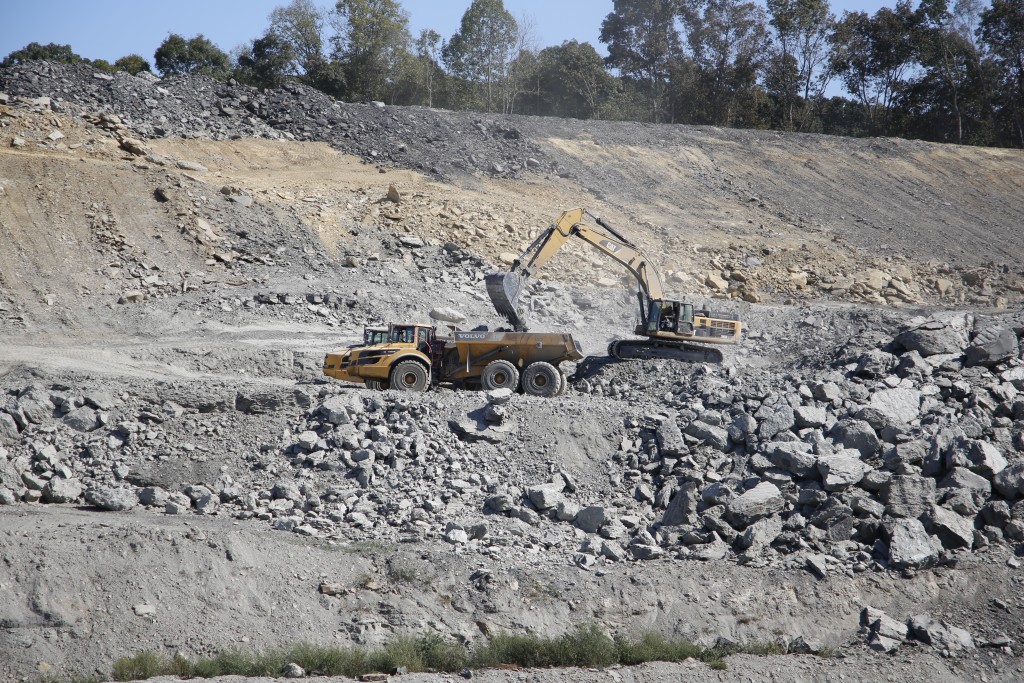
NELSONVILLE, OH — If you’ve noticed cleared land along U.S. 33 north of Nelsonville and wondered if it has something to do with the landfill — it does.
Rumpke is preparing for a 4-acre expansion, which is expected to be in use for four years after construction is completed in 2025. The company bought the landfill — which processes 750 to 800 tons of garbage a day, from Kilbarger Construction Inc. in 2021.
The expansion is part of a multimillion dollar project to update the Athens-Hocking Reclamation Center, according to David Murphy, a senior engineer at the company.
“With a landfill we don’t build the whole thing at once,” Murphy said.”We build pieces at a time. The way Rumpke constructs our landfills — we like to build enough of the landfill to provide us with two years of airspace.”
Before it can develop new landfill space, the owner has to send construction plans to the Ohio EPA for approval. Once the plans are approved, the owner requests bids for construction; the work is monitored by a third-party solid waste engineering company that tests the materials being used.
When construction is complete, the engineering company prepares a Construction Quality Assurance (CQA) document that is sent to the Ohio EPA and the Athens City-County Health Department. The EPA has to sign off on the CQA before any waste can be deposited.
Preparing an acre for landfill isn’t cheap. Murphy estimated that every acre costs between $150,000 to $200,000 to develop. Part of that cost is creating a blank canvas by flattening the land and felling trees.
“At this location the biggest challenge is that it’s all hilly and woody,” Murphy said.
Rumpke contracted with Caudill Lumber to clear the trees. Once these trees were cleared, Rumpke installed silt fences and sediment traps to prevent erosion into nearby streams.
These measures are a good, but temporary, method of erosion control, according to Erin Rivers, a professor at North Carolina State University who specializes in soil science.
“When properly installed and maintained, these erosion control practices are effective at preventing sediment from leaving disturbed areas,” Rivers told the Independent in an email. “Plants are the long-term solution for erosion prevention, and construction activities typically conclude with replanting the disturbed soils for lasting erosion control.”
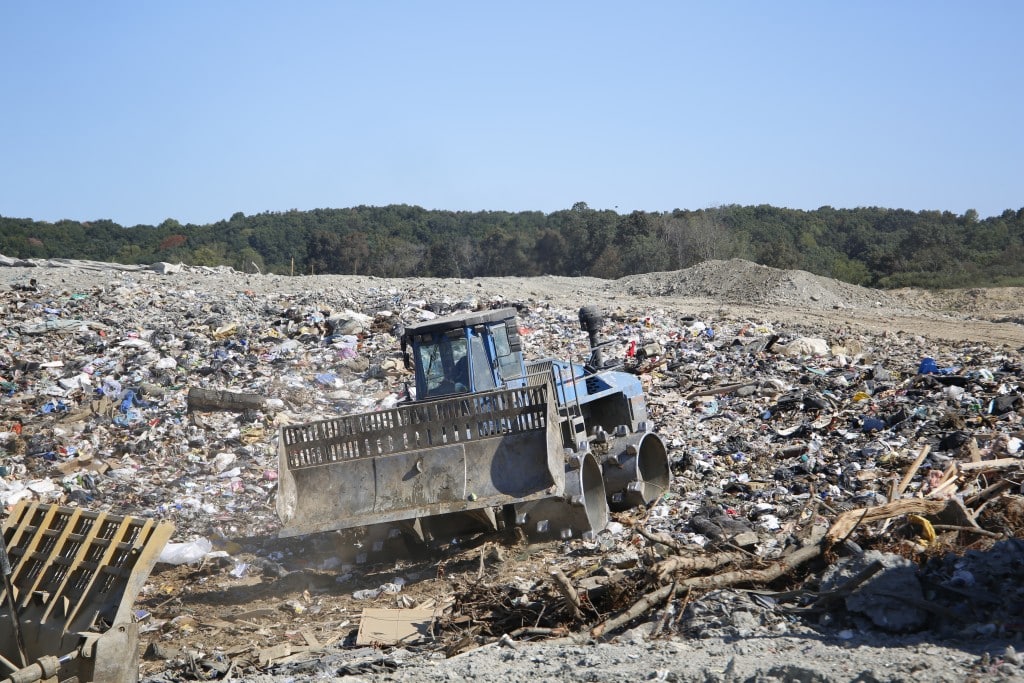
The cleared land is not only visible from U.S. 33, but also closer to residential housing on Scenic Lane.
“We try to be invisible at the property line,” Rumpke spokesperson Amanda Pratt said. “But as I understand it, where we are moving with our excavation is getting closer to properties on Scenic Lane.”
Ohio EPA regulations require landfills to start at least 300 feet away from the edge of the property line.
Some residents have sold their properties to Rumpke: One property was sold for $500,000 while another property was bought for $625,000.
Kristie Cassell, who has lived on Scenic Lane for 8 years, said that if Rumpke approached her with an offer, she’d likely sell.
“Lots of houses on (the west end of Scenic Lane) have sold,” Cassell said. “They haven’t offered us yet.”
Pratt said that Rumpke doesn’t currently have any plans for their newly owned property on Scenic Lane. One possibility is that the houses will be used as office space, as the company did with the house next to the landfill’s entrance that it bought in April 2022.
New leachate containment system

In addition to the land being prepared for active use, Rumpke has installed a new leachate containment pond at a cost of roughly $1 million, according to Murphy. The pond replaces a metal tank and represents a significant upgrade in the landfill’s containment system, Murphy said.
Leachate — liquid that has come in contact with solid waste — is one of the main byproducts produced by the landfill. It is “characterized by high chemical and biological oxygen demand and often consists of high concentrations of organic contaminants, heavy metals, toxic materials, ammonia and inorganic materials,” according to an article in the academic journal Water Reuse.
The leachate from the Nelsonville site is unlikely to be considered hazardous waste because most of the trash it accepts comes from homes and businesses, said Max Krause, a researcher with the U.S. Environmental Protection Agency.
“The characteristics of leachate do depend on what it comes into contact with,” Krause said in an email. “Something that is not hazardous, like our household waste, that comes into contact with other non-hazardous wastes that are already in the landfill, is not expected to create a hazardous waste.”
The new pond can hold roughly 200,000 gallons of leachate — four times the capacity of the metal tank. The mixture is later pumped into trucks that a contractor hauls to processing facilities in Logan and Huntington. Approximately 18,000 gallons of leachate are removed from the landfill daily, according to Murphy.
“Leachate is generally disposed of by sending it to a local wastewater treatment plant either via truck or our normal sewer lines,” Krause said. “The leachate is treated at the plant, alongside all of the other wastewaters such as from our houses.”
The new pond, which is already in use, has a secondary liner that can detect leaks. Any leachate that the liner detects is pumped into a tank next to the pond; the tank is checked daily, Murphy said.
According to Murphy, the liner-and-pump system is intended to prevent leachate from reaching groundwater.
“Although leachate could contain chemicals that could pose a danger to someone, they would have to come into prolonged contact or ingest the leachate for it to have significant negative consequences,” the EPA’s Krause said.
Rumpke will build another leachate containment system and sediment ponds for the new area being developed. The current system relies on gravity: All the leachate flows downhill. The area being developed is on the other side of the hill, so its leachate can’t flow to the current containment system.
Aboveground, runoff from rain is directed to sediment ponds around the site, Murphy said. Dirt, silt or dust carried by rain water collect at the bottom of the pond; Rumpke uses the water in the ponds to clean areas around the landfill, according to Murphy. Each pond has an outlet to release the surface water in the event of a storm.
One of the uses of the water is to suppress dust on the gravel roads throughout the landfill, Murphy said. Maintaining good air quality is part of keeping Rumpke’s permits for the landfill. Dust has been a particular problem this summer because of the ongoing drought.
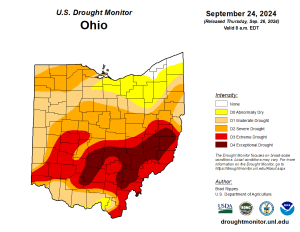
The water also will be used in a planned wheel wash for trucks leaving the property.
“A wheel wash is a structure that the trucks leaving the facility can drive through which sprays water and knocks dirt off of them,” Murphy said.
The water used to wash the trucks will flow into a pond, where debris can settle to the bottom. The debris-free water will then be pumped into a finishing pond, where it can be reused.
Rumpke also is building a new scale house at the landfill entrance. Trucks entering the landfill are required to be weighed in order to track the amount of waste entering the property each day.
“The goal is to make it an easy convenient customer experience for those bringing trash in,” Pratt said.