ATHENS COUNTY, Ohio — Athens County voters resoundingly approved two statewide ballot issues, one to guarantee abortion access and one to legalize recreational marijuana. The issues also passed with wide margins at the state level.
Athens County approved both issues with among the widest margins in the state, according to unofficial election night results.
Issue 1, the constitutional amendment on reproductive rights, passed in Athens County 71.67% to 28.33%, according to unofficial election night results. At the state level, the issue passed with 55.63% voting in favor and 44.37% against as of 10:37 p.m. Tuesday night.
Issue 2, the marijuana ballot issue, passed 69.37% to 30.63% in Athens County and passed 56.27% to 43.73% in the state as a whole, as of 10:37 p.m. Tuesday night.
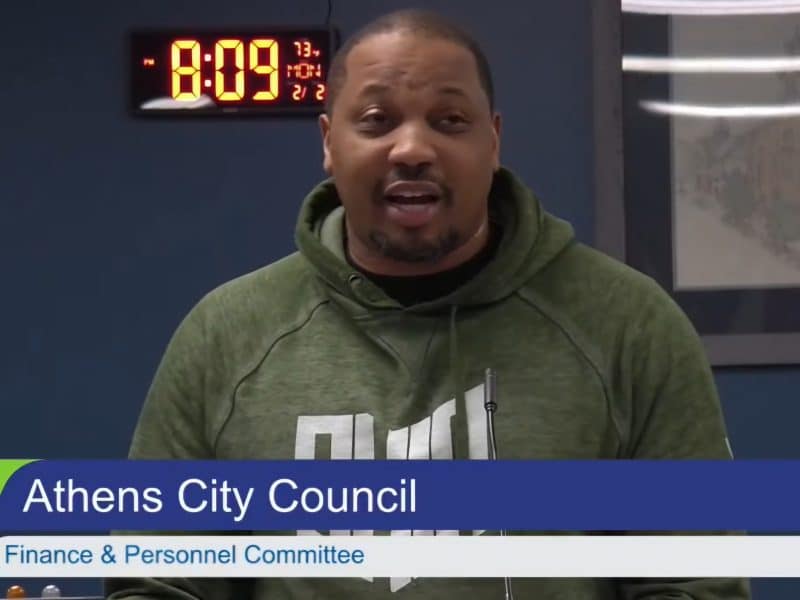
Athens County Democratic Party Chair Sean Parsons told the Independent that Athens County’s election results in regards to issues 1 and 2 were “just a real testament to the work that people did … and the values of this community.”
“I’m certainly very excited that Issue 1 passed, being the father of twin daughters — and my amazing wife, and then also Issue 2,” said Athens Mayor Steve Patterson, who also won reelection Tuesday night.
Issue 1 failed in only four Athens County precincts: Troy West, Troy East, Carthage Township and the village of Coolville. Troy West was the only precinct to reject Issue 2.
Issue 1
Issue 1 will add language to the Ohio Constitution enshrining the individual “right to make and carry out one’s own reproductive decisions, including but not limited to decisions on contraception, fertility treatment, continuing one’s own pregnancy, miscarriage care, and abortion.”
The proposed amendment will allow the state to prohibit abortion after “fetal viability,” the point at which the patient’s treating physician believes that the fetus “has a significant likelihood of survival outside the uterus with reasonable measures.” Typically, this occurs around the 24th week.
Indivisible Appalachian Ohio is a local organization that campaigned for Issue 1.
“We, as an organization, believe that people should be able to make their own health care decisions without lots of interference from the state of Ohio,” project manager Ella Zimmerly said. “We want people to be able to make decisions within their families, or with their doctors, using the best information they have.”
Indivisible Appalachian Ohio staff and volunteers knocked on 22,000 doors in Athens and surrounding counties in the months leading up to the election, board president Carol Waltz said.
On Nov. 7, Zimmerly, Waltz and two board members watched the results at the United Campus Ministry Center.
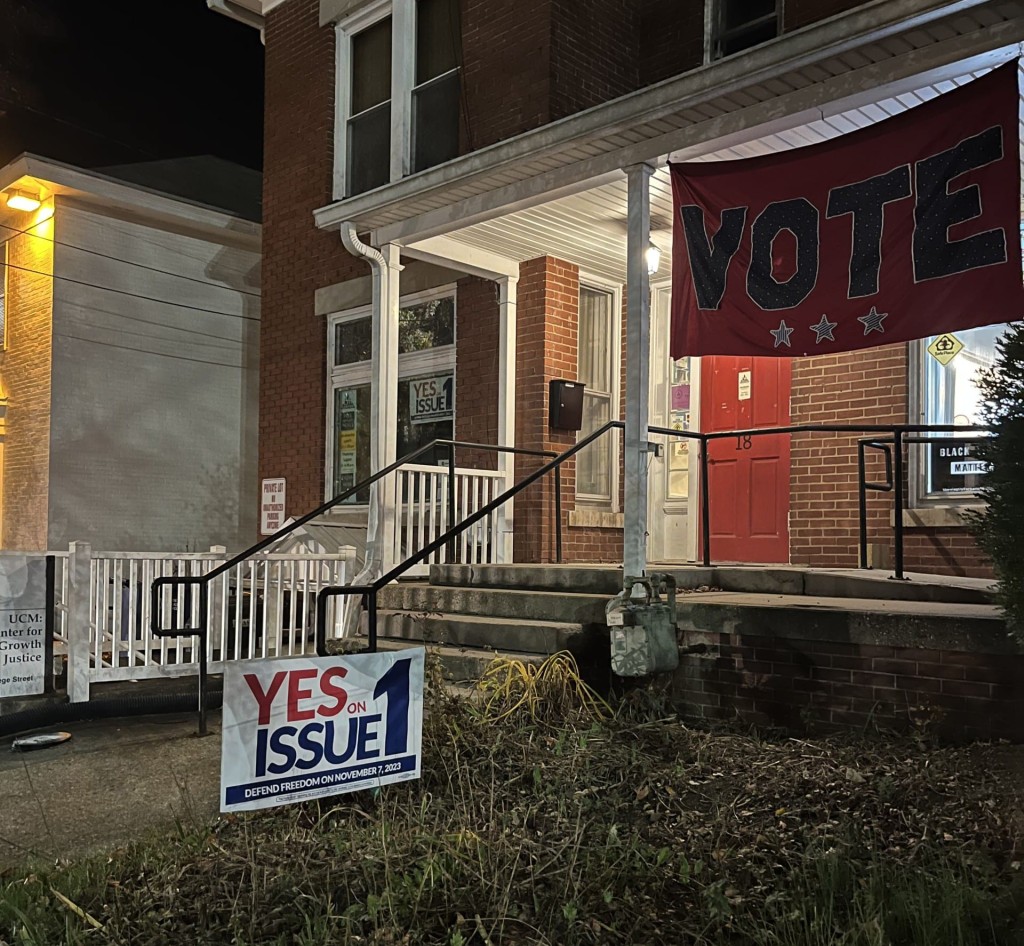
“It means better healthcare for Ohioans, more medical services available,” Zimmerly said. “I would love to see – or hope – that there’s less stigma associated with abortion.”
Waltz added, “We would call it a blowout and we’re very happy about that.”
Issue 2
Issue 2 will enact a law that allows adults 21 and over to use and possess marijuana.
Don Wirtshafter, founder and curator of the Cannabis Museum in Canaanville, celebrated with Sara Quoia by “smoking weed on the courthouse steps,” following news of Issue 2’s passage. Quoia worked alongside Wirtshafter on the Athens Cannabis Ordinance, aka TACO.

For Wirtshafter, Issue 2’s passage means “more revenue, less crime, safer roads, better schools.” Quoia added, ”Safer medicine and more jobs.”
Wirtshafter said “People won’t really notice a difference much” following the success of Issue 2.
“It’s not going to be major changes — anyone who wants marijuana now can get it,” Wirtshafter said. “We are getting rid of the black market some, and making it so that people aren’t criminalized for common behavior.”
The law takes effect on Dec. 7. After that, adults will be able to possess up to 2.5 ounces of marijuana and as much as 15 grams of marijuana concentrates. Cultivation will also become legal, with individuals allowed to cultivate as many as six plants and households as many as 12.
Sales will be regulated by a new Division of Cannabis Control, with a 10% tax on marijuana sales. Sales taxes will establish a cannabis social equity and jobs program, which will support communities disproportionately impacted by enforcement of previous marijuana laws by giving members of those communities preference in licensing.
Wirtshafter is hesitant about the proposed social equity and jobs program, finding it vague.
“I am afraid that the provisions of the social equity effort are going to end up being abused by these massive interests that are vying hard, trying to monopolize this new industry,” Wirtshafter said.
Quoia said, “We’re gonna have to keep an eye on them. … As this social equity clause takes shape, it’s going to be up to hardworking citizens that are willing to stay vigilant and hold them to it.”
Taxes will also support a substance use and addiction fund.
Because Issue 2 is a voter-initiated statute, rather than a constitutional amendment, lawmakers could still decide to change or repeal it.
“This is passing with a high enough mandate that the Republicans dare not mess with it,” said Wirtshafter.
Jay Edwards, Republican state representative for Ohio House District 94 from Nelsonville and Athens County Republican Party chair, did not immediately return a request for comment.
Let us know what's happening in your neck of the woods!
Get in touch and share a story!