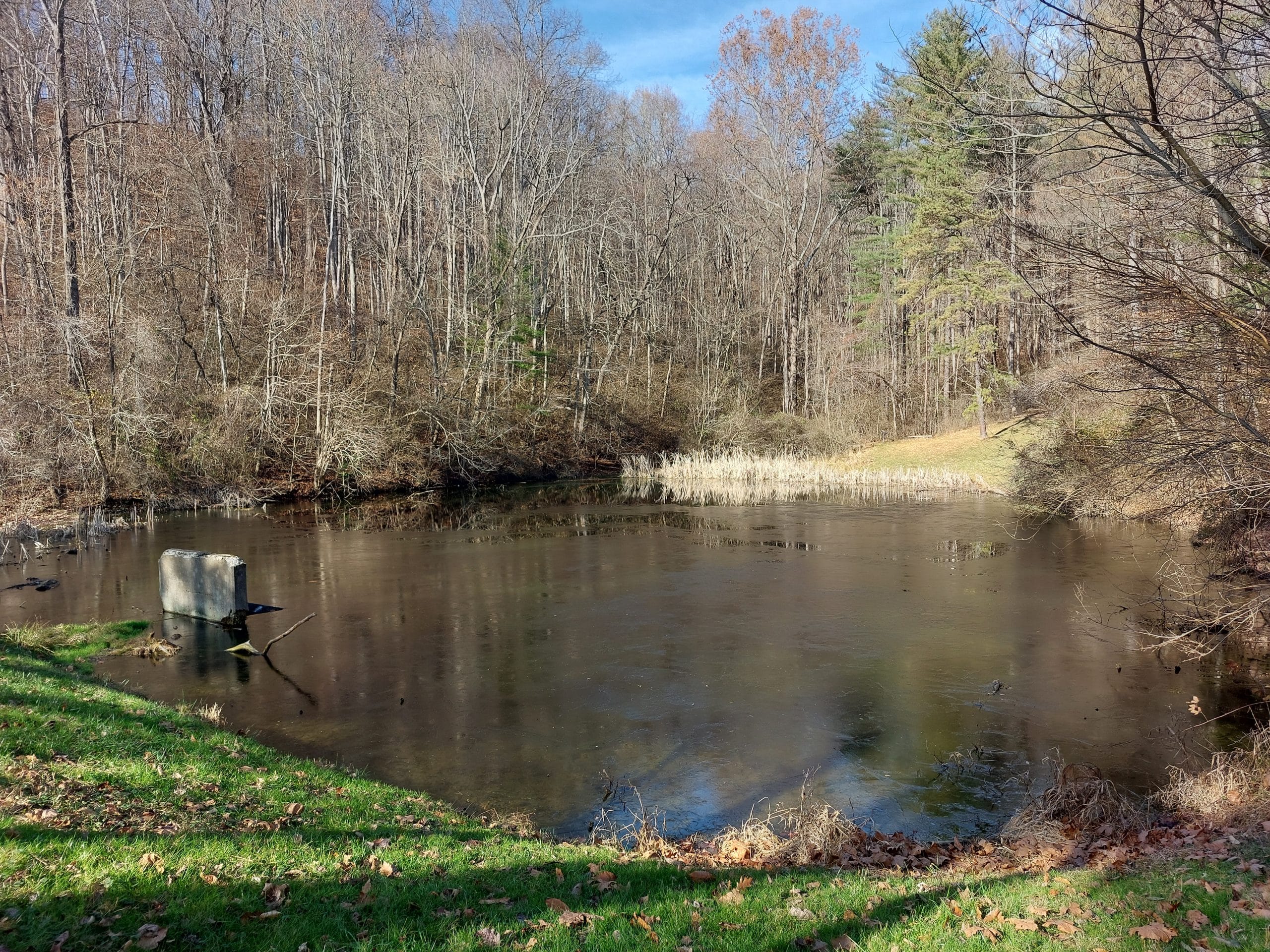

ATHENS, Ohio — All summer long an enormous, apparently dirt-filled bag sat at the entrance to Sells Park. Recently, the city opened that bag — full of sediment dredged from the park’s pond — to the public, as free compost.
Material may be picked up on Saturdays and Sunday before 9 a.m. and after 5 p.m. at the park, located in the Far East Side neighborhood at the end of Avon Place. Individuals may take up to two contractor (42 gallon) bags full of material.
“From what [I’ve been told] is that you can use it in your garden, like it’s going to be really rich compost material to add to your garden,” said Athens Arts, Park & Recreation Department Director Katharine Ann Jordan.
The sediment would likely make for a great addition to any garden, said Natalie Kruse Daniels, professor of environmental studies at Ohio University and director of the environmental studies program. “It would probably be pretty great for gardening, rich in carbon, nitrogen and phosphorus.”
Changes to the pond throughout this year mark the beginning of a new era for the Far East Side neighborhood park, under Director Jordan’s leadership.
The project, which started almost a year ago, addressed problems with overgrown and invasive plants and excessive sediment in hopes of making it a better home for wildlife and a more pleasant experience for visitors, she said.
“The goal was obviously for the wildlife and the animals, but also for the people visiting the pond to be able to have a really nice experience with that pond, whether it’s fishing, or if it’s hanging out there,” she said. “And if you want to birdwatch, or if you want to try to spot turtles or look at the fish, being able to see them is really important.”
Pond treatment
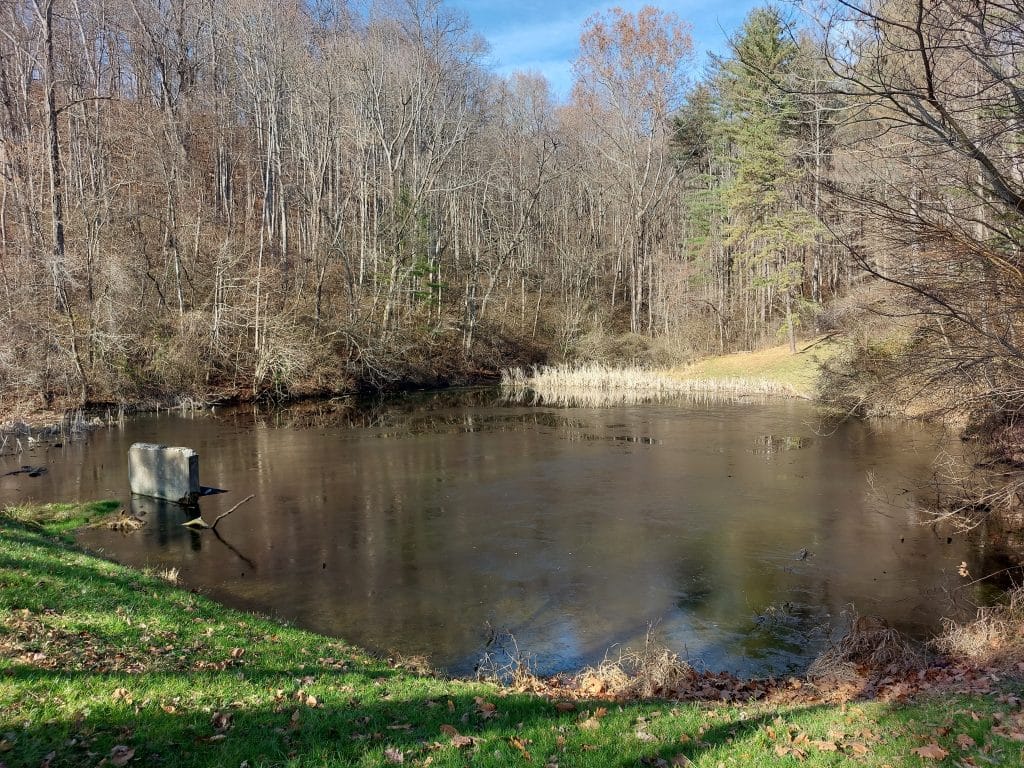
The Sells Park pond is manmade and 14 to 15 feet deep. It can support not only frogs, turtles and insects, but also fish such as bluegill and small bass — when it’s healthy. But it’s apparently been a while since the pond was actively managed; Jordan said she couldn’t determine when the pond was last dredged and/or stocked with fish, and it was overgrown with algae, duckweed and cattails.
“Over time, you will have an accumulation of typically organic materials in the bottom of the lake or in the bottom of the pond,” Kruse Daniels said. “Ultimately, with or without human intervention, you’re going to have eutrophication — it’s just a matter of the timeline.”
Eutrophication occurs when a waterway has too many nutrients, which triggers overgrowth of algae and aquatic plants. Duckweed and other species can thrive in eutrophic states, Kruse Daniles explained.
“When you have a bunch of organic and nutrient-rich sediment in the bottom of the pond, you’re going to grow a lot of duckweed, you’re going to grow a lot of cattails, you’re going to have that influx of wetland plants that is going to drive towards a wetland and state,” Kruse Daniels said. “Without management … that is the end state that that waterbody will tend towards.”
Jordan knew the pond needed work, but wasn’t sure exactly what was involved.
“Aquatic wildlife and management in that sense, is not something that I have necessarily expertise in,” she said.
In February 2023, Jordan contacted Jones Lake Management, a national company with headquarters in Cincinnati.
“I’ve heard from some folks that it needs dredging, but I’m not really sure what it needs,” she wrote in an email obtained by the Independent. “It’s mucky and I would like it to be an attraction.”
Jones advised the city to address plant overgrowth in the pond. For $1,395, the city contracted with Jones to conduct “algae and submerged aquatic weed treatment,” including “application of all registered aquatic algaecides and herbicides, as necessary to provide acceptable control of the algae and submerged weeds in client’s pond.” It also included “selective cattails treatments.”

“The goal is … that we have healthy fish in there, because people do like to fish,” Jordan said. “If we can get the pond to where it’s not choking out the aquatic wildlife, then … you’ll be able to see more wildlife.”
Jones workers came to Athens twice a month from April through October to apply and monitor treatments, Jordan said. In April, the city paid $1,855 for pond treatments for April through June, and an additional $700 in June.
Alex Roth, an aquatic biologist with Jones, applied algaecide to the pond every month, records show. Herbicides used in the project included fluridone and PhosLock, a bentonite clay that contains lanthanum. Lanthanum is a rare earth element used to decrease the amount of available phosphorus in the water, inhibiting the growth of duckweed.
In addition to controlling plant growth, reviving the pond meant doing something about the buildup of sediment at the bottom. A representative from the company advised her that “unless you get the bottom of the pond healthy, then it’s gonna be hard to really bring this pond back to health,” Jordan said.
To maintain a pond, Kruse Daniels agreed, “you’re going to have to dredge it.”
But instead of digging up the bottom with heavy machinery, Jordan said the company suggested that the city pump out sediment, “so that we could not drain the whole pond and not kill all the wildlife and try to be [as] least invasive as we can, while also restoring the pond’s health.”
Jones connected Jordan to MuckSuckers, a company based in Wapakoneta, Ohio, that deploys such technology. It was clearly needed: In a text message, a MuckSuckers representative told Jordan that it had removed more than 4 feet of sediment from the center of the pond.
An invoice obtained by the Independent shows that the city spent $15,850 on sediment removal in June.
To increase fish stocks, the city spent $619.60 on 20 pounds each of fathead and golden shiner minnows.
“We did have them put minnows in and they were eaten, so we do have some fish in there,” Jordan said.
In all, the city spent $21,920 on the pond in 2023, including $1,500 for an annual contract with Jones for the continued control of aquatic weeds and algae. The contract will renew automatically on Jan. 1 of each year.
The funds came from the city’s .01% recreation levy, Jordan said, which voters renewed in 2014.
Park plans
Jordan doesn’t expect the improvements to the pond to be obvious right away.
“This is really a big treatment year,” she said. “So hopefully, we’ll be reaping those benefits next year.”
But Kruse Daniel’s said the city was making the right decisions “if the intent is to have it remain a pond and not become a wetland.”
“It does support other critters, which just support other critters, and ought to continue to do so,” Kruse Daniels said.
Jordan would like to add a dock to the pond “for observation” and for fishing, “so that people can really get out into the pond and experience it properly,” she said.
Jordan said work on the pond was the first step in revamping the park. In the short term, the city needs to combat trail erosion.
“We will pick that back up, of working on covering up those social trails to try to start mitigating some erosion issues that are happening,” Jordan said.
The city set goals for the park in its 2014 and 2040 master plans. In 2014, the city pledged to install better trail signage and to improve the information kiosk at the park. It also recommended a small shelter at Sells, expanding its parking lot, creating “a unified trail signage package,” improving accessibility to the pond and adding benches, and the continued removal of invasive plant species.
Jordan said that in 2016 the city “did improve accessibility to the pond and added an accessible picnic table in 2016 (the accessible concrete path).” She isn’t sure when the current signage went up, nor when its kiosk was installed. “I have picked up continued Sells Park improvements called for in the 2014 Master Plan.”
The more recent plan recommends installing a small shelter, increasing signage in and near the park (including on Avon Place), improving landscaping and coordinating recreation activities with the Arts, Parks & Recreation Department.
“We’re excited to be working on Sells Park, we really love Sells Park,” Jordan said. “As a city, we know it’s a really valuable asset.”
Jordan invites questions and comments from the public regarding the park. She advised citizens to participate in its upcoming master plan process, too (to be announced at a later date). Contact the Arts, Parks, and Recreation Department at athensparks&rec@ci.athens.oh.us or 740-592-3325