
ATHENS COUNTY, Ohio — The Athens-Hocking Solid Waste District has found its second core member to officially form a council of governments for solid waste services.
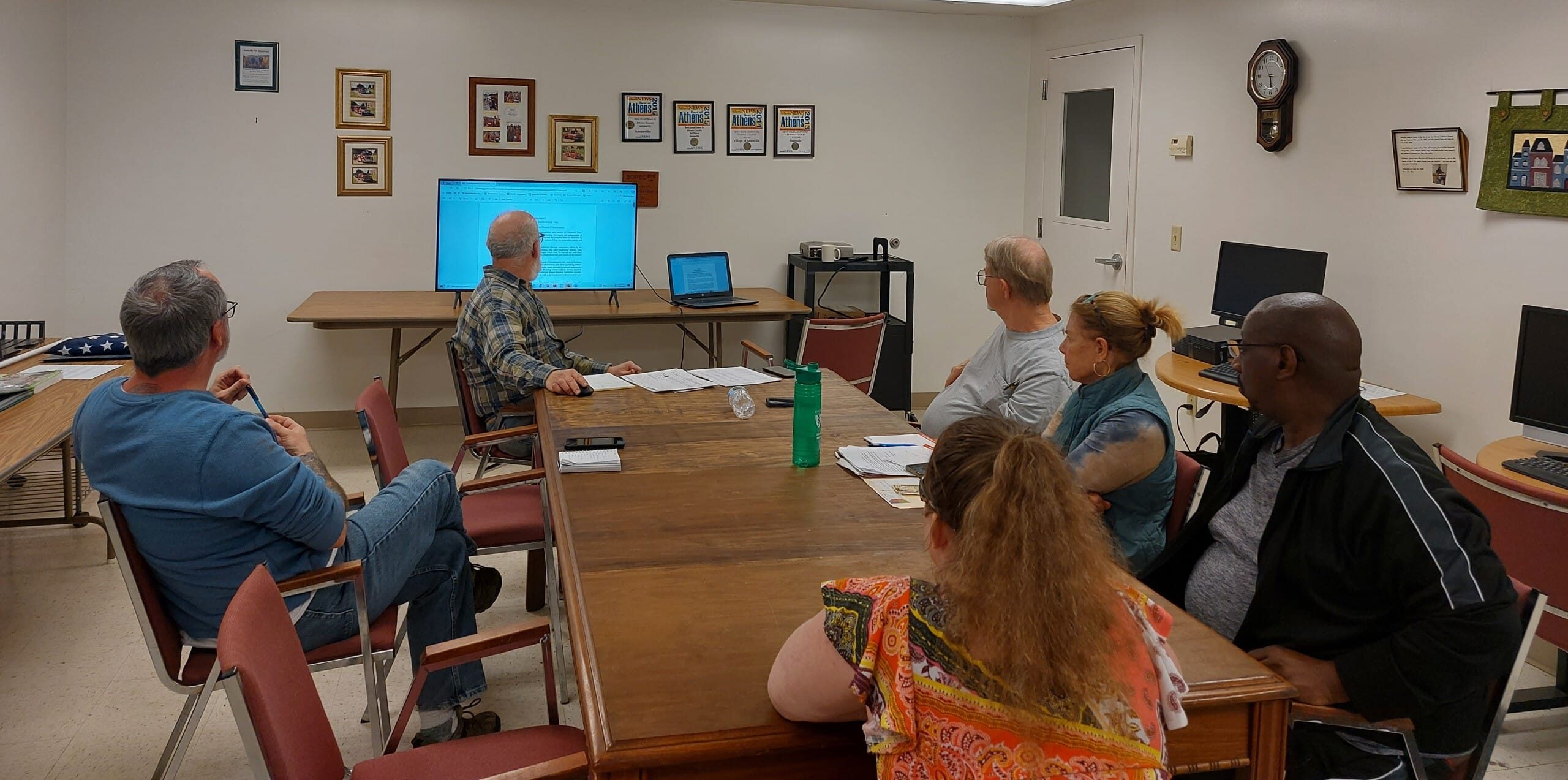
Last week, on March 13, Amesville Village Council read and unanimously passed a resolution on second reading to formally join the Southeast Ohio Area Resources Council of Governments.
Two members were absent, so lack of quorum prevented the council from declaring an emergency and enacting the ordinance.
However, Mayor Gary Goosman noted that the council could call a special meeting to expedite the process. The council’s next regular meeting isn’t until April 10. He will also review joining the COG with the village solicitor a final time.
The resolution’s first reading also passed unanimously last month, Goosman told the Independent last week.
“Sixty-percent of Amesville residents have Athens-Hocking as their service,” Goosman told the Independent on Monday. “They’re happy with the service and its local employees. They want to keep that business local.”
Goosman noted that the village doesn’t have a franchise district — which means that Amesville customers choose their trash haulers. Franchise districts traditionally mean a municipality contracts with one provider for a designated area.
“Residents don’t have to go with Athens-Hocking, we have three vendors,” he said Monday. “From the village perspective, I’d rather have one than have three on different days driving around the village in the early morning hours, but we don’t have a franchise.”
The solid waste district began forming the COG in January in a bid to save the Athens-Hocking Recycling Center’s assets, operations and locally controlled recycling infrastructure.
Nelsonville City Council authorizes city manager to participate in COG discussion
AHSWD Director Jane Forrest Redfern and AHRC Executive Director Crissa Cummings spoke to Nelsonville City Council on Monday, March 11, about the city’s participation in talks to form the COG.
On a 4-1 vote, the council passed a resolution on first reading that authorizes the Nelsonville city manager to negotiate an agreement to establish a regional council of governments for public waste management services. Council President Rita Nguyen was the lone no vote.
Nelsonville City Manager Tom Cangemi expressed confidence in the COG.
“I truly believe this is a way to go,” Cangemi said. “That’s why the resolution has been written up, so I have the ability to negotiate with them, get on board with it and move forward.”
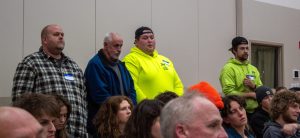
The public audience included a handful of AHRC employees, conspicuous in their neon yellow workwear, who eagerly awaited the announcements and council decision. One man told the Independent he has worked for AHRC for nearly 30 years, as had other coworkers in attendance.
The city’s current contract with AHRC expires March 31. Council passed an ordinance in January instructing the city manager to seek bids for trash and recycling services. AHRC and the city are working on contract extensions.
Where Athens stands
Athens Service-Safety Director Andy Stone said in an email that he and Mayor Steve Patterson “met with representatives” from the AHSWD, Amesville, Nelsonville and AHRC on Wednesday, Feb. 28.
“We discussed the concept of the COG and reviewed agreement and bylaws documents,” Stone wrote. “We took back copies and are reviewing them in more detail with our law department. There are a lot of specifics that needed to be filled in.”
The city had two main takeaways from its Feb. 28 discussion, Stone said.
“Joining the COG does not automatically mean a community will use services provided by the COG, such as solid waste and recycling collection. Communities would have an option to partake of those services or not based on their best interest,” he said. “There is potential for the COG to do some things that no one is doing now, specifically, manage hard-to-recycle materials, operate a tub grinder for large organics (downed trees, etc), and explore creation of a biodigester to receive sewage sludge. These are of particular interest to Athens.”
Stone said in an email Monday that there had been no changes since the Independent’s initial inquiry on March 5.
Logan hesitant
Logan Mayor Greg Fraunfelter said in an interview on March 12 that the city is still in the early stages of learning about the COG. He is hesitant to jump on board too quickly.
“My experience over the years is that there’s always something about a COG that they want absolute power and control,” Fraunfelter said.
AHRC is only one of about a dozen haulers serving Logan. Fraunfelter doesn’t want to lose the variety of businesses, so he doesn’t want the COG to be Logan’s sole trash hauler.
“I am one who prefers the chaos of capitalism and just let the market work things out,” Fraunfelter said.
Fraunfelter said he would attend continuing COG meetings to learn more about how a COG could serve Logan. He noted that a COG would be more appealing if it could set standards for haulers — “things … that are about health and safety,” he said.
The SOAR COG would be at-cost, meaning municipalities would choose which services they receives from the COG, Forrest Redfern said.
Materials pile up amidst layoffs
AHRC staffing numbers have shrunk since Jan. 10, when the Independent reported it had 43 employees; the company is now down to 35 workers.
“We are surviving,” Cummings said in an interview on March 4. “We don’t have quite enough staff to run smoothly, and so everybody’s chipping in — whether they’re supervisors or administrative — to kind of get the operations tasks done.”
Cummings said that recycling piles have grown to “frightening levels … because we just didn’t have enough personnel to get through it. That’s probably been the most extreme change and hardship in terms of operations.”
Four workers, whose jobs were sorting materials, have been laid off, Cummings said.
AHRC is taking on volunteers for help, including at a monthly volunteer day.
“We have to do a fair amount of litter cleanup around the facility, just because of the nature of the business,” Cummings said. “And so we’ve been having people help us with the cleanup, but also actively sorting either cardboard or all of the mixed recycling.”
Those interested in volunteering at AHRC should contact Caleb Boggess, AHRC Rural Action AmeriCorps National Service Member, at 740-594-5312 or americorps@athenshockingrecycle.org.
Cummings hopes that the COG will form in time to save AHRC’s operations, she said.
“We have all these customers that we service, both individuals as well as business, and then we have contracts with [Ohio University] and Nelsonville, and so preserving their service is our primary focus, and ensuring that we continue to provide good customer service,” Cummings said. “Where we’ve skimped is on the sorting of the recycling versus on collection, for good reason. But, we’re starting to look at, like, how do we manage all of that? And how long can we?”
Until this year, AHRC’s contract with the city of Athens provided 30% of its annual revenue. The longer AHRC goes without that revenue, the more it has to dip into its savings.
“We’re looking for ways to make up that income, but it’s a pretty big shortfall,” Cummings said, noting that AHRC is considering fundraising events. “We had all those layoffs, but a lot of our costs are fixed.”
Corinne Colbert contributed to this reporting.