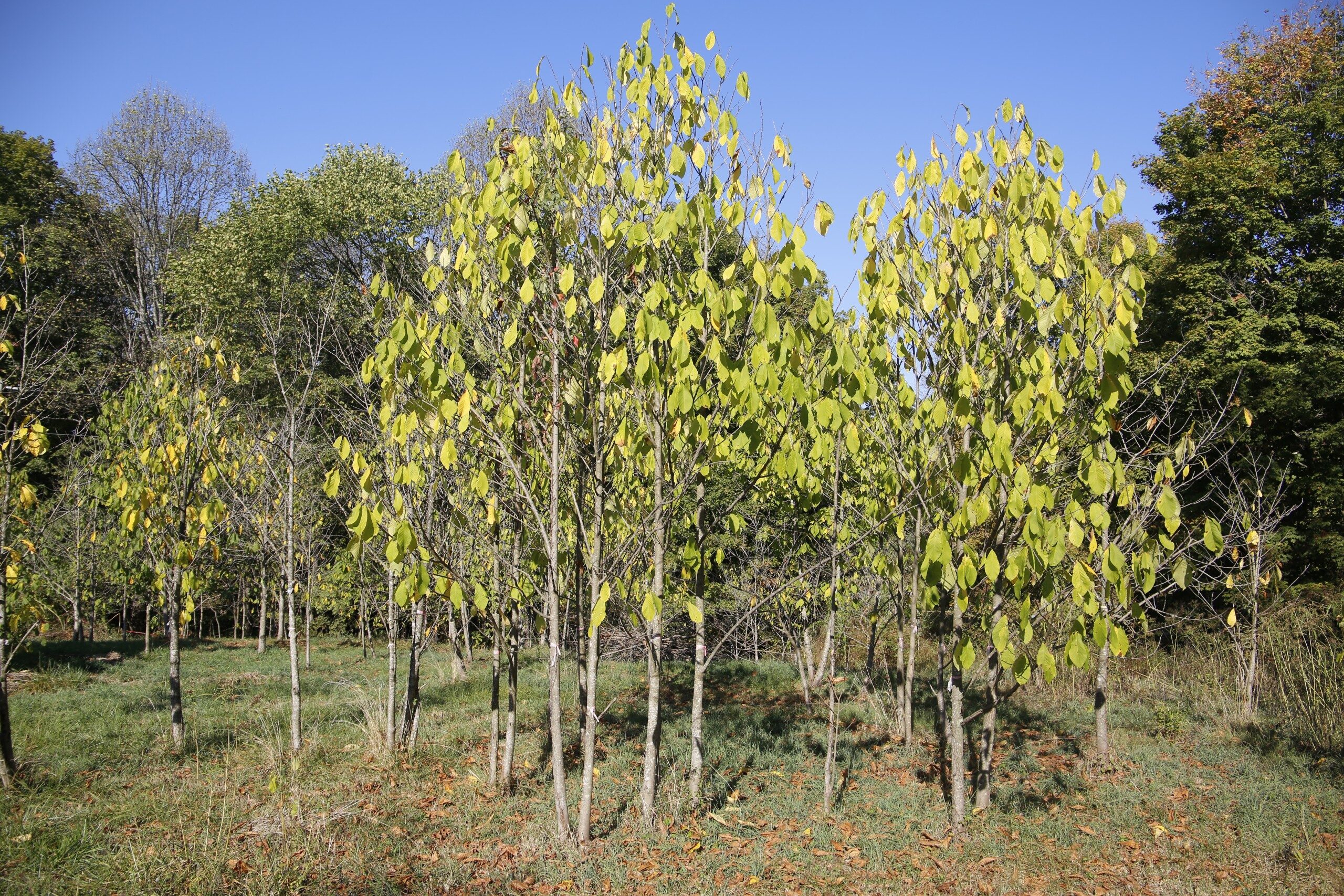

ALBANY, Ohio — Ambrosia beetles have killed nearly half of the pawpaw trees at Integration Acres this summer.
Chris Chmiel, an Athens County commissioner and owner of Integration Acres, said that the beetles have inflicted extensive damage to his trees.
It’s unknown to what extent the ambrosia beetle has attacked wild pawpaw. The Ohio Department of Natural Resources doesn’t “have any information regarding ambrosia beetles impacting pawpaw,” forest health program manager Thomas Macy told the Independent in an email.
Ambrosia beetles attack pawpaw trees in much the same way as the emerald ash borer attacks ash trees. Emerald ash borers lay eggs on the bark of the tree; when they hatch, the larvae burrow into the tree, eating the wood as they grow. The pests have wiped out much of the region’s ash trees.
Ambrosia beetles, on the other hand, burrow into the tree as adults to lay their eggs — while also depositing a fungus that spreads throughout the tree, according to Joe Boggs, Ohio State University entomologist. Once the larvae hatch, they eat the fungus. But the fungus blocks the tree’s ability to take up water, causing it to die of dehydration.
“One beetle is enough to spread fungus, which clogs up the vascular tissues of the tree and kills it,” said University of Kentucky Horticulture Professor Kirk Pomper. “It’s potentially the most devastating insect pest for the pawpaw.”
Healthy trees can defend themselves against burrowing pests (such as ambrosia beetles) by producing chemicals called acetogenins which act as a natural pest deterrent.
“Normally, our trees are able to defend against ambrosia beetles and bark beetles,” Boggs said. “The beetles key in on trees that can’t defend themselves.”
Local trees are still recovering from stress incurred in 2018, one of the rainiest years in Ohio history, according to both Chmiel and Pomper. This summer’s drought is exacerbating that earlier stress from excessive rainfall, Pomper added. As a result, local trees are weaker and have lower defenses.
This isn’t the first time pawpaw growers in the region have had to deal with ambrosia beetle infestations. Pomper said that he first encountered ambrosia beetles infesting pawpaw trees over 10 years ago when a grower called Kentucky State’s pawpaw orchard asking for help.
“I wouldn’t say [ambrosia beetle infestations] are common, but it has certainly happened before,” Pomper said.

One sign of the ambrosia beetle is an iconic “toothpick” of wood pulp that accumulates at the opening of the burrow as the beetle digs in. But that works only if you know what to look for.
“I may have seen it, but I didn’t know what it was, a couple years ago,” Chmiel said “I had seen that frass but I wasn’t connecting all the dots.”
And the sign comes too late, after the beetle has already burrowed into the tree.
Growers’ best bet, Pomper said, is to place beetle traps. They won’t stop the beetle, but they can alert growers to take action.
“The only time when you can really try to control the beetle is in the spring and summer when it’s flying around,” Pomper said. “People will put out traps and when they see the beetles (in the traps), they will spray insecticides to kill them and keep them from spreading.”
Unfortunately, it’s next to impossible to get rid of the beetles once they have burrowed into the wood of the tree, Boggs said. Systemic insecticides are spread by the phloem of the tree, a part of the tree which transports the tree’s “food” and is not where the beetles live. Any insecticide effective in the xylem, the part of the tree which transports water and where the beetles do live, would poison the tree’s fruit — and wouldn’t harm the beetles because they feed only on the fungus, not on the wood pulp.
“The insecticides are problematic all the way around,” Boggs said.
Pomper said that orchard owners may have to take radical steps to get rid of an ambrosia beetle infestation.
“If you’ve got a tree that’s heavily infested, the only thing you can do is cut down the tree and burn it,” Pomper said. “Just to get rid of it as a source of beetles.”
Chmiel has cut down several pawpaw trees on his property and has begun to burn them. However, he hasn’t culled all of his trees and believes that some might be able to be saved.
“I’ve already cut down a lot of trees,” Chmiel said. “If it’s completely dead I’m cutting it down. The ones that are partially dead I’ve pruned and hopefully will get them back to a healthy state.”
Pomper said cutting down a pawpaw tree isn’t the end of the plant, because the root system will send up new shoots. Chmiel is counting on shoots to regrow many of his trees.
Chmiel intends to spend the winter learning more about the ambrosia beetle. He’s working with Ohio State University researcher Christopher Ranger, who examines how and why ambrosia beetles attack orchards. Chmiel hopes to bring Ranger to Athens to host a workshop for local pawpaw growers.
“It’s really got me thinking about when you plant a pawpaw, where you plant it, how you plant it,” Chmiel said.