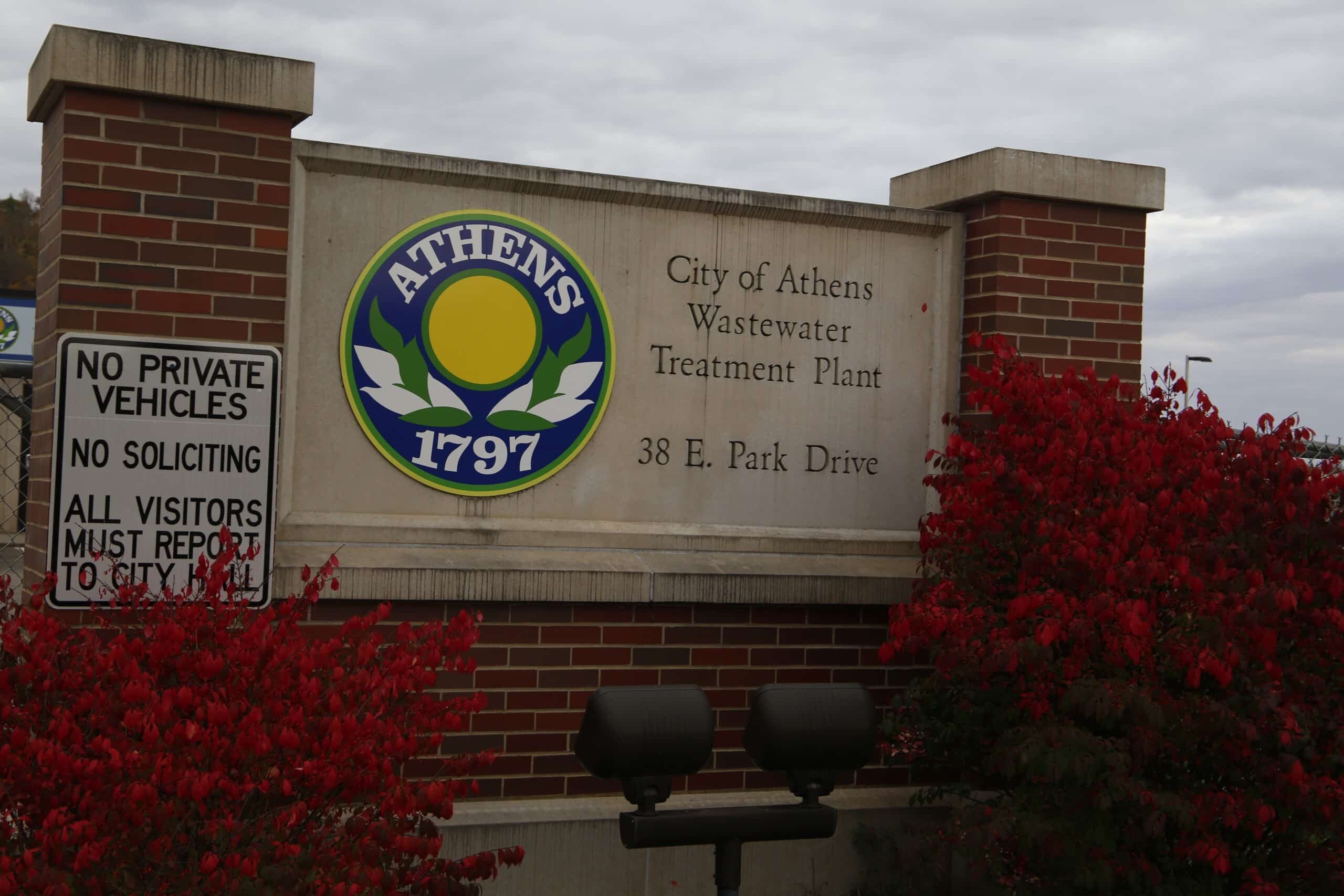

ATHENS, Ohio — Thousands of Athens County residents have received letters from their water provider asking if they have lead pipes in their homes.
The letters represent the next phase of a U.S. EPA program to determine how much lead pipe is still being used to deliver water to homes.
Water districts nationwide had to submit inventories of their distribution lines to the EPA in October.
According to local water district officials contacted by the Independent, none of their water mains or other distribution pipes contain lead, either because they have long since been replaced or because they were never used in the first place.
Now the water districts must build an inventory of service lines — the pipes that take water from the main into the building. To do that, local water districts are asking their customers to complete surveys about the materials used in their water lines, using photos, videos and other means to help owners with the identification.
“The goal of the survey is to understand not only what’s between the meter and the main waterline also known as the service line, but also to understand from the meter to the house and what plumbing is in the house,” said Michael Elliott, manager of the Burr Oak Regional Water district. “The EPA’s goal is to obviously get rid of lead. The survey enables us to understand what’s out there and what needs to be replaced.”
An April 2023 EPA report estimated that over 9.2 million pieces of lead pipe were still in use — and Ohio is one of the states with the highest lead pipe usage. The dangers of lead exposure are well-documented, including central nervous system problems, developmental delays and sensory issues.
City of Athens
Residents of the City of Athens began to receive letters in the mail asking about their lead pipe status beginning in mid-October. Steve Adams, the environmental coordinator for the city of Athens, said that the city has no lead pipes, but still needs to figure out what individual households’ pipes are made out of.
“What we don’t know for sure is what piping materials are used on the private side of the meter,” Adams said. “Individual owners are responsible for the pipes that go from the meter into a house and any pipes inside a house.”
Adams said few Athens residents are likely to have lead pipes, which haven’t been used in residential construction since the 1920s. Even those that do have lead pipes may have some protection from the city’s naturally hard water, which forms a film that keeps the lead from leaching into the water.
The survey is intended to “verify materials used and if there are instances of lead, to help property owners to eliminate it,” he said.
As of Oct. 31, Adams said, the city had received surveys for less than 3% of the roughly 5,400 buildings that get their water from the city.
According to the U.S. Census roughly 68% of city residents live in rental properties.
“[Renters] should be forwarding this issue to their landlords,” Adams said.
Complete the City of Athens water line survey.
City of Nelsonville
Devon Tolliver, the Nelsonville chief of police and acting city manager, said the city’s water system delivered roughly 89 million gallons of water to more than 2,250 customers in the past year.
This isn’t the first time that the city has had to analyze its water system. Earlier this year, the city sent letters informing residents of elevated total trihalomethanes, a byproduct of water disinfection, in the city’s water supply.
Long-term exposure to these byproducts has been linked to an increased risk of cancer and liver, kidney and central nervous system problems according to the letter sent out to Nelsonville residents. To reduce the amount of total trihalomethanes in the water the city installed spray aeration and head space ventilation at the water plants clearwells alongside mixers to churn the water.
“Nelsonville does not have any lead pipes in its water system,” Tolliver said. “The focus is on individual homes having lead lines in them when they were originally built.”
Complete City of Nelsonville water line survey.
Le-Ax Water District
The Le-Ax Water District probably never had lead service pipes because it was established in 1968, according to general manager John Simpson.
“With our age, the likelihood of lead lines was very slim,” Simpson said.
Instead of lead, Le-Ax’s pipes are primarily PVC with a small amount of iron ductile leaving their water treatment plant. According to Simpson, Le-Ax has roughly 500 miles of piping distributing water to over 7,000 customers in parts of Athens, Hocking, Meigs and Vinton counties.
Complete the Le-Ax Water District water line survey.
Tuppers Plains Chester Water District
Like Le-Ax, the Tuppers Plains Chester Water District is relatively new — established in 1969 — and so has no lead in its 600 miles of distribution pipes, said General Manager Derek Baum.
“The lead pipes are mainly concentrated in the older systems,” Baum said.
In addition to regular disinfection and sanitation measures, the district runs its water through a granular activated carbon system, otherwise known as a GAC filtration system. This system is maintained for the water district by DuPont as part of the company’s settlement of a lawsuit brought by multiple water systems — including Tuppers Plains — for contaminating water with C8 and other “forever chemicals” from its Washington Works plant.
“It was designed to remove PFAS from DuPont back in the early 2000s,” Baum said. “It removes a lot of other things including disinfectant byproducts.”
Complete the Tuppers Plains Chester Water District water line survey.
Burr Oak Regional Water District
The Burr Oak Regional Water District serves over 40,000 people and supplies water to Glouster, Jacksonville and Trimble. The district also provides water to parts of Hocking, Morgan and Perry counties.
Manager Michael Elliot said that the district is ready to help any customers who receive a “lead status unknown” letters.
“We can walk them through exactly what we’re looking for,” Elliott said. “If we need to come out on site, we’re more than happy to do that.”
Burr Oak is currently installing a GAC filtration system, like the one used in Tuppers Plains. The $10 million cost is being funded by the Ohio BUILDS grant from the Ohio Department of Development.
“We are trying to protect the future,” Elliott said.
Complete the Burr Oak Regional Water District water line survey.
Athens County Water and Sewer District
Oscar Carson Jr., superintendent of the Athens County Water and Sewer District, said the district worked with its customers to inspect their plumbing and found no lead pipes in use.
“Everything down here is plastic and copper as far as service lines go,” Carson Jr. said.
The district, which was established in 1972, serves The Plains and has over 25 miles of piping.