
ATHENS, Ohio — Athens Mayor Steve Patterson traded barbs with members of Athens City Council Monday night over his administration’s proposal to make the council responsible for approving individual applications for street fairs, not just the street closures themselves.
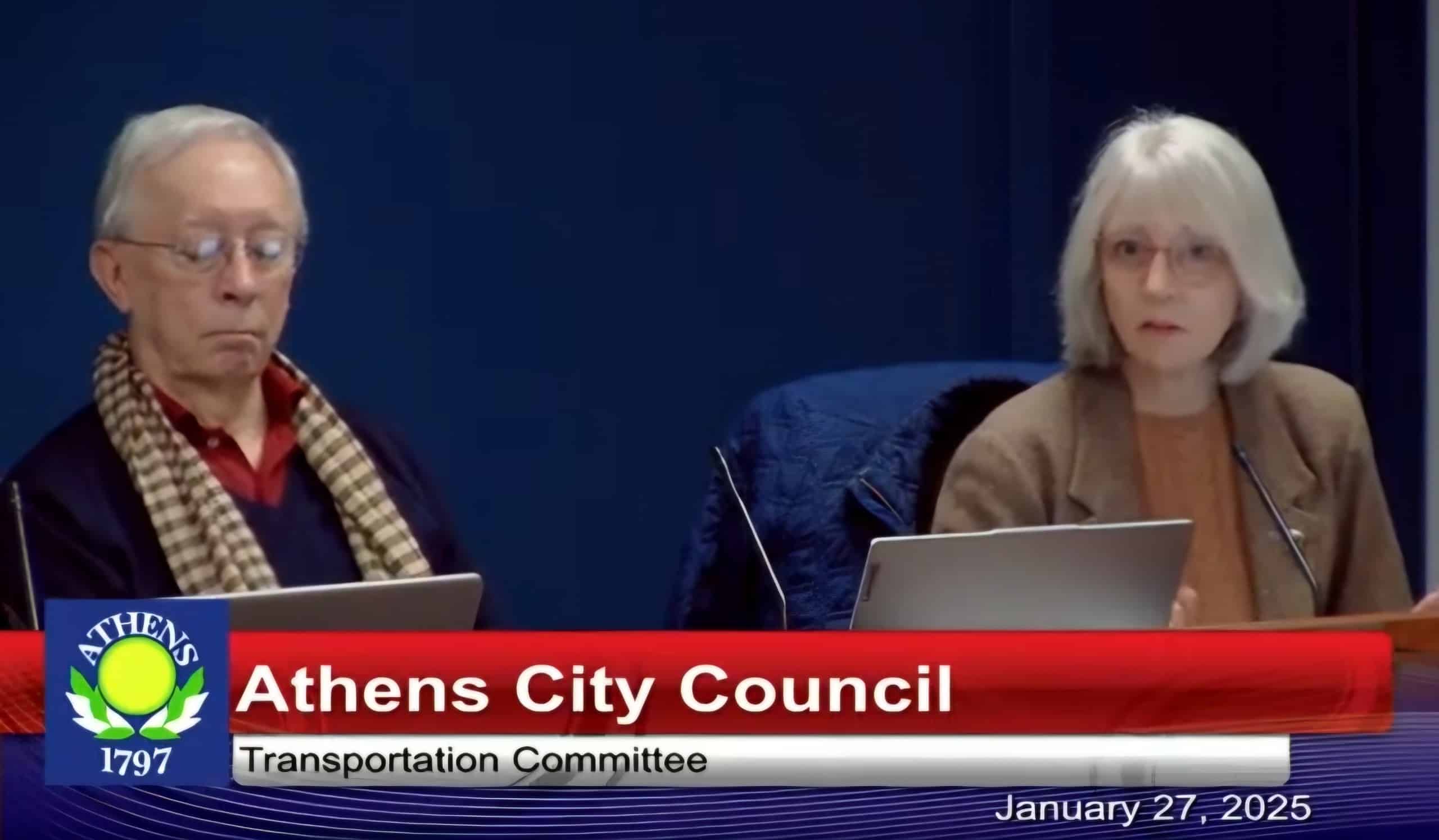
At its meeting Jan. 27, Transportation Committee chair Solveig Spjeldnes, 1st Ward, told the council that Deputy Service Safety Director Andrew Chiki had submitted a proposal on the topic.
Since 2020, the administration has given the council a list of anticipated street closures to approve in a block early in the year. The plan Chiki submitted would make council responsible for evaluating and approving street closures individually. Once council approves an application for closure, Chiki wrote, he would work with event organizers and coordinate with city employees to implement the closure.
Spjeldnes said she supported having the council approve Ohio University’s application for a street closure on April 5 for the International Street Fair as a “one-off” only. While praising Chiki’s proposed application form for event organizers, Spjeldnes said it’s “a colossal waste of our time” to approve all applications as they’re submitted.
Patterson noted that in the past, approving individual applications for street closure was always part of the council’s duties. Returning to that process is not “more load” for council to handle, he said — “It’s council just doing their job of approving ordinances as they come forward.”
He said that the current system leaves the administration to deal with closure requests that come in after the block list is approved.
“We experienced this last summer, to change the date or be accused of changing things when [we] weren’t supposed to,” he said. “This gets us out of … having to deal with any of those things.”
That comment appears to refer in part to complaints from Saraquoia Bryant, owner of the Cool Digs Gem Shop on Union Street about the difficulty she had requesting a street closure. Bryant told the council in October that she had been trying to request closing Union Street for a gem show since July, but that Chiki had not responded to her despite multiple attempts and the city’s approval of other closures after the block list had been approved.
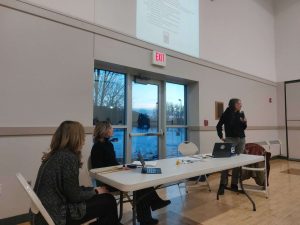
Bryant was one of the organizers of a recent town hall meeting where business owners and residents aired concerns about challenges for local businesses, including street closures.
Patterson also claimed that some events have “not turned out the way that they were sold to the city council” and that last-minute requests for street closures threaten “the health, safety and welfare of the community.”
Spjeldnes noted that under the new policy, last-minute requests would no longer be an option, since organizers would have to submit applications at least 30 days before the event. So if last minute requests are Patterson’s concern, Spjeldnes said she didn’t understand what involving council has to do with it.
“If they fill out everything in the form and everything’s cool and people don’t object, then we’ve saved everybody’s time,” she said. “Where’s the disconnect?” .
There is no disconnect, Patterson responded — “I just think that you have an issue with council having to pass ordinances, whether 20 ordinances or one ordinance.”
Council President Sam Crowl clarified that the council’s role is passing ordinances approving street closures, not approving the events themselves. Under Patterson’s new proposal, the city would be tasked with both.
Speaking as an audience member, 4th Ward councilman Alan Swank agreed with Speldnes’ objections to the plan. He noted that when the council approved Bryant’s request last fall, “It was clearly stated by the administration that in January we were going to have a meeting, and if you wanted to have a street fair in 2025, you better get your butt there or you’re not going to have it,” Swank said. “What’s changed? It was going to work back then and it can work now.”
The city has many more requests for street closures now, he said, because of the city’s adoption of a Designated Outdoor Refreshment Area, among other developments. Approving applications individually would just encourage more people to apply on the spur of the moment.
Swank suggested that the city send a registered letter to every sponsor of a street fair last year, specifying a meeting date for all to attend and apply so council can approve the requested street closures in March.
That’s not practical, said Jesssica Thomas, At Large.
Speaking as an audience member, she said that as a business owner she’s seen how Chiki has tried to support block closure approvals in recent years. “It’s been a headache in that more things are happening at different times, people want to add things,” she said. “It comes to a lot of workload on his part that wasn’t working out.”
In addition, she noted, approving closures in a block wouldn’t keep the council from approving individual closures anyway. “We would basically have to tear the [block closure] ordinance each time and separate them out anyway,” she said.
City Law Director Lisa Eliason advised council last summer that it was their responsibility to approve street closures, Thomas said, “and we do not want to give that away.”
“One big ordinance is just starting to create more problems than it’s solving,” she said.
Also speaking as an audience member, At-Large councilman Michael Wood said that approving requests individually would allow the council to weigh whether a given event would be worth the impact on Uptown businesses. And it would support innovation among community organizations, he said.
Wood also agreed with Patterson’s concerns about the administration being responsible for approving closures.
“Andrew Chiki shouldn’t be the person having to make these decisions,” Wood said. “His name gets bandied about a lot these days, I think unfairly.”
People want more transparency in city decision-making, he said, and having council approve applications would achieve that.
“I don’t think [the administration] should have to be the public whipping boy for somebody being upset about a road closure,” he said.
Transportation Committee member Jeff Risner, 2nd Ward, also supported considering each street closure applicant individually.
“I’ll be blunt: I’m for this,” Risner said. “I want to take the power back.”
Committee member Beth Clodfelter, At Large, suggested that a compromise could be to have people submit request forms to the administration, which would then send the request for a street closure to council.
That approach would ensure that the council “is not in the position of even being perceived as deciding what is a good event and what is not,” she said.
Patterson agreed with Clodfelter’s suggestion, noting that the administration could review the forms to ensure that requests don’t conflict with construction projects or other events.
Athens City Council’s next regular meeting will be at 7 p.m. on Monday, Feb. 3, in Athens City Hall, Council Chambers, third floor, 8 E. Washington St. Meetings are also available online. Regular sessions are on the first and third Mondays of the month; committee meetings are on the second and fourth Mondays.
Update: A link to a records request has been added to this story since initial publication.