
Changemakers is a column that highlights the work of local nonprofit organizations serving Athens County.

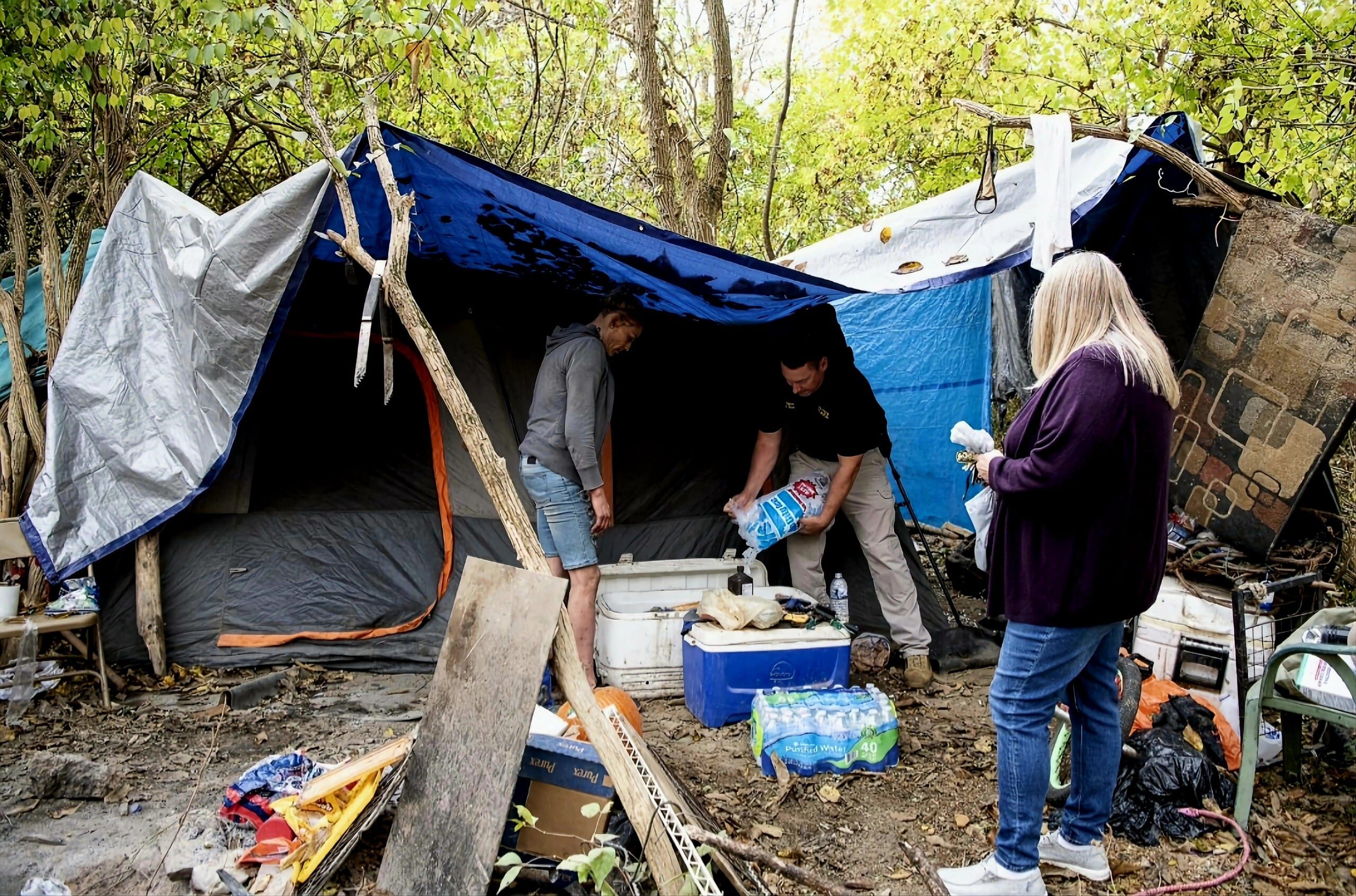
ATHENS COUNTY, Ohio — After suffering a string of bad luck, including a brain injury and a divorce, Greg found himself homeless. Figuring Athens might be a good place to start fresh, Greg walked from Parkersburg, West Virginia, to Athens and set up camp — literally, in the woods between the Hocking River and the East State Street commercial corridor.
But his fresh start was rough, to say the least. Private security and police hassled him; people stole his belongings from his tent when he was out during the day. It was fall 2024; It was beginning to get cold and he didn’t even have a sleeping bag.
“I was shivering, what was I gonna do? I heard, ‘Hello? Anybody there? We’re with Integrated Services,’” Greg recalls.
Several housing specialist case managers from Integrated Services for Behavioral Health had arrived. They gave Greg a jacket and some blankets.
“Right from that moment, everything turned around,” he says now. “I wasn’t just in the woods, cold, wondering what the heck I was gonna do.”
Since 1994, ISBH has served members of the community who are experiencing mental health issues, substance use disorder and/or homelessness — often people experience more than one of these crises at once.
ISBH employs two models that successfully help the people they serve.
The first model is what Rose Frech, ISBH’s director of external affairs, calls the ‘walking and talking’ model. It means meeting people where they are, physically and otherwise, to get them the help they need.
“We go out to people’s homes … We are so committed to that model, and we know it works,” says Frech.
A second model Frech highlights is that known as supportive housing.
“Supportive housing is a model that combines rental assistance with access to housing navigation, case management services, and behavioral health and substance use disorder treatment services,” Frech says. “It aims to tackle both the immediate need for housing while also addressing the related health and social factors, to help drive long-term positive outcomes.”
ISBH was able to get Greg into a hotel during the coldest winter months. They got him back on the medicine he needed for his brain injury. Only then did they encourage him to attend substance abuse counseling for his alcoholism, which he did for nearly two months at the Carlson Center, a residential treatment facility for drug and alcohol addiction located on West Union Street.
But due to lack of funding for housing, Greg was back in the tent between East State and the river in April when major floods came and nearly swept him and his belongings away. His hypothermia was so bad he had to be treated by emergency medical technicians. He was still regularly in touch with his ISBH case worker, though, and she got him into long-term housing that same day.
The Ohio Housing Trust Fund, which makes housing like this possible, was fully funded in the two-year Ohio state budget passed in June.
Today, Greg has an apartment in Nelsonville within walking distance of most necessities and along the Athens Public Transit bus line. Now that he has stable housing, his plans are to apply for disability benefits, find a part-time job and attend AA meetings.
“I was shocked and kind of skeptical for a while. But now they’ve come through with everything that I’ve needed,” Greg says of his experience with ISBH. “They have been a blessing.”
ISBH is a “front door” for people who need help finding housing, since the nonprofit is ready to go with funds from the U.S. Department of Housing and Urban Development.
ISBH’s permanent supportive housing in Athens County takes two forms. First, there is project-based housing, at places like Charles Street in Athens and Serenity Village in The Plains. Second, there is tenant-based housing, which is HUD rental assistance housing vouchers for use in private rentals. In 2024, ISBH housed 183 people in 93 households.
ISBH has been a key player in the Housing Security Co-Create group coordinated by the Athens County Foundation. The group has been instrumental in acquiring and transforming the former Sunset Motel into a homeless shelter, on track to open in 2026.
Frech has nothing but praise for the Co-Create group. “It’s been so uniquely Athens. In all the best ways.” she says. “Kerry [Pigman] and her team have done such a great job at two things: Creating a safe, welcoming space for everyone to participate, and getting meaningful work done.”
ACF and ISBH were already coordinating prior to the Co-Create group, primarily through ACF’s grant support of The Hive, ISBH’s free after-school youth drop-in center in Nelsonville. About 200 kids are enrolled with the Hive, which serves about 50 on most days. Activities for the kids are supplemented with resources offered to the entire family, whether that’s a meal or support for a parent’s mental health or substance use disorder.
ISBH also runs a number of other programs: The Mary Hill Youth and Family Center is a 16-bed facility in Nelsonville for youth who have experienced trauma and ensuing behavioral issues. Help Me Grow is a home-visit program for pregnant women and families with children up to age 3 that focuses on parent education, screening and intervention. ISBH also has an embedded social worker at the Athens County Public Libraries. The social worker meets people at library branches in the county and can point them to resources for food, housing or whatever their needs may be.
The majority of those who receive ISBH services are low-income families with children who are Medicaid-eligible. The federal “Big Beautiful Bill” passed in July is expected to mean $1 trillion in cuts to Medicaid over the next 10 years. And the two-year Ohio budget passed in June added work requirements for Medicaid recipients.
“Work requirements very rarely result in people going into the workforce, but they can definitely play a role in people falling off Medicaid and not getting the services they need,” Frech says.
On the federal level, Frech is concerned about how the cuts to Medicaid are going to play out.
“Reach out to your elected officials at the state and federal level and let them know if you think these programs and services are valuable,” she asks of the public. “In poorer areas like this, if we lose those public dollars there is no fundraising in the world that would fill that need.”
Frech also points out that ISBH contributes to the economy of Athens County. ISBH’s Athens County budget is about $3.4 million a year, through programming funds and through salaries, where much of the money is spent within the county.
Many of those salaried employees have lived experiences with mental health, substance use disorders and/or homelessness. Frech notes that this peer support is critical.
“We have people working alongside people in their recovery and building relationships with the people we serve that can really change lives and save lives,” Frech says, “The work they do is really incredible. And you have to have a real heart to do it.”
Get involved with ISBH: Call 800-321-8293 or email info@isbh.org.
Only Greg’s first name is used in this column, for privacy reasons.