
Changemakers is a column that highlights the work of local nonprofit organizations serving Athens County.
GLOUSTER, Ohio — Rhonda Reedy and her husband, Calvin, are retired and both are disabled. Between the two of them, the Glouster couple has prescriptions for some 60 medications. While a few of those medications are taken on an as-needed basis, others — like Calvin’s diabetes drugs — are literally lifesaving.
And those medications can be prohibitively expensive, even though the couple are enrolled in Medicare. For example, Medicare does not cover CREON, which Calvin takes to help him digest his food. It costs about $1,600 per month.
“Without having that, he could not live,” Rhonda Reedy said. “I don’t know too many people who can afford 1600-some dollars per month.”
At first, a doctor gave them a coupon for a couple of months supply. Then they raided their savings.
“I couldn’t pay for it anymore. I was like, what am I gonna do?” Reedy recalled.
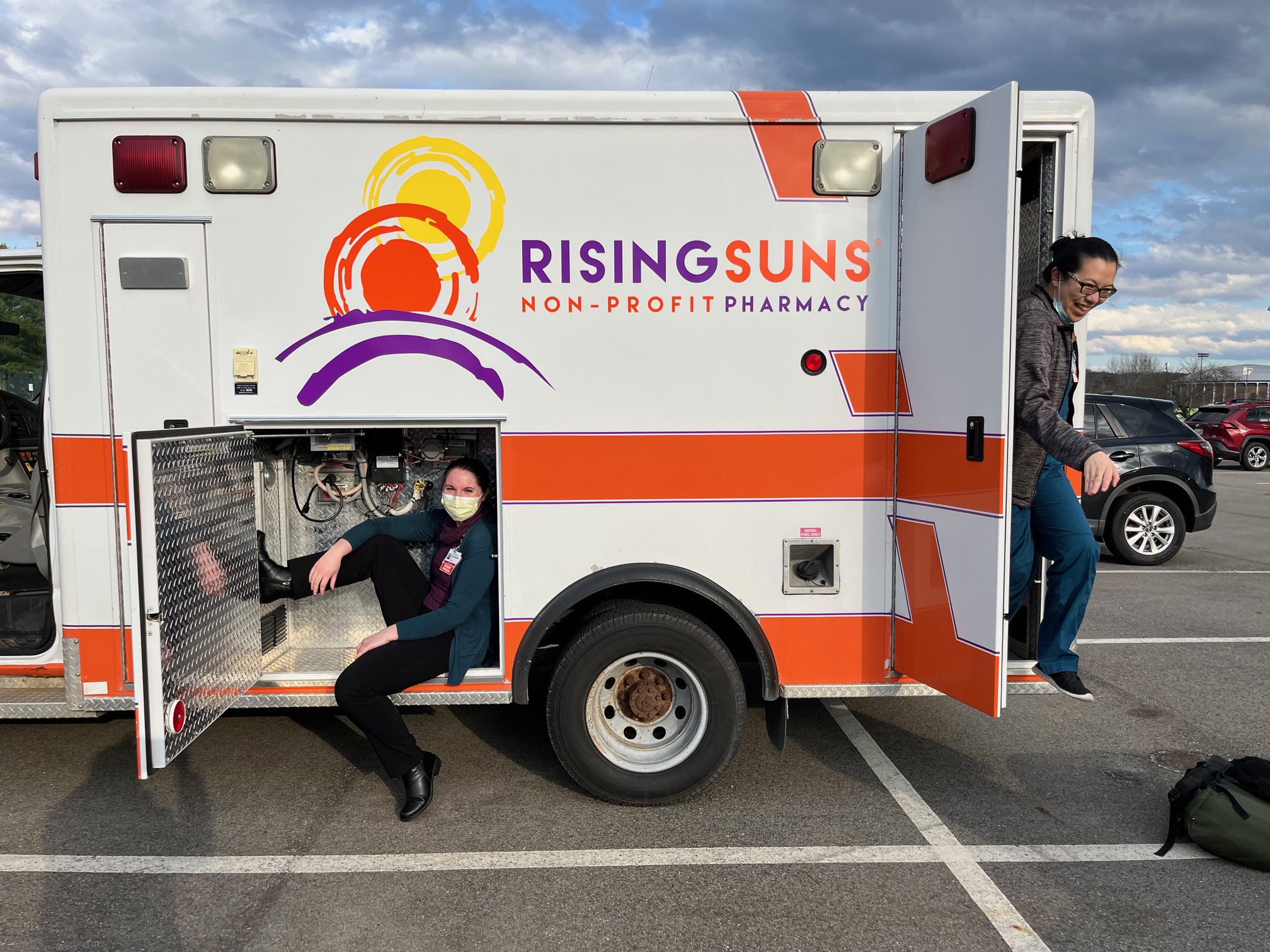
One of the Reedys’ daughters had heard of Rising Suns Non-profit Pharmacy, which provides free medications to residents of Athens and surrounding counties who are under- or uninsured. So Rhonda called the pharmacy to determine that her family qualifies, and has been getting most of her medications from Rising Suns ever since.
This includes prescription drugs for things like heart disease, high cholesterol, asthma, migraines, osteoporosis, and so on.
The Reedys are just two of the 2,000 people in southeast Ohio that Rising Suns has served since it opened in 2021. Rising Suns has dispensed more than $12 million worth of medications — all for free. About 13,000 prescription drugs and counting have been dispensed.
The free pharmacy is the brainchild of Sarah Adkins, an Athens native, pharmacist and instructor of pharmacy sciences at Ohio University. In addition to Adkins, one more pharmacist plus interns and volunteers help run Rising Suns, which recently relocated to the Athens City County Health Department on West Union Street.
“Sarah and Megan and all the workers down there, they’re so awesome,” Reedy said, adding, “Without that program, I don’t know what we’d do.”
Adkins helped Reedy complete forms to apply for medication directly from a drug company. And when her husband was in the hospital, Reedy shared her worries.
“When’s the last time a pharmacist has sat down with you and said, ‘How are you guys doing? Do you need a hug today?’” Reedy said. “They just don’t. She’s been there so much for us.”
Going to the pharmacy a couple of times per month, Reedy noticed how busy the staff and volunteers are, and she saw that sometimes they didn’t even have time for lunch. So Reedy started to bring in food: fresh-baked bread, cinnamon rolls, salads, and noodles.
“I feel like I’m giving back a little bit, but nothing like what they’re doing for us,” Reedy said.
“We call ourselves a pharmacy by the community, for the community,” Adkins said. “That’s how we’re surviving.”
She described the people of Southeast Ohio as going “above and beyond” to support the pharmacy, from baked goods to individual donations to church collections.
Southeast Ohio has the fewest corporate resources and the greatest economic need in the state. Demand for drugs outstrips supply. Yet the nonprofit keeps running on those small donations plus grants, volunteers and donated drugs. Some national and state nonprofits donate money or drugs directly. Rising Suns operates as a so-called repository pharmacy. This means about 80% of the medications it dispenses are donated from long-term care facilities or rehab facilities.
“They will box up the drugs that have not been used and they ship them to us. It’s a lottery,” Adkins said. “We literally open up that box and say, ‘Come on! Let’s hope there’s an inhaler in here.’”
Sometimes it seems that Rising Suns operates on the sheer force of will of its founder. The name Rising Suns is a play on “sons” — Adkins lost her two young boys, Solly and Sammy, to gun violence at the hand of their father. This project is, in part, to honor them.
Adkins established the Solly and Sammy Fund for Peace, which now lives as a donor-advised fund at the Athens County Foundation. The fund supports families impacted by trauma and grief, and also organizations that support women and children, provide grief counseling and educate against violence.
So when Adkins was interested in starting a free pharmacy in Southeast Ohio, she knew who to talk to: Susan Urano, who was then executive director of the foundation.
“I will tell you we would not be here without her,” Adkins said. “She knew of people who would be good connections. She had a nonprofit lawyer who did our 501(c)(3) stuff pro bono. It started with her. She gave me my first check.”
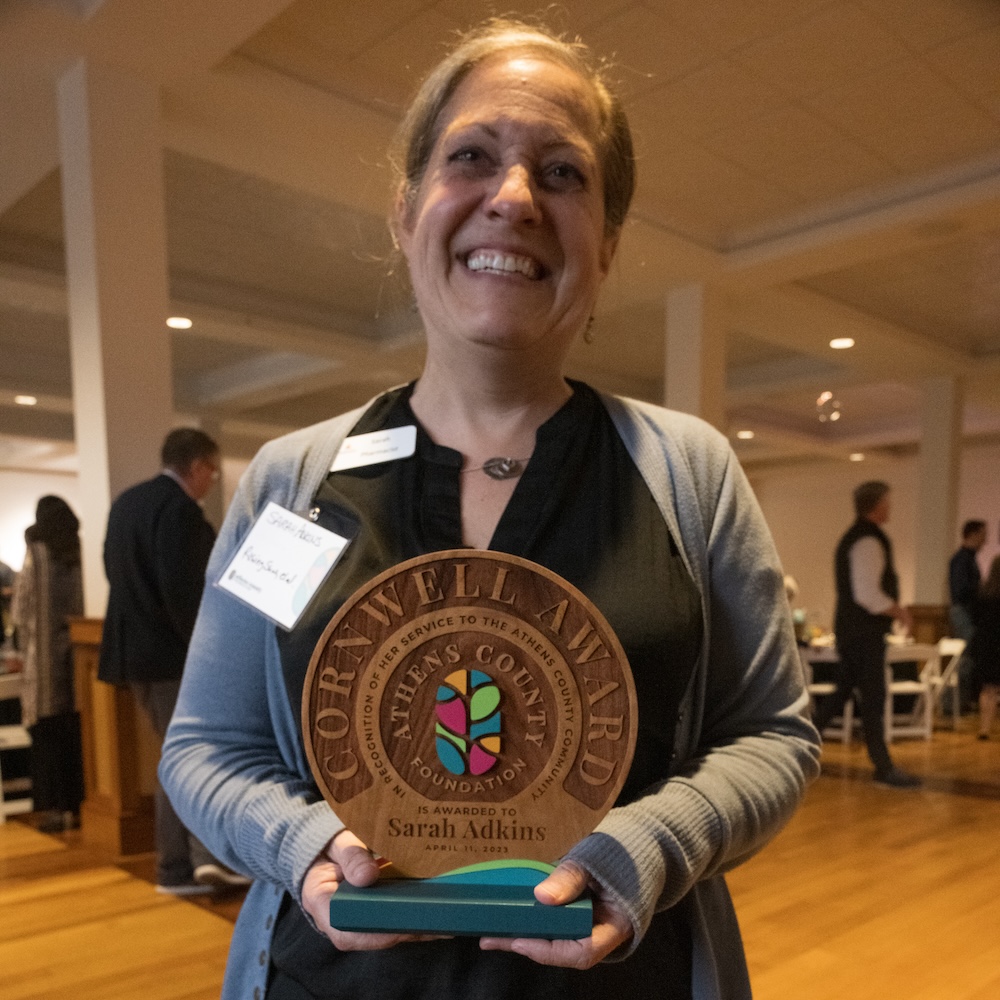
The foundation honored Adkins in 2024 with the Foster B. Cornwell Award for her work to improve the health of those living in Athens County and Southeast Ohio.
“Sarah’s strength, determination, and deep care for others set a powerful example for all of us,” said Kerry Pigman, executive director of the Athens County Foundation. “ACF is grateful to stand alongside her.”
Rising Suns’ mission is to ensure all people in southeast Ohio have access to safe, effective drugs. Most medications dispensed are for asthma or diabetes or are blood thinners. Running the free pharmacy costs about $250,000 per year. This includes the costs of delivering the medicines when necessary.
“My goal is to take down all the barriers,” Adkins said. “[So that] cost isn’t an issue. Transportation isn’t an issue.”
This is why a driver is one of three Rising Suns paid employees, in addition to a pharmacist and an office manager/technician. Meeting payroll plus all the other expenses is a constant challenge.
“If everyone in Athens and surrounding counties would donate $5 or $20 a year, that would help us sustain this service and pay our dedicated employees,” Adkins said.
The for-profit healthcare system in this country is perhaps Adkins’ most difficult systemic hurdle.
As she put it, “Making people pay this much for health care in the United States is 100% greed. It’s 100% greed. Someone’s health should not be capitalism. It is not okay.”
“Everyone deserves to be taken care of,” she said. So that’s what Adkins does. She takes care of others, one patient at a time.
