
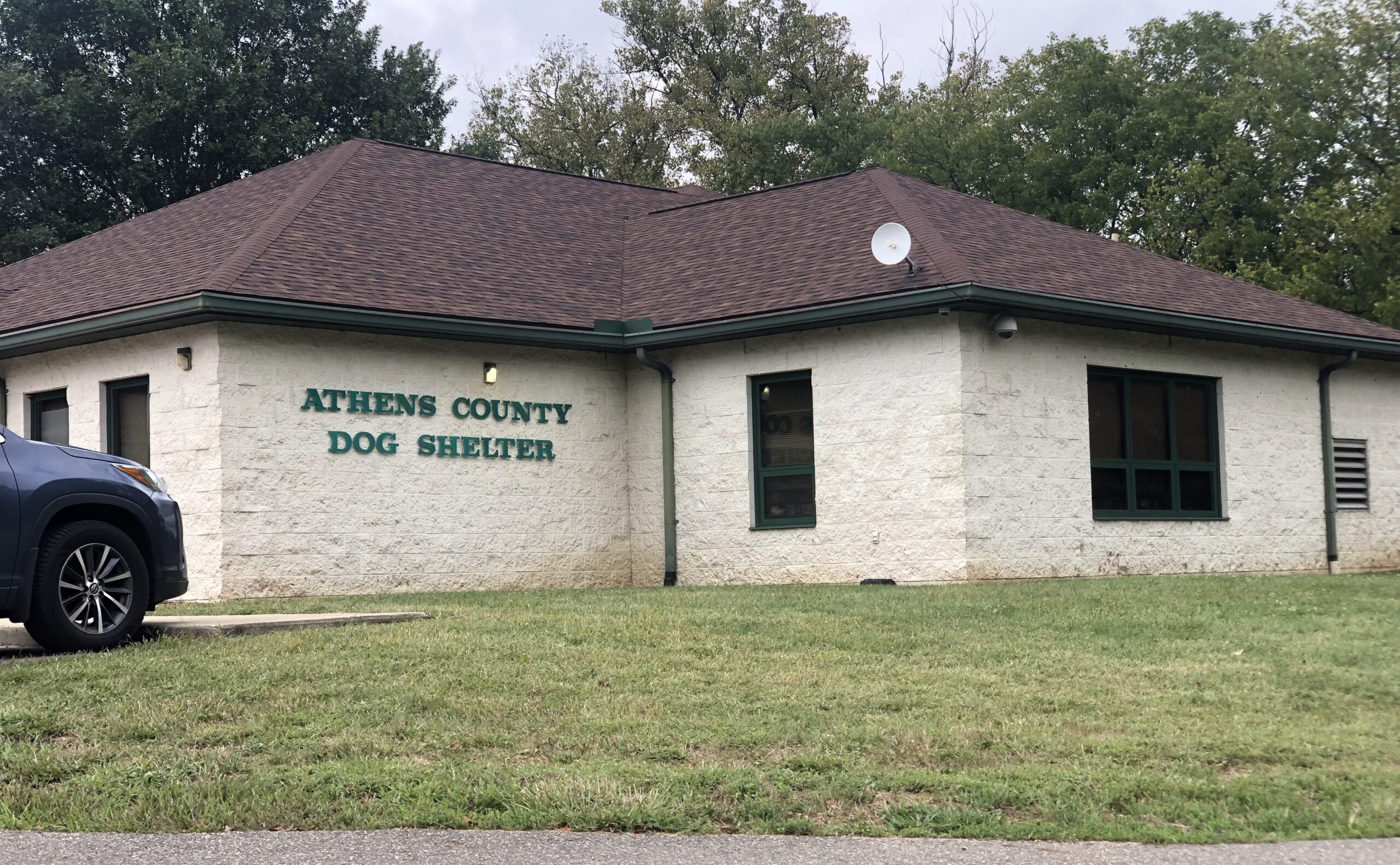
ATHENS COUNTY, Ohio — Avery’s Law, a recently passed piece of legislation, has changed how Ohio law handles dogs classified as vicious, dangerous or nuisances.
Avery’s Law expands the powers of the dog warden and court system regarding dogs that attack or injure another animal or person. The law also closes several loopholes and creates new requirements for owners of dogs deemed vicious and dangerous.
“Before we did not have any legal power or authority to remove an animal while we were attempting to designate it as dangerous or vicious,” Ryan Gillette, the Athens County Dog Warden and a sheriff’s lieutenant, told the Independent. “This does give us the authority to do that now if we feel that there’s a public safety risk.”
One of the most important changes made by Avery’s Law is an expanded legal definition for what constitutes nuisance, dangerous and vicious dog behavior.
“Nuisance” behavior ranges from running free to chasing people and animals to attempted bites. The “dangerous” designation is defined by attacking other dogs and people while “vicious” behavior is defined by killing or maiming a person as well as repeated “dangerous” behaviors.
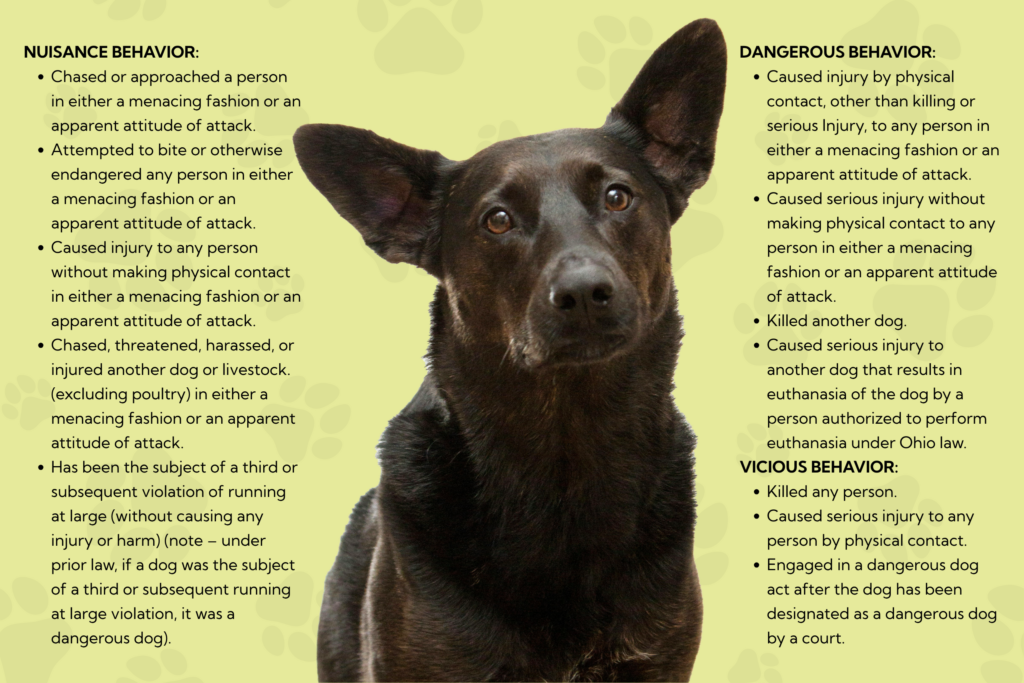
According to Gillette, Athens County only has three dogs designated as dangerous. The rest are considered nuisance, and there are no dogs deemed vicious in the county.
These designations are breed-blind and the dog’s behavior in an attack has to be unprovoked to be considered under the law, something that Gillette described as “pretty rare.”
“It’s all about the dog’s actions – whether it’s a golden retriever, a German shepherd, boxer, or rottweiler, it doesn’t matter what the dog is, it’s the act that the dog commits [that matters],” Gillette said.
One of the new requirements placed on owners of dogs cited as dangerous or vicious dogs is that they must secure a $100,000 liability insurance policy or face a fourth degree misdemeanor.
“That one in particular, I think, is going to be pretty challenging for the folks to try to pay,” Gillette said.
Another change made by Avery’s Law will allow Gillette to fine owners who do not properly fence dogs considered dangerous and vicious.
“The original dangerous or vicious provisions only stated a fenced yard with a locked gate,” Gillette said. “So you could have met the requirements by putting up a little white picket decorative fence that’s knee high, [put a] gate on it and have a German Shepard that’s 120 pounds inside that fence. It was legal. [Legislators] changed some language in there to show what the requirements are.”
The new law requires that a dog be euthanized if it “kills a person or seriously injures a person that results in substantial risk of death, permanent incapacity, serious permanent disfigurement, or acute pain of a duration that results in substantial suffering.”
This requirement closely lines up with the new definition of vicious dog actions, according to Gillette.
“The interpretation that I have based on that law is ultimately that if the dog is determined to be vicious, then it shall be euthanized, because it would have to have committed one of those things in order to be designated as vicious,” Gillette said.
Gillette said he can only investigate a dog attack criminally if there are victims willing to come forward. His office only receives a handful of bite reports a month, with some months having no reported bites at all, he said.
“There could be ten dog bites a month in Athens County that we don’t know about,” Gillette said. “These [bites] are only the ones that [were] reported to us and an investigation [was] done to determine whether or not there was a criminal element.”
Avery’s Law provides some leeway for dog shelters. If a shelter takes in a dog and doesn’t know about its dangerous or vicious status, then they will not be fined for not following dangerous or vicious dog regulations.
The law also requires that a dog’s dangerous or vicious status be disclosed to dog trainers and veterinarians.
Gillette told the Independent that he generally doesn’t write up dogs that are running free if they are well behaved and not causing trouble for others.
“So a dog that’s always out and loose, which is not something that we typically deal whole lot with here as far as nuisance [behavior], especially if they are a good dog and not a danger to the public,” Gillette said. “That was not something that we pushed unless a specific neighbor was having a constant problem, like a dog getting into their chicken coop all the time or something like that.”
Reactions to Avery’s Law
Friends of the Shelter Dogs, a non-profit volunteer group that supports the Athens County Dog Shelter, said the changes made by Avery’s Law causes them to rethink some of their dog adoption events and other operations.
Mindy Ehlers, a volunteer coordinator for Friends of the Shelter Dogs, told the Independent that the group may exercise greater caution and shift to smaller events to avoid stressing out the dogs, and to better prevent any chance of biting.
“We’re thinking about maybe doing just one or two dogs at a set location and advertising [that] people can come meet them,” Ehlers said.
When it comes to dogs classified as dangerous and vicious, the changes made by Avery’s Law won’t impact the Friends of the Shelter Dogs, as the volunteers don’t work with any dogs that have known behavioral issues.
“When dogs are reported to have had to have bitten somebody and caused injury, they have to be quarantined for ten days,” Ehlers said. “Often they would go to the shelter for a ten day quarantine. If a dog is being held at the shelter on a bite hold, volunteers would have no contact with that dog.”
Jennifer Clark, the director of legislative outreach for the American Kennel Club, told the Independent that their organization was pleased to see that the law is focused exclusively on the actions of dogs, and doesn’t consider breed as an issue.
“The AKC supports laws that establish a fair process by which specific dogs are identified as ‘dangerous’ based on stated, measurable actions; impose appropriate penalties on irresponsible owners; and establish a well-defined method for dealing with dogs proven to be dangerous,” Clark wrote in an email to the Independent.
“The definitions in this new law outline what actions constitute a nuisance, dangerous, and vicious dog – and all three designations are important in the hope that an owner may recognize problematic actions their dog may be taking and address them before a serious incident occurs,” Clark added.
Clark said that the American Kennel Club will continue to work with Ohio lawmakers to ensure “Ohio has strong, clear, enforceable laws that are in the best interest of dogs and the community.”
