
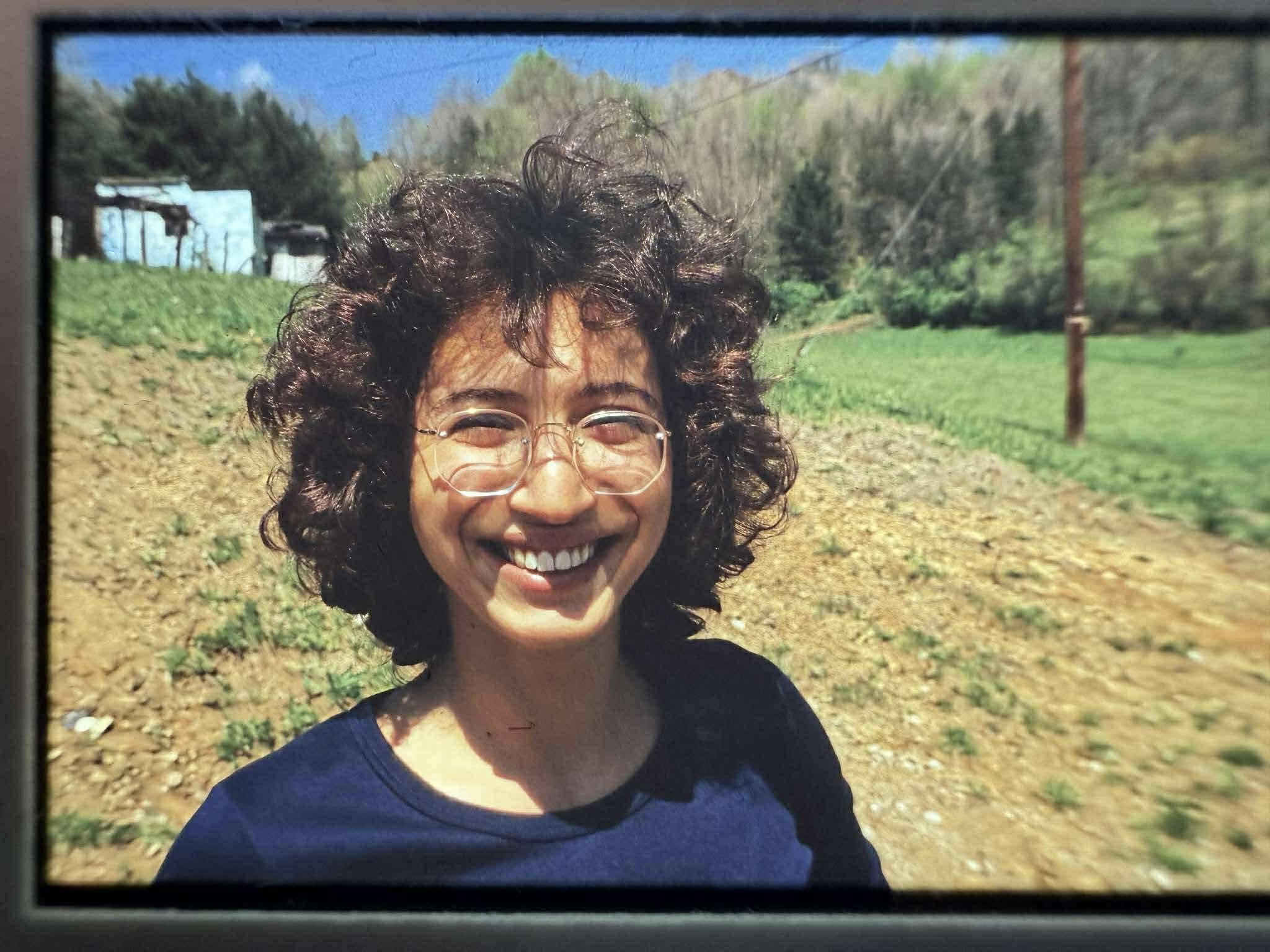
ATHENS, Ohio – Appalachian hills and their history inspire Athens writer Bonnie Proudfoot’s material. The author and poet employs themes, scenes and details with specificity that Southeast Ohioans may recognize.
Conversation with Proudfoot immediately evokes a specific area, too, though it’s not her intention. The 71-year-old has a distinct accent — unshakeable, she laughs — that harkens to her childhood in Queens, New York.
“You can’t lose that,” she told the Independent.
For 30 years she’s been a writer. Since 1979, Appalachia has been Proudfoot’s home. Her new book of poetry, “Incomer,” was released this April by Shadelandhouse Modern Press and in its works Proudfoot unearths the challenges of finding belonging.
The poems consider the full vibrancy of what she considers “my adopted place,” she said.
Proudfoot moved to Athens County in 1996, and has since has worked, raised her children, and built a network of writer peers and friends here. She became a glass artist and published a novel that brings to life a West Virginia logging town.
Southeast Ohio is her home. “I fell in love with the region,” Proudfoot said.
Her latest collection of published poems set aglow the area’s intricacies like lightning bugs do for the local landscape on humid summer nights. But still, by definition, she remains an outsider.
“Take a kid who grew up in a city, put her / next to a pond with a pole, and soon enough, / she will catch a fish and not know what to do / with it.”
Path to poetry
When Proudfoot left the New York and headed south, she took poetry workshops while studying art, English and creative writing — “I could never decide between art and English,” she said — at what is now Fairmont State University in West Virginia. She received teaching certification before going on to study creative writing at West Virginia University, where she received a master’s degree, and at Virginia’s Hollins College, where she earned a second master’s.
When she arrived in Athens in the mid-’90s, she completed coursework to get a Ph.D. in creative writing from Ohio University, but didn’t graduate.
“Being broke and having children, I just hopped over to a job at Hocking College,” she told the Independent.
There, she developed her close-knit artistic community. Nearly every Tuesday for 25 years, about 10 writers (including Proudfoot) have traded drafts, slipped poems under office doors, shared work that inspired them, and met regularly to ask each other what a poem still needs.
“Their work is nurturing to me,” Proudfoot said. “It means something to me to have peers.”
Her newest collection turns fully toward Southeast Ohio and Appalachia. About three-quarters of the book’s poems were written within the last five years, she said.
Ohio University Press imprint Swallow Press published her debut novel, “Goshen Road,” in January 2020. Although the COVID-19 pandemic upended the novel’s release events, it earned glowing reviews and was longlisted for the prestigious PEN/Hemingway Award for Best Debut Novel.
But finishing the novel — which she had started in graduate school — followed by the COVID-19 lockdowns and years of social change left Proudfoot “psychically” ready to return to poetry. She joined online writing groups and a poetry workshop led by Cincinnati poet laureate Pauletta Hansel and returned to the New York childhood she had not written about elsewhere. The result was a chapbook, “Household Gods,” that was released by Sheila-Na-Gig Editions in 2022.
Proudfoot said poetry helps her arrive at truths she could not otherwise articulate.
“When you write fiction, you’re not talking about your own life so much,” Proudfoot said. “It’s a little terrifying to use ‘I’ and be that exposed.”
An incomer’s perspective
Proudfoot’s poems march through thickets. She is an artist determined to discover on the page her purpose and place. Her work approaches regional truths often stereotyped as tatters, from a transplant’s perspective. And the politics of having chosen as home a region exploited by outsiders informs her writing.
When she landed in West Virginia in 1979, Proudfoot was a starry-eyed homesteader-to-be who saw bounty and opportunity in the hills and wanted to use what the land seemed to offer up: open space, rolling hills, the dream of a garden.
“I came here because I saw potential,” Proudfoot said. “Potential to look. I looked at the land as almost a canvas that I could paint in a way that I wanted.”
Her perspective evolved as she learned about the persistent economic disenfranchisement Appalachians face as a result of the demise of logging and coal mining industries, as well the impact of environmental plunder through destructive practices like fracking, mountaintop removal, and strip mining.
“You think, ‘Oh, I could build a barn here,’” Proudfoot said. “‘And my horse is going to drink this beautiful water from a little spring.’ But there’s a real place that you’re not seeing.”
If left uneducated, incomers can fail to see the “castings off of what people before you did to the land,” she said.
The question at the center of her work became, Proudfoot said, “What can we hear?”
That tension — seeing Appalachia as a refuge and understanding the violence done to it — animates Proudfoot’s poetry. Her poems dwell in the body and in the land at once: through weather, plants, scars, hunger, family. Those themes are inseparable from the place she has chosen. Her poems reckon with what it means to love a landscape while knowing one arrived late to its history, and how home is a concept internal and external.
“I write poetry because it teaches me,” she said.
Proudfoot wants readers outside Appalachia — including family members still living on the East Coast — to understand why she loves living here, and to see beyond the stereotypes long attached to the region. Her art preserves experience and memory through language. Her poems use dialogue, dates, and bring the reader to the heart of the human experience.
No matter how long she lives here, Proudfoot said, she will “never really have that same deep, deep, deep connection” as those whose familial lines root in the hills like veins of coal under its brutalized ground. In her work, Proudfoot examines a past left behind and the present, wondering if she “grafted to something native.”
“I had a grandmother who went to the butcher store and the butcher gave her the meat,” Proudfoot said. “Other people had grandmothers who went out and butchered the chicken.”
“I feel like I have to be as honest as I possibly can be,” she said.
An artist’s community impact
Athens poet laureate Becca Lachman told the Independent that she sees Proudfoot’s work and legacy as poetic mentorship that “reminds us of the brokenness and beauty around us — and our role in all of it.”
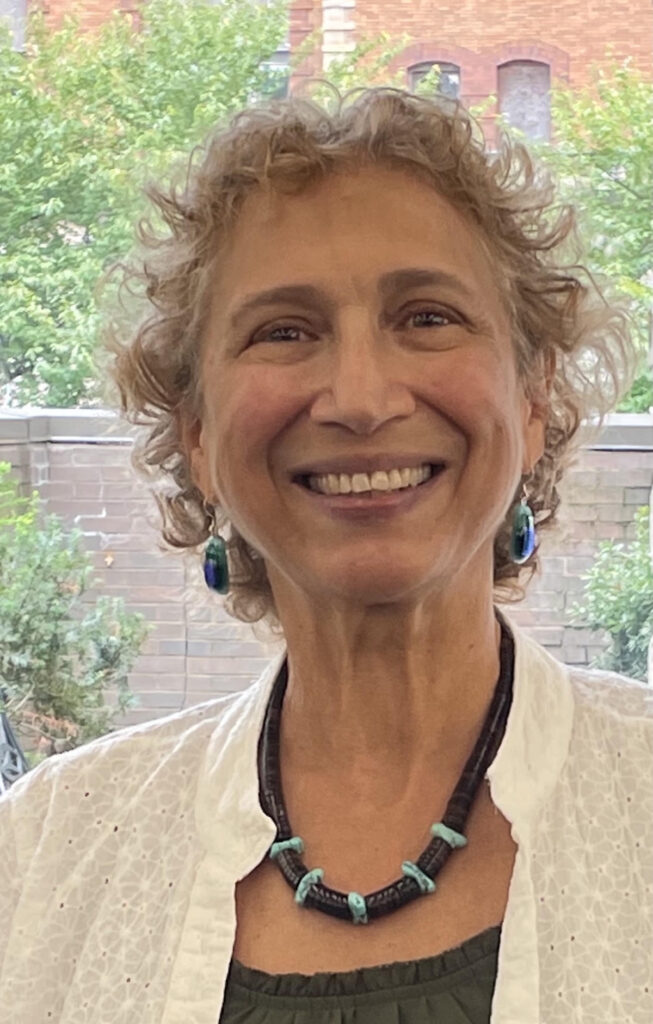
“She is a rock in our creative Athens County family,” Lachman said.
The two writers first met at a 2013 creative arts salon. Proudfoot’s commitment to artistry is apparent through her support of other community artists, Lachman said, noting Proudfoot’s new book and many publications as evidence that the author prioritizes writing.
“For the many years I’ve known her, I’ve witnessed what a champion Bonnie is for other writers and artists — not surprising maybe, since much of her professional life was spent nurturing young writers as an educator,” Lachman said.
“She just genuinely celebrates others’ successes.”
Community is so central to Proudfoot’s work that she did not want the upcoming May 9 book launch for “Incomer” to focus solely on herself. The event at Passion Works Studio begins at 3 p.m. and will feature live music and readings from fellow poets from the Athens writing community: Kate Fox, Jane Ann Devol Fuller, Jean Mikhail, and Wendy McVicker.
“Really, it’s important to me, because it’s not just my book,” Proudfoot said. “It’s kind of like a celebration of everybody.”
Editor’s note: This story was updated at 12:35 p.m. Sunday, April 26, 2026, to correct a factual error regarding Bonnie Proudfoot’s age. She is 71 years old, not 79.
