
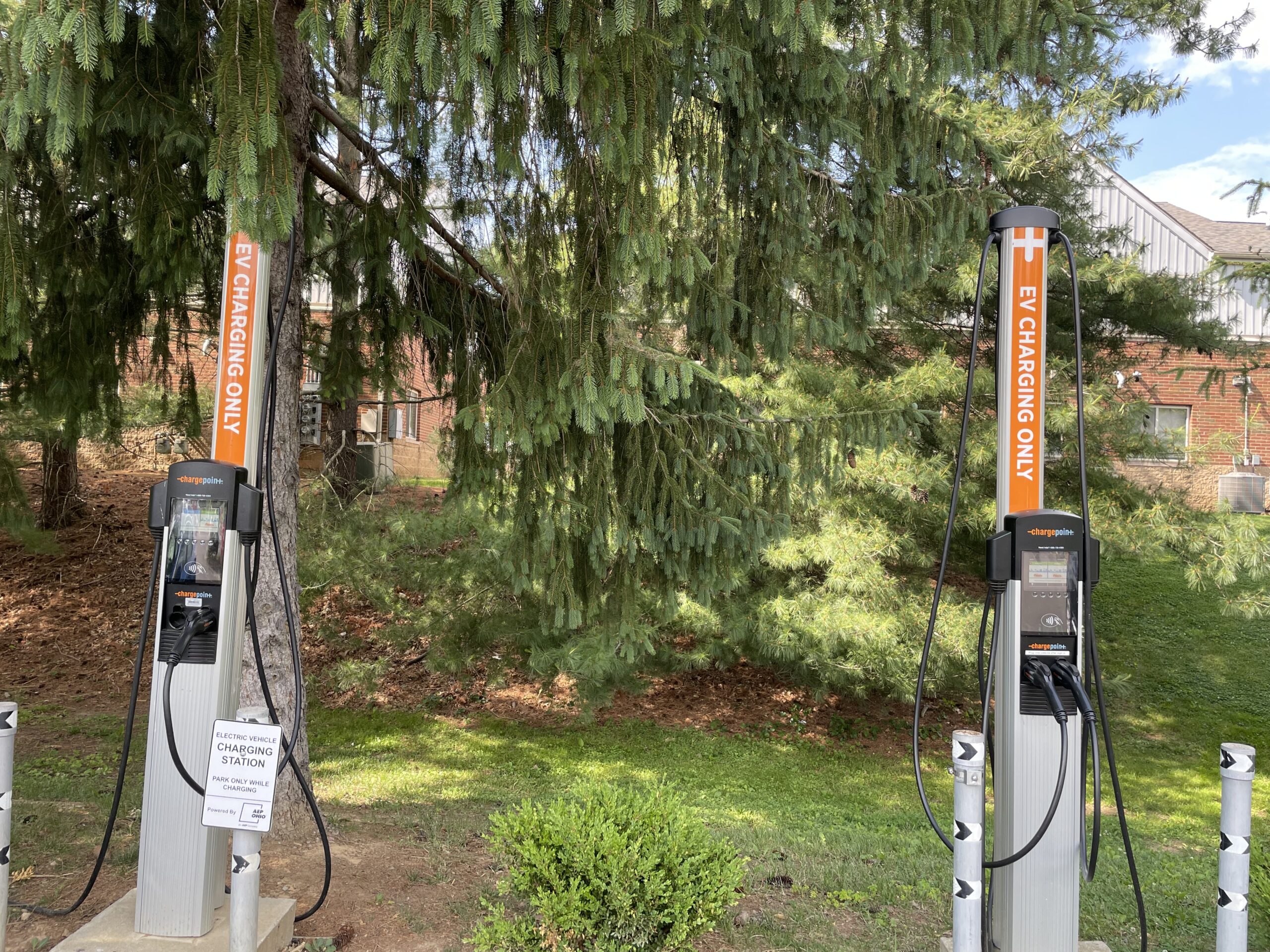
ATHENS COUNTY, Ohio — As electric vehicle infrastructure is built up across the country and county, local fire departments are playing catch-up when it comes to combating fires involving the large lithium ion batteries that power EVs.
“[EVs are] still a newer technology as far as the overall fire service is concerned,” said Robert Rymer, the chief of the Athens Fire Department.
EV fires are currently rare in the county; Athens has an incident involving an EV maybe once a year, according to Rymer. However, that may change in the future as EV purchases become more common and groups work to build charging stations in the county.
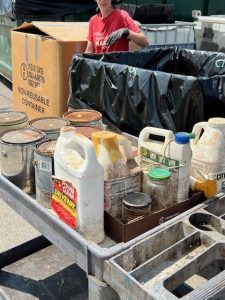
Lithium ion batteries aren’t a new technology. They’ve been used for decades to power everything from phones to laptops to children’s toys. The Independent previously reported that improperly disposed of lithium ion batteries can cause fires in garbage and recycling trucks.
However, the lithium ion batteries in electric vehicles are significantly larger than the ones used in other devices. Local fire departments told the Independent that they plan to prioritize preventing battery fires when responding to calls about EVs.
“When we have lithium ion batteries that are involved in a fire, our first priority is to make sure that that battery does not get involved in the fire to [the point] where the battery itself is damaged,” Harry Barber, the chief of the Nelsonville Fire Department, said.
However, that might be easier said than done. Nick Zamiska, an instructor with Bad Day Training who recently taught a class on EVs to local fire departments, told the Independent that the way EVs are constructed poses unique challenges for firefighters.
EVs are full of high voltage wiring that firefighters must avoid when cutting up a car to rescue passengers, according to Zamiska. As part of his class, Zamiska brought in a Tesla and showed local firefighters the best way to cut up a car.
That instruction was important, Rymer said, because of the structural differences between EVs and standard cars.
“An electric vehicle, like a Tesla — we may not be able to cut that car up the same way we do a normal car, because of where all the electrical wires run,” Rymer said. “On Teslas, they put little symbols of fire hats on there, so we know where we can get to to shut that electric off, or where it’s safe to cut and where it’s not safe to cut.”
Zamiska noted that it can be especially hard to access the battery pack, which is often water-tight and made of highly durable material.
“So if you’re trying to get fire operations to cool that battery, one challenge is even gaining access to it,” Zamiska said. “They’re pretty well protected, unless that car is very compromised because of an accident or fire.”
If the battery is damaged in an accident or subsequent fire, it can trigger what is known as thermal runaway or “runaway fires.” There are two important factors at play in thermal runaway.
Firstly, when the battery is damaged, the energy stored in it is rapidly converted to heat. Batteries with a higher charge may give off more heat, triggering a more severe thermal runaway, according to a study published by the Journal of the Electrochemical Society.
Secondly, lithium ion batteries create their own fuel. When the metal oxides used in lithium ion battery construction are heated, they break down and release oxygen, causing fires to reignite or worsen, according to a study published by researchers from the University of Illinois and Argonne National Laboratory.
Let it burn
Due to the chemical reactions involved, lithium ion battery fires are incredibly difficult to put out. An EV fire in Bedford, New Hampshire, took 6,000 gallons of water to extinguish. In some cases, it can take up to 40,000 gallons of water to put out an EV fire.
A typical car fire generally needs between 500 and 750 gallons of water to put out, according to Zamiska.
Additionally, any water used to put out an EV fire becomes contaminated from the chemicals contained in the lithium ion batteries. A study published in Environmental Science and Technology reported that compared to traditional vehicle fires, the water used to put out an EV fire contains significantly higher concentrations of nickel, cobalt, lithium, manganese, and fluoride.
“It takes a lot of water and a lot of resources in order to [put out an EV fire], because now you’ve got to deal with 30,000 gallons of water runoff getting to the storm drains,” Rymer said.
Given the challenges of both putting the fire out and dealing with the environmental cleanup, both the Athens and Nelsonville fire departments told the Independent that they plan to let EV fires burn themselves out unless they could put buildings or other cars at risk of igniting. In those cases, the best option is to try to move the EV someplace where it can burn.
“So now they’re teaching us to get [the fire] away from exposures, if it’s in a garage, try and pull it out of the garage and let the thing burn,” Rymer said. “It’s safer for the environment.”
The difficulties associated with EV fires led a Chauncey Village Council member to discourage a local EV charging station at this month’s council meeting.

When lithium ion batteries stop holding a charge or otherwise stop working, take them to the Lowes in Athens, located at 983 E. State St.
