ATHENS, Ohio — An Ohio University task force has recommended that the university expand transportation services, change hiring practices, explore new housing options and implement new culinary practices to reduce food insecurity among international graduate students.
The task force was formed in February this year in response to a survey conducted by Ohio University’s Sustainable Living Hub that found that 65% of international graduate students respondents would be considered food insecure using the U.S. Department of Agriculture’s food insecurity classifications.
The survey also found that roughly 50% of OU’s international students have had their studies and well-being affected by food insecurity.
“Students said things like, ‘I can’t concentrate in class if I’m hungry. I can’t focus on my work if I’m worried about when I’m going to get my next meal,’” Sustainable Living Hub Coordinator Kyle Butler told the Independent in January. Butler authored the survey.
Food access
Food access in Athens is an issue that goes beyond Ohio University students.
According to a report published by the Southeast Ohio Foodbank, roughly 18% of Athens County residents are food insecure. This exceeds the statewide food insecurity level of 15.3% and the national food insecurity rate of 13.7%.
Butler told the Independent that multiple factors contribute to international students’ feeling food insecure, including feelings of isolation, low pay, language barriers, a lack of familiar foods, and more.
“Are you going to be able to get the staple foods that you know how to prepare, and that you know you know can meet your nutritional needs?” Butler said. “Or are you going to end up relying on low-quality convenience food or packaged foods?”
The task force suggested several short- and long-term goals for the university to reduce food insecurity. Some of those have already been implemented, including:
- A catering food rescue program for students to pick up leftover food from university-catered events.
- Installing refrigerated food lockers in Alden Library for the Cats’ Cupboard food pantry. (Cats’ Cupboard also shares recipes with members, to support students preparing unfamiliar foods, according to OU interim vice president for Student Affairs Kathy Fahl.)
Other suggestions included:
- Partnering with local and regional international food markets. This could include a donation program as well as a discount for Ohio University students.
- Creating a campus farmers market to bring fresh produce to where students are. The task force highlighted the Ohio University Student Farm, Community Food Initiatives, and local farmers as potential partners.
- Giving international students “Market Bucks” to use at the Athens Farmers Market during their first week in the country. This would immediately connect students with a source of fresh produce as soon as they arrive.
- Cooking demonstrations to show international students how to turn local foods into appealing dishes they want to eat. It would also help students learn how to cook with different types of food, such as canned goods.
- Establishing a meal-swipe donation program for international students, similar to an existing program open to all students. University officials would have to grant the donated swipes to international students in distress.
Haley Duschinski, the director of the School of International Studies and Languages, told the Independent that this year’s International Student Orientation included sessions with representatives from local food pantries and free meal programs. International Student Orientation also took new students on a trip to the Athens Farmers Market on Aug. 15.
Employment
Another problem area flagged by the survey is the lack of job opportunities available to international grad students. U.S. law restricts international students on F-1 visas to working for their university; they may work off campus only if they are enrolled in a job training program.
“The number one reason [for food insecurity] was money,” Butler said. “72% of the students who were food insecure reported finances as being the main driver.”
Ohio University’s International Student Union told the Independent earlier this year that international students who stay in Athens during the summer have “little or no access to on-campus jobs.”
The task force’s report recommended that the university communicate with international students about summer employment options, offer additional training for hiring managers and administrators, raise money for summer internships focused on the community, and more.
According to Duschinski, the Center for International Studies has already begun sharing employment opportunities in a weekly newsletter that goes out to students.
“We’ve been trying to identify jobs that would be good positions and sending them out through the newsletter,” Duschinski said.
Housing
While not specifically identified as a problem in the Sustainable Living Hub survey, housing and affordability also contribute to has been an ongoing issue for years. Graduate students rely on stipends ranging from $15,000 a year to $26,000 a year, a large portion of which can go toward rent.
“A lot of people mention that by the time they pay rent, they don’t have enough left over to really feed themselves for the full month,” Butler said. “But also, [international students] can’t necessarily rent a place to live from overseas.”
The task force report suggested that the university create a resource page for international students listing local rentals, expand training on leasing and mediation, test out graduate student housing and create partnerships between OU, the City of Athens, and local landlords.
Fahl said the university has already implemented an early arrival housing program to give international students a place to stay while they look for a rental. Fahl told the Independent that 25 students took part in the program this year.
“The university was in a position this year with some excess housing stock to be able to offer support to students to stay in housing in an early arrival capacity,” Fahl said.
Transportation
Athens’ public bus services do not operate on the weekend, making it difficult for anyone without a car to get around then. Butler told the Independent that international graduate students reported being busy during the week with classes and assignments and often struggled to get to the grocery store on weekdays.
“There are some difficult logistics there,” Butler said.
The International Student Union told the Independent that bus services operating on the weekend would “greatly impact students.”
The task force suggested that the university work with Hocking Athens Perry Community Action, also known as HAPCAP, to expand weekly busing options available to students. The report also recommended that OU work with GoBus to create a more frequent bus route to Columbus.
In April, Athens Mayor Steve Patterson promised to bring back Saturday bus services if voters passed an income tax increase on the May ballot. Saturday bus services would be restored in 2028 after the tax increase went into effect.
That tax increase ultimately passed by 10 votes.

Food insecurity resources
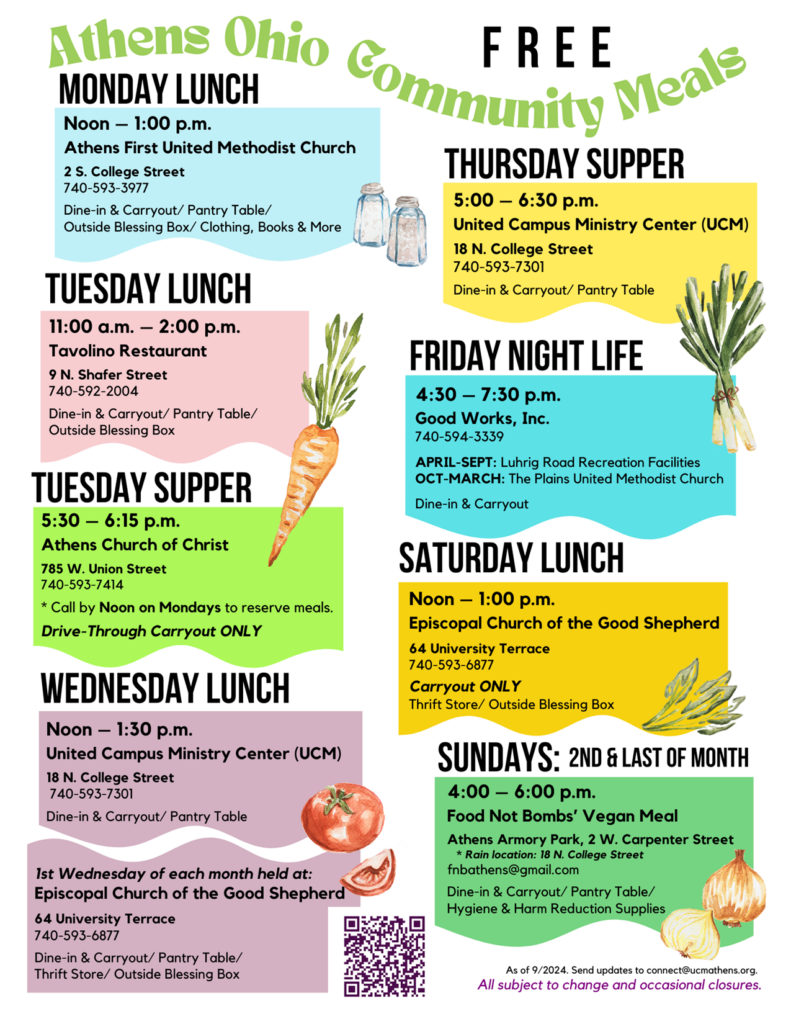
If you or a loved one struggles with food insecurity in Athens, consider the following resources: