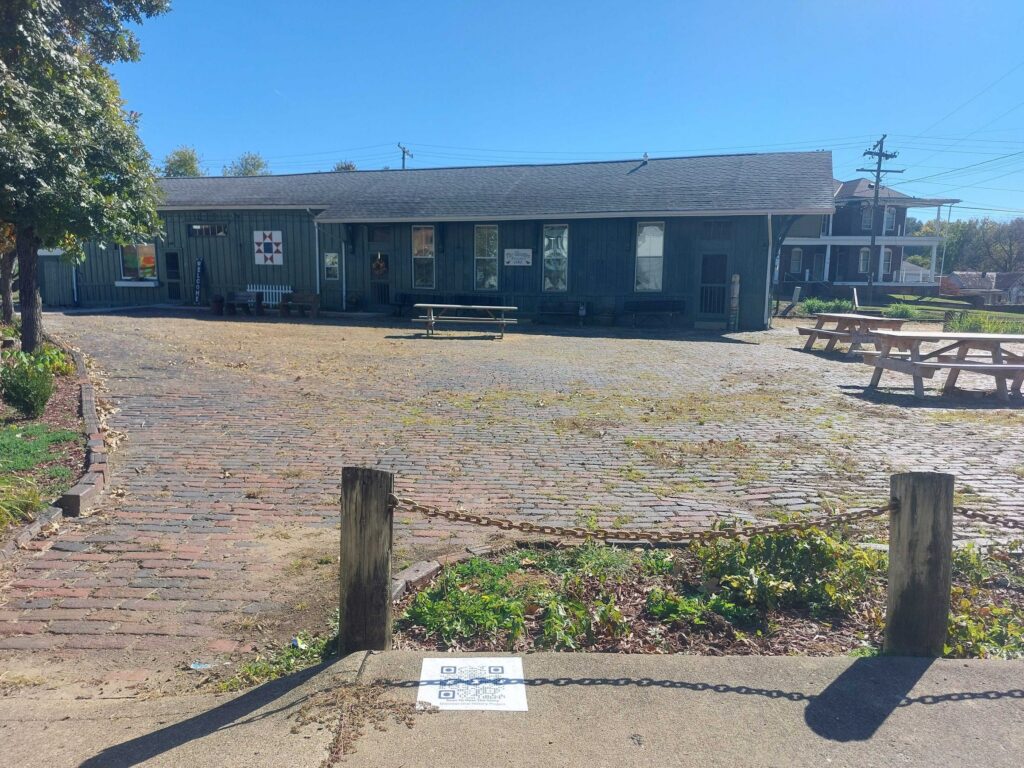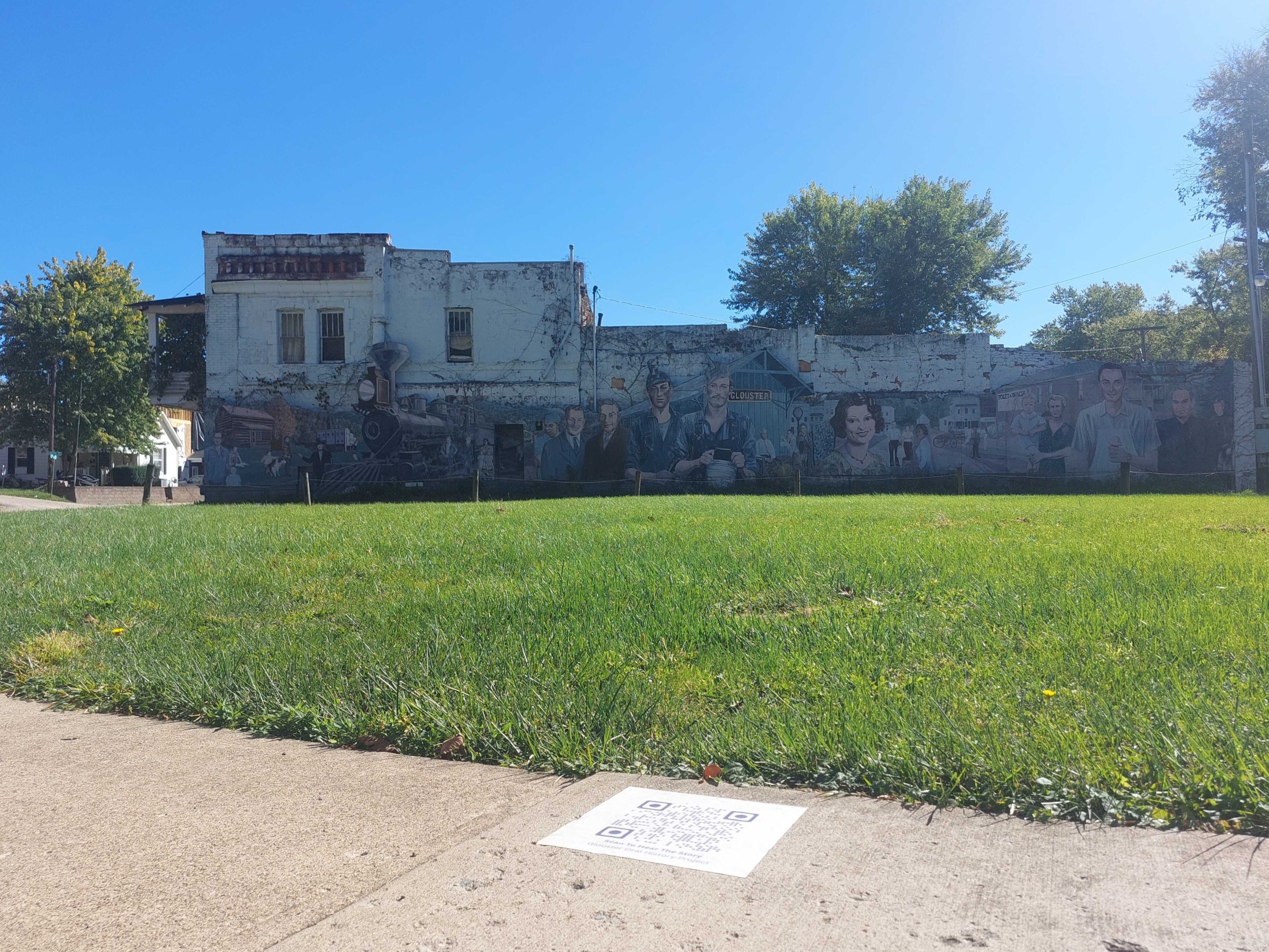
GLOUSTER, Ohio — Everyday sights and corners of Glouster are now adorned with QR codes, ready to be scanned to share history.
The Glouster Oral History Project’s first six QR code stops are a project of Maggi Giffords, a lifelong Glouster resident who heads the village’s Genealogy and History Group. Her mission is to share Glouster history with younger residents and visitors, as well as preserve Glouster’s coal-mining legacy.
The QR codes were scanned over 81 times in September, she said.
Prior to the codes, Gifford, a self-identified history buff, led walking tours of the village dressed-up as Hugh Gormley, the former mayor of Glouster, and Hannah Allen, an original settler to the area.
To grow participation in the village tours, Gifford came up with the idea for a self-paced tour using QR codes, with each code placed at a notable building in Glouster and providing historical information, stories and older photos.
For Gifford, the QR code trail captures Glouster’s rich history.
“This is a way in my opinion, not only to share our history, but to bring people to town and let them see what things were like and what things could be like,” Gifford told the Independent.
Named Glouster in 1886, the village was previously called Sedalia, after the Sedalia Coal Mining Company. In the 1890s during the Hocking Valley coal boom, which took place from the 1880s to 1920s, the village had approximately 3,000 residents, according to an article by The Athens Messenger.
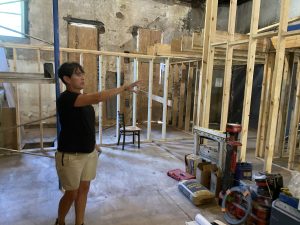
The QR code trail comes as Glouster undergoes a wave of notable renovations organized by the Glouster Revitalization Organization. This includes the stops on the Glouster History Trail, like the historic Knights of Pythias Building, at 106 High S., Gifford said.
Previously home to a fraternal organization and secret society, according to a Facebook post by Gifford, the building served as a “castle” for the Knights of Pythias, and as a lodge and dining space. The first floor of the building also housed Davis Cash store and later Atlas Bros Co.
After being purchased by Glouster Revitalization Organization in 2021 and renovations underway, the building will soon be an “entrepreneurial incubation setting, a remote work center and community coworking space,” according to the Glouster Revitalization Organization.
Another stop on the QR code trail rail is at Sedalia Crossing on Woodrow Avenue, previously home to Wonder Bar, which closed in 2005.
The building was originally built in 1890, and then known as “Round Bar.” It became Wonder Bar in 1934, and was sold to Sam and Ellen Jones in the 1970s. (Ellen Jones’ father and uncle had opened it in 1934.) The building was demolished in 2019.
Although her project itself was self-funded, Gifford relied on other residents of the village to piece together the history of some of the most recognized buildings in Glouster, including Sam Jones, who also owns Sam’s Gym, another historical Glouster business; and his daughter, Kim Jones.
Sam’s Gym, at 69 High St., is an upcoming addition to the QR-code history trail. The QR code will share information about Sam’s Gym’s origins as the Glouster Athletic Club.
“Glouster was called ‘Magic City’ because when they began to mine coal, it sprang up so quickly,” Kim Jones said. “That was actually what they referred to it as for a while.”
Gifford also plans to include other former High Street including Charlie’s Confectionary, previously located by Palace Theater and located across from Wonder Bar, and the Kittle Farm Supply, which ran for 28 years before closing around 1980.
Other stops now on the trail include:
- The gas station, previously the old Stoecklin’s Meat Market Building, at 51 S. High St.
- The Glouster Depot, at 53 High St..
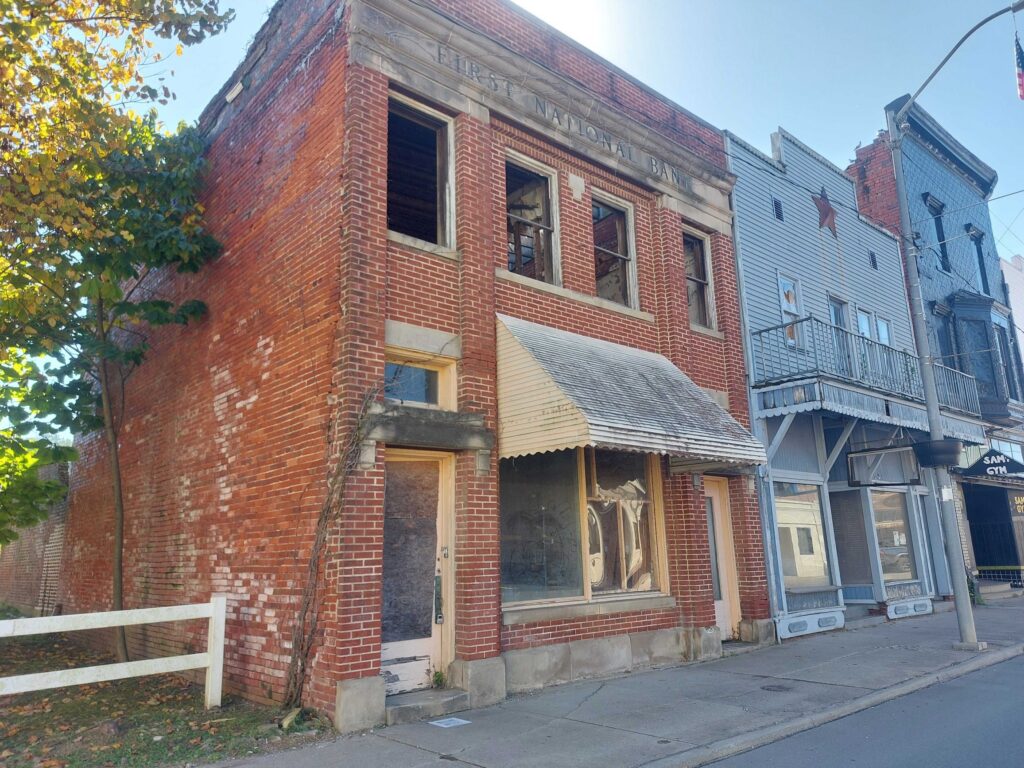
- The former First National Bank building, at 26 Toledo St.
- The Glouster mural, at 1 Main St.