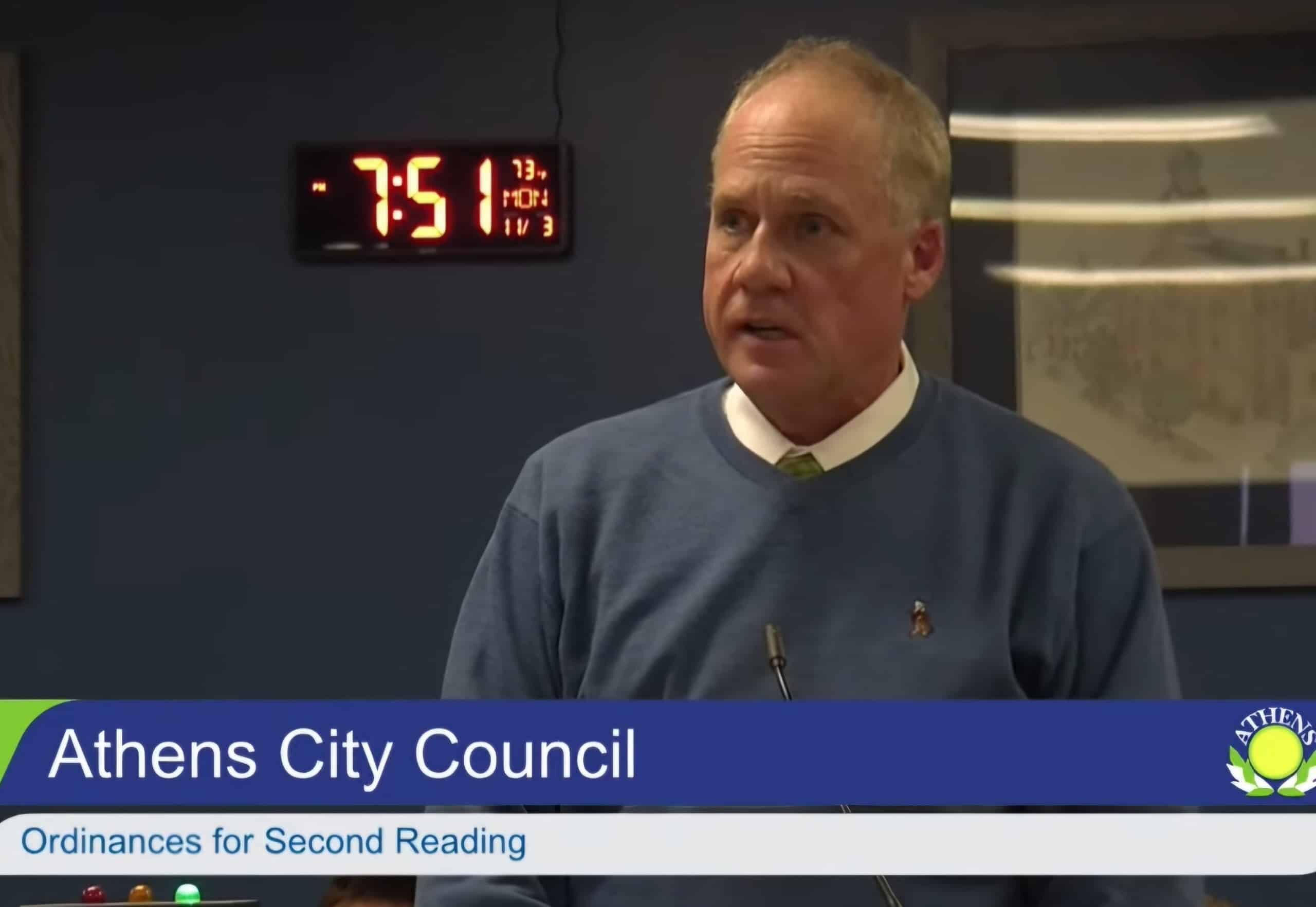

ATHENS, Ohio — Once again, numerous residents turned up at Athens City Council’s regular meeting Nov. 3 to speak their minds on a proposed ordinance that would allow installation of temporary housing shelters at The Gathering Place.
Ordinance 112-25 would allow a variance in zoning restrictions for The Gathering Place to set up three Conestoga Huts as part of a temporary housing pilot project. Each hut would house one individual in the Gathering Place’s parking lot at 1, 5 and 7 N. Congress St.
The ordinance had its first reading following a lengthy public hearing at council’s Oct. 20 meeting. Third reading for Ordinance 112-25 is scheduled for third and final reading during the regular council meeting Nov. 17.
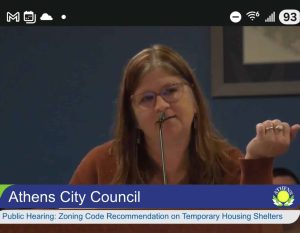
As at the Oct. 20 meeting, comments on the Conestoga Hut project produced passionate but civil discourse. Detractors focused on the project’s potential impact on Athens’ Uptown area and on Ohio University students living nearby; proponents highlighted the need for temporary housing and The Gathering Place’s 50 years of providing mental health peer support services in the same location.
Ohio University students who live near The Gathering Place have said at previous meetings that the idea of people living in temporary shelters there made them feel unsafe. That concern was voiced again Monday night, this time by Emerson Young, an OU student living on South Green.
Young said that he and his friends, who work at Uptown bars, feel “uneasy” around The Gathering Place late at night, and suggested that the organization seek another location for the huts.
Gathering Place employee Maddie Shiplet countered that she has been “called out by young men at their rental houses,” not unhoused people or her clients. In contrast, she said she felt safe working with clients at The Gathering Place and at the emergency warming center the city and Gathering Place opened last year.
The need for temporary housing is becoming more pressing as winter approaches, she said.
“This past winter I looked a homeless mother in the eyes and told her there was nothing we could do and she would have to sleep in her car tonight,” Shiplett said. “I helped a woman living on the street wash and put gloves on her hands because they were so stiff and frost-nipped she couldn’t feel them any more.”
Kent Lankas, a senior resident at Mike’s Bridge House, a sober living facility for men that is connected to the Gathering Place, addressed comments given during the meeting. Lankas, from Athens, said he has been a student, homeowner, and moreover experienced living unsheltered and struggled with the stigma associated with it.
“That one thing of having shelter, having security, made the entire world of difference,” Lankas said.
Project opponent Andy Vogt said the quality of or need for The Gathering Place isn’t the issue — it’s the impact the huts might have on OU students.
Ohio University’s “rising tide of enrollment lifts every vessel in this community,” he said. On the other hand, he asked, “Where’s the pathway to prosperity” for those who would be using the shelters?
“There isn’t a lot of jobs in this community,” he said.
Jack Stauffer, an outspoken opponent of the proposal, said the huts would “damage” Athens’ image and “create a homeless encampment in our downtown area.”
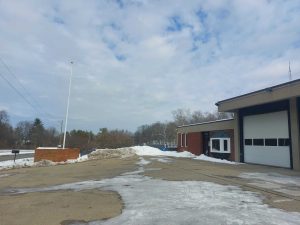
Vogt suggested erecting the huts in “the space underneath the abandoned fire department on Columbus Road.”
Vogt’s and Stauffer’s comments were criticized by longtime West Side resident Tara Griffitts.
“The conversation to move unhoused persons underground is offensive and egregious,” she said. “We are past the time when we move people that we don’t want in our society underground or in a closet.”

She characterized Stauffer’s comments as “gross exaggeration” and “fearmongering.”
Athens resident Susan McNish said she and Jeff Lyons help to build the huts, and said the shelters would make huge differences in people’s lives.
“People bring up the aesthetics of the city — I can say personally, three safe, cozy, secure micro-shelters is nothing to the piles of vomit, urine and trash all over the city every morning,” Lankas said. “A person in recovery … they become a better person than they were before their issues began and that is something we need to allow all of us — we need to have that opportunity.”
Gabe Spiezio of Athens did not say how he feels about the huts, but commented on the dialogue that’s been occurring at public meetings regarding the project. He said he felt that the university students who’ve voiced opposition to the project have been ostracized and belittled.
“Athens prides itself on compassion, inclusion and empathy,” Spiezio said. “Let’s make sure that extends not just to those that agree with us but to everyone who calls this place home.”
Also Monday night, council held a public hearing for a separate but similar, more expansive recommendation to amend the city zoning code to permit temporary housing shelters as a conditionally permitted use in R-3 and B-3 zones. Six people spoke during the public hearing, mostly centering their comments specifically on the Conestoga Huts.
The council adopted the following ordinances on third reading:
- Ordinance 0-100-25 to enter into a pre-annexation agreement with the Athens County commissioners to annex Athens County Children Services, at 18 Stonybrook Drive, within approximately one year. In a related ordinance the council also adopted, the city will advertise, accept bids and enter into a contract to build a new, larger water serving children services along Jacobs Street, from Graham Drive to Stonybrook Drive. The council amended the ordinance before final passage, as the cost estimate increased from $380,000 to $420,000, Service-Safety Director Andy Stone said.
- Ordinance 0-103-25 that amends city code and establishes an unoccupied and vacant property registration system for residential and commercial buildings. The new system addresses fees, penalties for non-compliance and exceptions. A related ordinance the council also adopted established annual fees for properties that remain vacant.
- Ordinance 0-106-25 that establishes a “Do Not Knock” registration system through the Northeast Ohio Public Energy Council. A related ordinance bans pending and soliciting to those registered for the “Do Not Knock” program. Residents enroll at blocktheknock.com.
- Ordinance 0-110-25 that establishes a cybersecurity policy for the city. Stone said the policy brings the city in compliance with state law and can be updated as needed.
2026 budget
Ordinances for first reading for the 2026 budget include Ordinance 120-25, the city’s appropriations budget for calendar year 2026.
Council members noted that the budget has changed since last week, when the Finance and Personnel Committee broached the topic of the city’s general fund of just over $20 million, which covers the city’s departments, such as police, fire and code.
Stone said the budget, which will continue to change as costs are adjusted between now and the end of the year, shows the city to be “about flat” from where the budget was last year, about 1.2%. “That’s something to be proud of,” he said.
The city’s police department budget — now just under $6 million — increased from the initial 2026 appropriations projection from last week, as overtime costs have come in, Stone said.
The fire budget, projected at $4.2 million, is expected to increase for the same reason — accounting for overtime. There are 15 firefighters and six lieutenants, Stone said, with a drop of three positions, once a grant expired.
Keri Johnson contributed to this reporting.
Athens City Council’s next regular meeting will be Monday, Nov. 10, at Athens City Hall, Council Chambers, third floor, 8 E. Washington St. Meetings are also streamed online. Regular sessions are on the first and third Mondays of the month; committee meetings are on the second and fourth Mondays.