
ATHENS, Ohio — The city of Athens will prepare a petition to intervene with written comments to the Ohio Power Siting Board, involving an artificial intelligence company’s plans to construct two gas power plants near Piketon in Pike County, in order to power a data center campus.
Athens resident Aaron Leatherwood prepared an extensive report to the council on the matter, stating the downwind effects of the two plants — proposed for 10 gigawatts of total power generation — could have serious health consequences for Athens residents who suffer from respiratory issues, such as asthma.
The council has until 11:59 p.m. Dec. 2 to prepare written concerns to the Ohio Power Siting Board, involving Case 26-0746-EL-1, a proposed 1.83-gigawatt gas plant, and Case 26-1070-EL-BGN for a much larger second plant.
Known as the future PORTS Energy Center, set to power the future PORTS-Pike Technology Campus, the site is situated on nearly 800 acres about 5 miles south of Piketon. Construction is slated to begin early next year, with phased operations beginning in the third quarter of 2028.
“SB Energy’s affiliate, Portsmouth Gas DevCo has proposed gas plants near Piketon to power a data center campus for OpenAI,” Leatherwood wrote Nov. 2. “NVIDIA has backed the campus with guarantees of up to $105 billion; the total project cost is in the range of $170–$185B [billion], of which less than 20% is power generation. NVIDIA has separately stated that they expect to install $200B of their hardware per generation (year) over the next 20 years.”
The size of the proposed PORTS Energy Center has caused concern from city officials, as explained by Leatherwood, along with downwind ramifications on local health.
“The resulting 10-gigawatt power plant is more than double the size of any existing gas-fired power plant in the US,” Leatherwood wrote. “The developer is attempting to rush the project application to power production in under two years. The project is not receiving the scrutiny that it needs to receive, particularly as regards downwind health.”
Athens Mayor Steve Patterson, who said he plans to meet with other local mayors and stakeholders to prepare a combined response, said one of his major objections will be the proposed use of simple gas turbines, rather than using catalytic gas generators with scrubbers to lower emissions.
Patterson also said the city needs to move quickly on installation of an air quality monitoring station. The city previously had one 2007–2012 on Blackburn Road, before the equipment was subject to decommissioning due to state resource re-allocations. He added it is critical to have air quality monitoring in place before the power plants go online in order to have a baseline for air quality impacts.
Patterson also noted that the two proposed plants totaling 10 gigawatts would be more than double the size of the next-largest gas-fired plant, known as West County Energy Center in Florida.
Athens has made serious progress in reducing its emissions, Patterson said, such as with its 2.1-megawatt East Side solar project that powers the Athens Community Center, half of the wastewater treatment plant and other amenities.
The PORTS plant would expel four types of pollutants that aggravate asthma, Leatherwood wrote. By convincing the regulators to require catalytic-type gas generators through a design change, the project’s environmental impacts on air quality can be mitigated substantially, according to Leatherwood.
Study mulls potential salary increases for elected officials
The topic of salaries for elected Athens officials was discussed Monday by the Committee of the Whole, including the mayor, auditor, law director, treasurer, council president and council members.
Council President Micah McCarey completed a comprehensive report on past practices for salary increases, titled Elected-Official Compensation in Athens.
Any proposed salary adjustments would not take effect until 2028. At issue is whether to remain with the standard practice of giving 2% salary increases annually, which McCarey’s report said became the standard practice in 2014.
McCarey noted that Ordinance 158-22 establishes the current salary schedule and said, “There is no automatic 2% increase after 2027 in the current ordinance.”
Under the current ordinance, Mayor Steve Patterson receives a 2026 salary, not including benefits, of around $97,000, which is set to increase next year to about $99,000. The city auditor earns around $84,000 this year, set to increase next year to around $86,000. The law director receives an identical salary.
The council president’s salary this year is around $11,700, which would increase to approximately $12,000, while the same numbers for council members, respectively, are $9,500 this year, and approximately $9,700 next year.
McCarey wrote that purchasing power, due to inflation and other factors, has meant salaries are not keeping up with living costs, an issue the council may want to address.
From 2015 through 2025, salary growth of elected officials was about 22%, with a consumer price index growth of around 36%, McCarey found. That translates to a real purchasing power change of about 10%, according to McCarey.
Making up for lost purchasing power could involve correcting — as one example — council salaries by raising them about 7% in 2028, a “full correction,” or raising them with a “half-gap” increase of about 4%.
McCarey emphasized that his salary analysis is for educational purposes and a reference point for discussion, “but does not recommend a particular salary, percentage increase, or compensation formula. It does not establish that any office is overpaid or underpaid and is not an evaluation of any current officeholder.”
Any salary increases acted on for elected officials would not necessarily pertain to current council members. Those who choose to do so will be running for re-election next year to retain their seats in 2028.
Patterson said he does not want his mayor’s position to be subject to a recent human resources policy stating that any department head must make at least 5% more in salary than their immediate subordinate.
Under that policy, Patterson would need to make at least 5% more than city Service-Safety Director Andy Stone, whose annual salary is about $112,000. Patterson said Stone, as well as firefighters who earn salaries with experience and overtime that may be higher than both of theirs, deserve the pay they receive from the work put in.
Council member Paul Isherwood, At Large, noted that council positions are part-time.
“I don’t think anyone up here is doing it for the paycheck,” Isherwood said. Overall, he added, the city “is in really good hands and is really well run.”
The city must be able to offer salaries that are competitive with other cities so as to attract good candidates for open positions, Isherwood said.
Beth Clodfelter, At Large, said it made her “cringe” to think of council members receiving 7% raises in 2028, after asking for, and having city voters approve a city income tax increase that will rise from 1.95% currently to 2.15% starting next year.
McCarey’s analysis also took a look at what elected city officials earn in other Ohio cities that may be comparable to Athens. As one example, while Patterson earns $97,144, the mayor of Chillicothe earns $60,548. Patterson said one reason is the Chillicothe mayor position is a 32-hours-per-week job.
The council will consider elected official salaries during a forthcoming regular council meeting, without naming the specific meeting date. Thomas said the issue does not need to be acted upon until early February 2027, but could be on the agenda sooner.
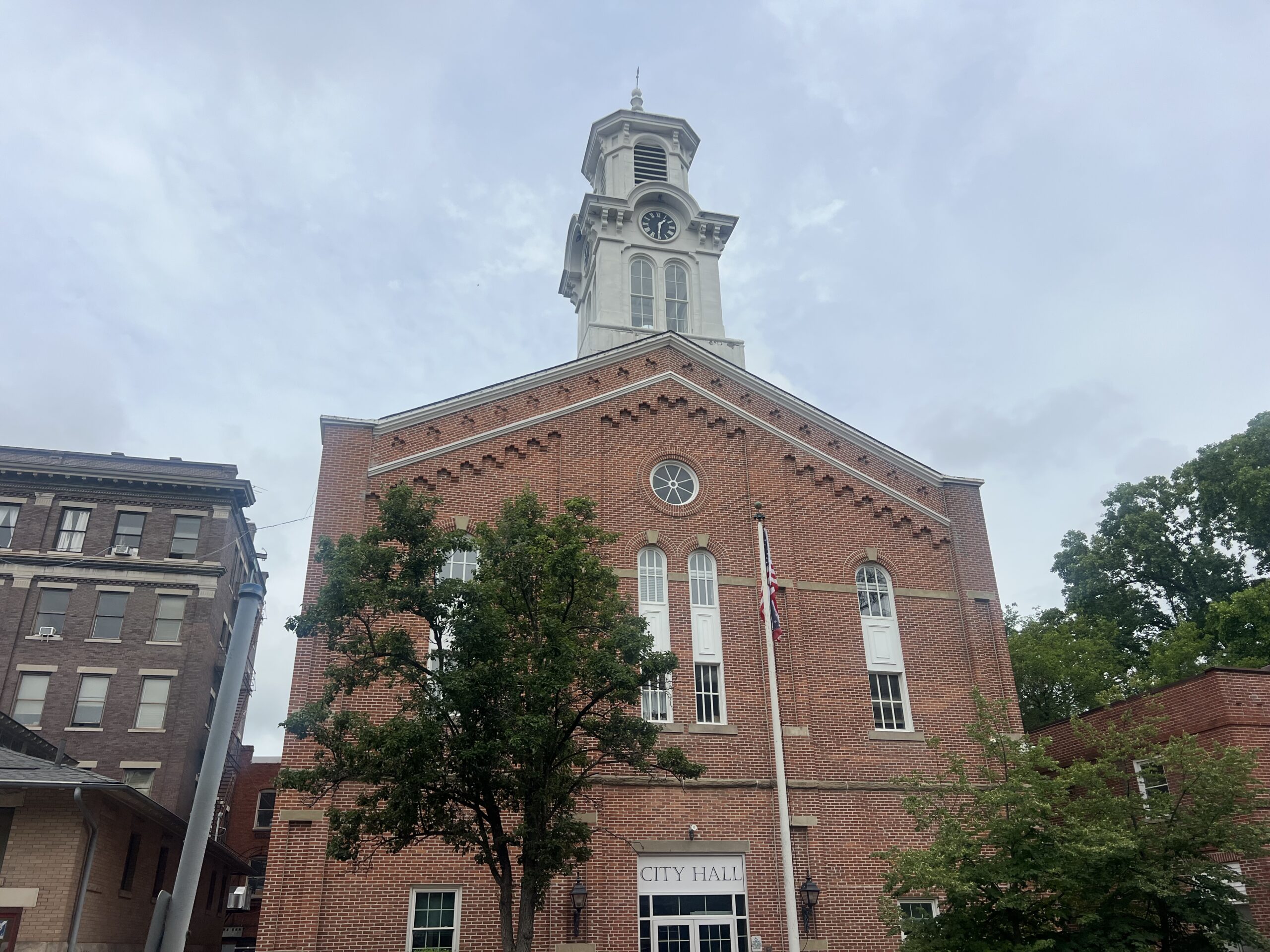
Athens City Council’s next meeting will be held 7 p.m. Monday, Nov. 16, at Athens City Hall, Council Chambers, third floor, 8 E. Washington St. Meetings are also streamed online.
Regular sessions are on the first and third Mondays of the month; committee meetings are on the second and fourth Mondays.
