AMESVILLE, Ohio — Over the past 45 years, Mark Cohen has repeatedly walked along the same creek on his property, a tributary of Federal Creek, finding arrowheads and at least 10 pieces of petrified wood.
“I have paid attention to just about everything I can, and so it’s just constantly training my senses to be tuned into things that are interesting and different,” Cohen said.
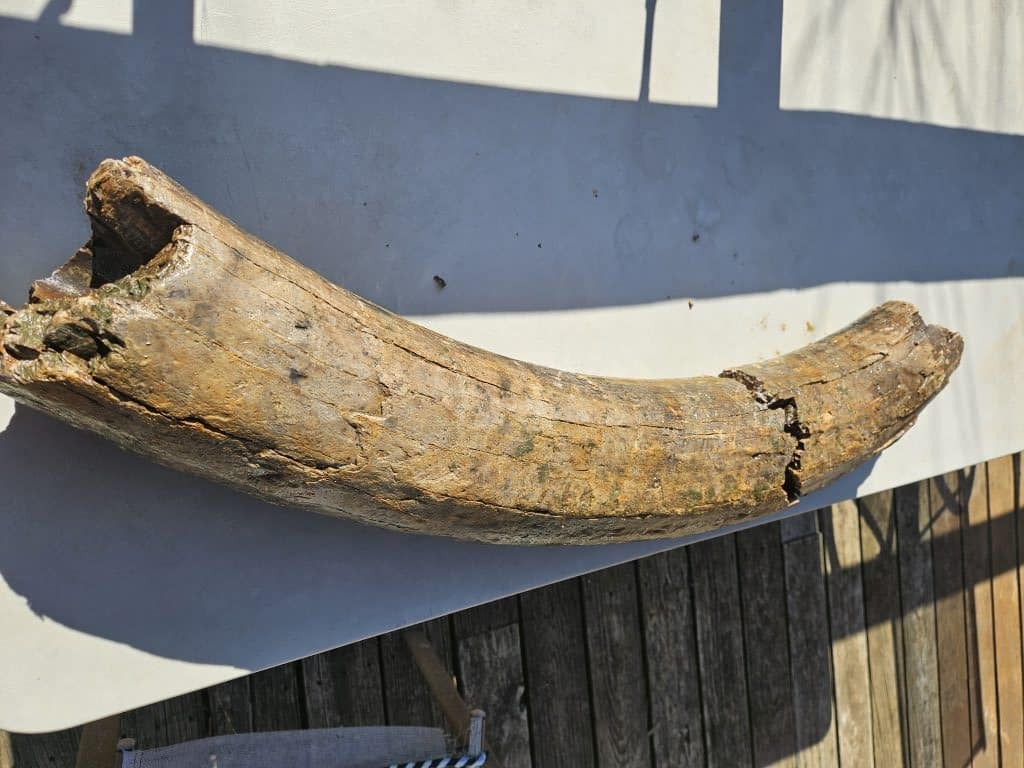
But in early March, he found something truly unusual: the tusk of a prehistoric animal submerged beneath the water.
“When I first saw the tusk, I thought it was a piece of petrified wood,” Cohen said.
Cohen said when he removed the tusk from the water he “could tell it was a bit brittle.”
“It kind of broke when I lifted it,” Cohen said. “I put it together on a table at my house, and I wrapped it up, but within about seven days, it completely disintegrated.”
He documented the find with photographs, which he sent to experts from multiple universities, including Ohio University, University of Cincinnati and University of Michigan.
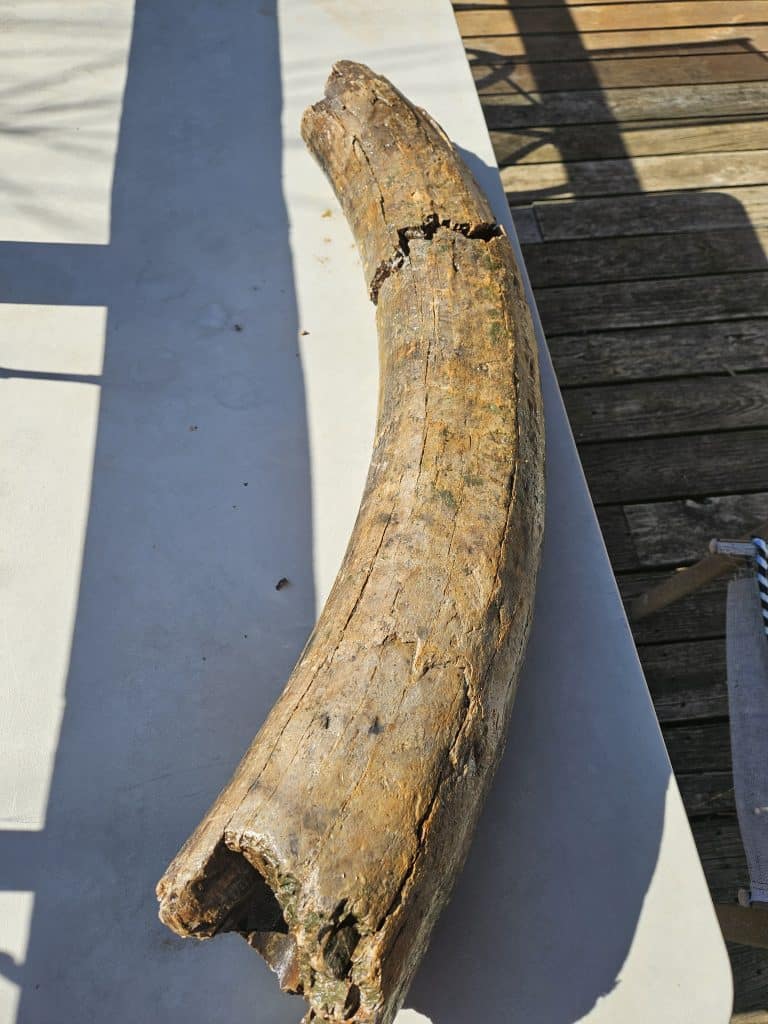

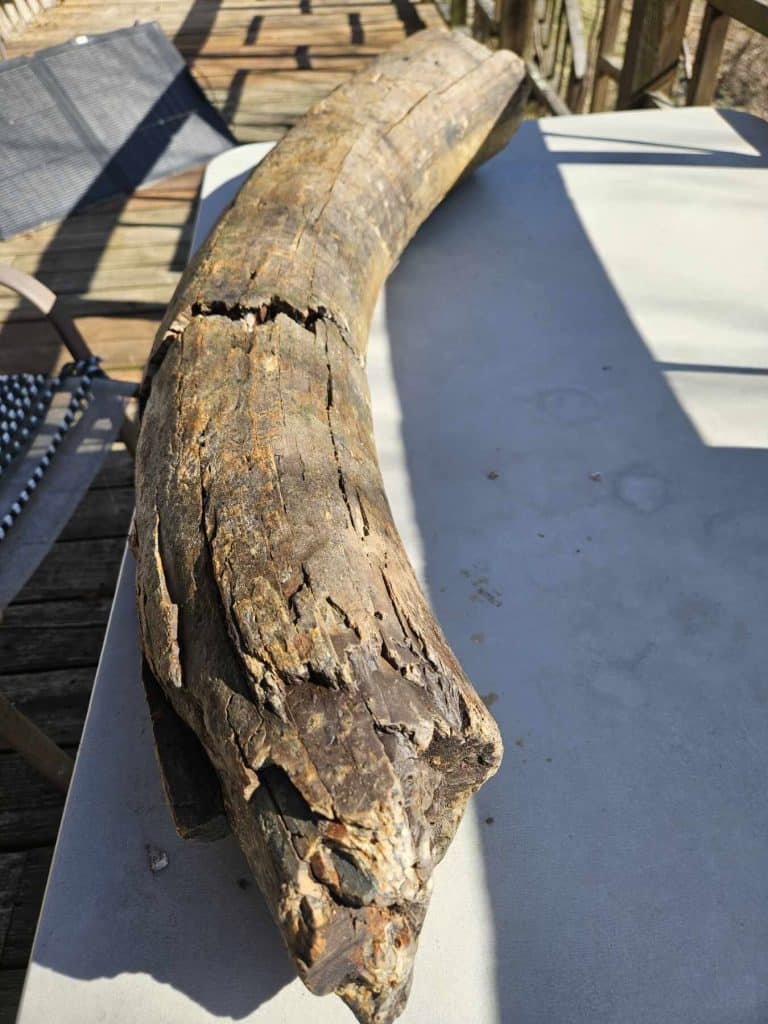
Photos of the tusk before degradation. Provided by Mark Cohen.
Daniel Fisher, the Claude W. Hibbard Collegiate Professor Emeritus of Paleontology at the University of Michigan, believes the tusk came from a mastodon. In an email to Cohen, Fisher explained that he printed the photo and used a marker to “make a local radius, from the tusk axis outward toward its periphery.”
“They’re actually ever-long, ever-growing incisor teeth,” Fisher told the Independent in an interview. “And we know enough about the shapes of these structures that we observed little cues that a casual observer might not pick up on.”
Brad Lepper, curator of archaeology at The Ohio History Connection, concurred with Fisher’s analysis. Although best known for his work on Ohio’s prehistoric moundbuilders, Lepper led the 1989 excavation of the Burning Tree Mastodon in Licking County, uncovering the most complete American mastodon skeleton ever found.
Based on Cohen’s photos, which the Independent shared, Lepper identified the find as an “Ice Age elephant-like creature’s tusk.”
“I would lean towards a mastodon because it seems a little bit less curved than mammoths’ [tusks] are, but since it’s the tip, you can’t tell,” Lepper added.
David Dyer, curator of natural history at the Ohio History Connection, reckoned that the specimen was a mastodon’s tusk “because they’re more common in the state,” outnumbering mammoths by about three to one.
And since most tusks found in Ohio are 12,000 to 14,000 years old, Dyer said, Cohen’s find is “probably right in that range.”
That period of time is the end of the Pleistocene epoch, better known as the Ice Age.
If it were less fragile, Fisher said, laboratory analysis of the tusk could reveal more information such as details of the animal’s behavior, environmental requirements and diet.
Exposure to the elements may have made the tusk more susceptible to cracking, he said, destabilizing its structure.
Due to the extremely fragile nature of the tusk and its location in the creek, all three experts said that the tusk would have eventually broken down naturally.
Fisher said that the rest of the animal’’s remains could still be in the area.
“It would be very difficult to say absolutely that there are or not, but it’s self evident that there could be other remains of this individual, and likewise, individuals like it somewhere nearby,” Fisher said.
Fossils found on private property belong to the landowner and don’t have to be reported to anyone. However, Dyer said that if you find something, it’s a good idea to call an expert to ensure that it’s excavated properly.
“I probably wouldn’t recommend people try to do it themselves,” Dyer said.
Cohen was “initially bummed” after the tusk fully degraded, but has turned philosophical about it.
“I think that ultimately, just about everything is fleeting and precious,” he said. “And overall, I’m just super appreciative to having seen it and shared that with people that I know.”
Elephants of Athens County
This isn’t the first time that such a fossil has been discovered in Athens County.
- The Southeast Ohio History Center’s collections include a piece of a mastodon jawbone found on Robinson Ridge Road in the 1920s.
- Former county surveyor William E. Peters’ history book, “Athens County, Ohio,” includes the 1938 discovery in Glouster of multiple fossils of a mastodon by a man named Clyde Bobo.
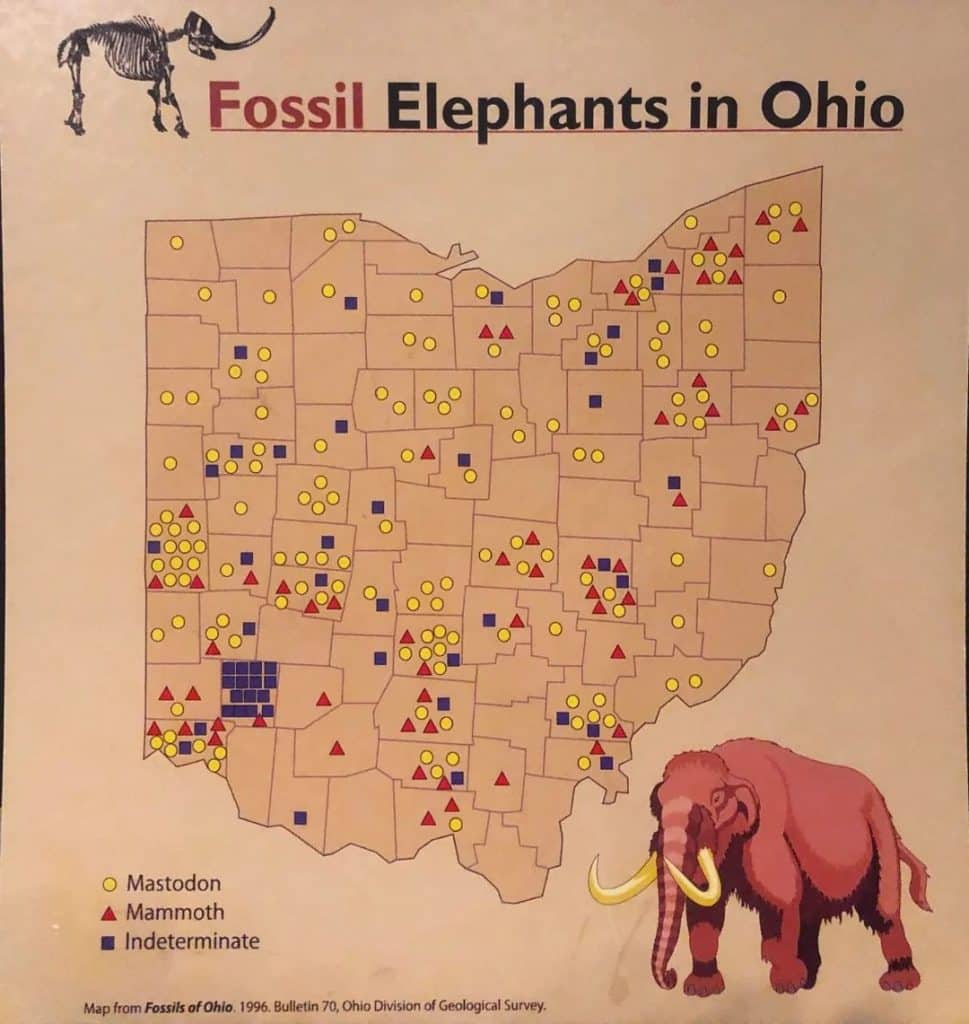
- A map of “Fossil Elephants in Ohio” included in a 1996 publication on Ohio fossils shows that eight elephant-like fossils had been verified in Athens County.