ATHENS COUNTY, Ohio — The Ohio Department of Natural Resources investigated at least 26 oil and gas incidents in Athens County over the past five years, according to ODNR data analyzed and published by the environmental nonprofit FracTracker Alliance.
Across the state, ODNR investigated more than 1,500 incidents over the same period, from 2018 through early September 2023.
That’s a stark contrast with the claims of some industry leaders: FracTracker’s investigation began after Rob Brundrett, president of the Ohio Oil and Gas Association, told WOSU that Ohio rarely has issues with oil and gas incidents.
Brundrett’s statement prompted environmental activist Jenny Morgan with Save Ohio Parks to submit a public records request for the data. Morgan then shared the data with FracTracker for analysis.
“Data show the total number of oil and gas incidents in the state, and their level of severity, has been grossly misrepresented,” FracTracker’s Midwest program coordinator Gwen Klenke said in a press release.
Most of Ohio’s incidents were in the eastern part of the state, and the three most affected counties were Washington, Muskingum and Noble counties, with over 70 incidents each. Athens County didn’t rise to the top in the data, but still saw more incidents than 75% of counties.
FracTracker removed about 100 incidents from its analysis of the ODNR dataset due to incomplete information, including locational data.
Most Athens County incidents involved a release or discharge of crude oil or gas, according to the Independent’s review of the raw ODNR data shared by FracTracker.
Three incidents involved what the ODNR described as a minor contamination of waterways, and about half involved contamination of soils. Four incidents — including two from 2019 — haven’t been resolved, requiring ongoing remediation work.
Though most incidents were associated with operational oil and gas production wells, several oil and gas leaks in Athens County were associated with orphaned wells — abandoned wells that often pose environmental hazards.
Two incidents included in the ODNR data involved a release of brine, a toxic waste product from fracking. Brine may contain radioactive materials and polyfluoroalkyl substances, or PFAS, which are linked to birth defects and increased risk of cancer, among other health issues.
Related coverage from the Athens County Independent:
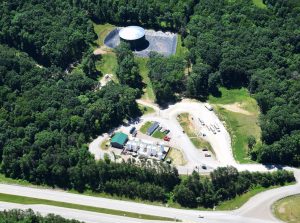
One incident in 2018 involved an estimated “30’ by 300’ release of brine” from an apparently slowly leaking tank battery in Stewart. The release resulted in “several dead trees and brush as well as a large grass kill area” but no injuries, and no harm to water or wildlife, according to the ODNR data.
Another Athens County incident was a 2021 fire at an oil well in Amesville. While ODNR’s report said “we are uncertain as to how the fire started,” ODNR noted it had “visited site prior to this incident due to neglect by caretaker to get a leak fixed” which was allowing oil to spill down the hillside.
In a handful of Athens County incidents, ODNR determined the oil or gas released was not of a “reportable quantity.” One other incident was not substantiated.
Most investigations began after calls to the state’s Ohio’s One-Call Incident Notification, with others reported internally within ODNR.
All the Athens County incidents that were assigned a severity rating by ODNR were classified as minor. That’s not unusual — most incidents across the state received that classification, with only three incidents classified as major.
Ohio Oil and Gas Association President Brundett told Energy News Network that the limited prevalence of major incidents is “a testament to the industry’s rigorous safety standards and practices.”
However, hazardous materials expert Silverio Caggiano told Energy News Network that even one minor incident per week is still high, given that even minor spills often involve toxic materials.
Klenke told the Independent that ODNR’s classifications represent “kind of a big discrepancy in what ODNR is capturing versus what’s actually happening.”
“A good chunk of them are not actually minor,” Klenke said.
To illustrate the point, Klenke pointed to one incident in the dataset: a Toledo house explosion that injured five people. ODNR categorized it as “moderate,” rather than “major.”
Klenke described ODNR’s data collection process as woefully lacking, overall.
Most incidents did not require follow-up reporting, which Klenke said made it difficult to get information on most incidents beyond the limited narratives included in the ODNR’s dataset. Additionally, much of the data FracTracker initially received was inconsistent and incomplete, making it difficult to analyze.
In FracTracker’s report, the nonprofit said it was unable to identify documentation defining criteria for different levels of severity. Combined with the data’s other limitations, Klenke said that lack makes it difficult for anyone to evaluate the risks posed by the industry.
“There could be nothing to worry about in Athens County, but because ODNR reporting is so poor, [residents] cannot make that distinction for themselves, and neither can we,” Klenke said.
Representatives of ODNR and the Ohio Oil and Gas Association did not immediately respond to the Independent’s request for comment.