ATHENS, Ohio — The Athens County Board of Commissioners in March created an Athens County Suicide Fatality Review Board to conduct annual investigations into the backgrounds and circumstances relating to people who died by suicide.
The board held its first meeting March 5 to prepare for its first official review, which will take place in February 2026. Next year’s review will analyze each suicide-related death that occured in the county during 2025.
The formation of Athens County Suicide Fatality Review board reflects a grim reality: The need for mental health resources in Athens County and the region outpaces availability of services, explained National Alliance on Mental Illness Athens Director Jordan Pepper.
“We do have the highest rate of suicide in this corner of the state,” Pepper said of Southeast Ohio. “We have the least resources, so we definitely need to do something about that.”
In 2024, 11 Athens County residents died by suicide, according to the Athens City-County Health Department. As for deaths by suicide this year thus far, the Independent is awaiting data from the health department.
“The purpose of this meeting [in February 2026] is to help identify things that the county can do … to help prevent any further deaths,” Ashcraft said.
The framework of the Athens County Suicide Fatality Review Board is modeled after state-mandated child fatality review boards.
Around 30 counties in Ohio have suicide fatality review boards, according to the Ohio Suicide Prevention Foundation.
317 Board Deputy Director Svea Maxwell said her agency has been eagerly awaiting the formation of an Athens County Sucide Fatality Review Board. The review board hopes it will help identify gaps in outreach or patterns in causes of deaths, she explained.
“We’re hoping to get information to help us do more prevention,” Maxwell said. “We’re looking to see where gaps might be locally that we can work with local providers or community members to help fill in and see where we can make a difference.”
Maxwell will serve on the fatality review board, representing the 317 Board, as a “key contributor.”
Other members include Ashcraft; Dr. Carl Ortman, Athens County coroner and health commissioner; Crystal Jones, director of nursing at the health department; Gerald Carter, medicolegal death investigator and compliance officer at Athens County Emergency Services; a law enforcement designee and a private individual.
New board reflects systemic needs
It’s not just Pepper’s belief that Athens County is in need of more mental health services. The U.S. Department of Health and Human Services’ Rural Health Information Hub shows almost every county in Ohio as health professional shortage areas.

Disparities in healthcare — and deaths by suicide — are noticeably worse in Appalachian Ohio, too.
Nine of the 15 Ohio counties with the highest rates of suicide between 2017 and 2021 were located in its Appalachian region — including Meigs and Vinton, which led the state in deaths by suicide based on population.
Athens County has some existing mental health resources, which include but are not limited to:
- Athens County Suicide Prevention Coalition, which supports the Athens County Local Outreach to Suicide Survivors team, aka LOSS, among its other services.
- NAMI Athens, which offers support groups, training opportunities, classes and more.
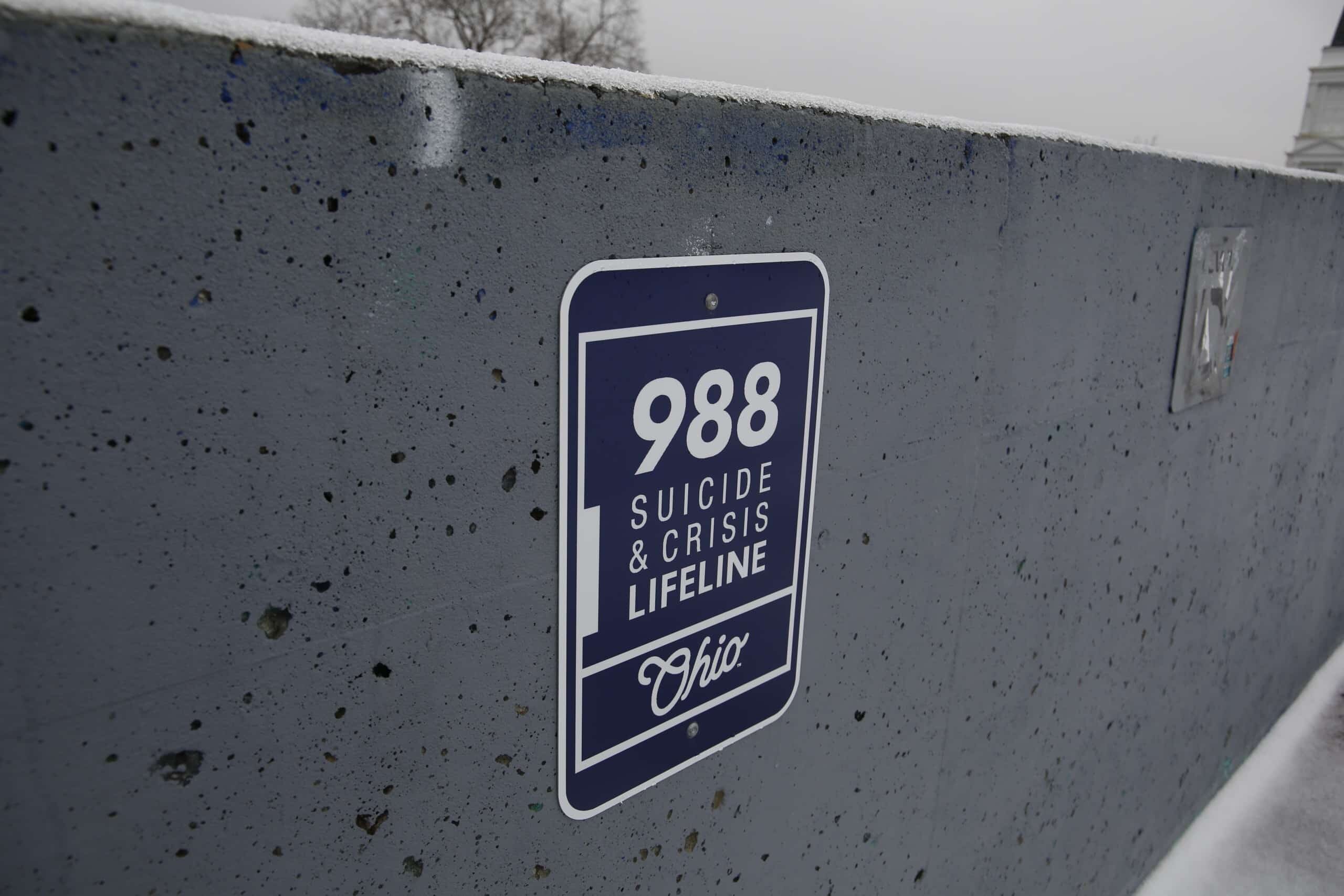
- The 988 Lifeline.
The Athens County Suicide Prevention Coalition is a small working group of dedicated volunteers. Some of its volunteers operate the Athens County LOSS team, part of a national initiative, which reaches out to bereaved families and individuals when they lose loved ones to deaths by suicide.
The LOSS team is considered “postvention” – but in supporting the bereaved, it also supports suicide prevention, Maxwell noted.
“The goal is to reach out and meet people who have lost a loved one to suicide as quickly as possible, because research shows that before this model, it took an average of four and-a-half years for suicide survivors to reach out for their own mental health … and this cuts that down so quickly,” Maxwell said. “It reduces stigma, it provides resources.”
The suicide prevention coaltion offers a support group, which meets on the third Tuesdays every month at 5 p.m. at Appalachian Behavioral Healthcare, 100 Hospital Drive.
“We’re we’re there to show that we can get past this horrible, tragic time … and that we can get through this together,” Maxwell said.
Those interested in seeking support from the Athens County Suicide Prevention Coalition, or supporting its work, should contact Maxwell at svea@317board.org or 740-593-3177 ext. 222.
Additionally, last summer, local organizations came together to create and distribute Lethal Means Safety kits, which address suicide deaths caused by firearms. The kits are canvas pouches that contain gunlocks, medication disposal bags and information about suicide prevention.
Last year, in both Athens County and Ohio, more than half of the people who died by suicide used firearms.
Several local organizations, including OhioHealth’s Nelsonville Health Center, Health Recovery Services and Equitas Health, have distributed 128 kits over the past year, said 317 Board Outreach Coordinator and COMCorps Service Member Andrea Pierson in an email.
There are 129 kits remaining, Pierson added. Contact the suicide prevention coaltion at AHVsuicidePreventionCoalition@gmail.com or through its Facebook page to obtain one.
While the local suicide fatality review board is a step toward addressing deaths by suicide on a local level, those working in mental health services acknowledge the need for greater change.
Pepper said that NAMI Ohio is assessing “the whole mental health system and seeing how we can look at it really in-depth, and see what’s working, what’s not.”
She suggested that the state could invest in mental health as it does local boards of developmental disabilities, “rather than have people bounce from agency to agency, and have agencies that have therapists that come and go,” Pepper said.
Pepper mentioned a crisis center in Franklin County that offers mental health resources. “I think I would love to see something like that here,” she said.
“I always liken it to the example of an urgent care versus an emergency room,” Pepper explained. “When you cut off your arm, you need to go to the emergency room, and when you cut your finger pretty deeply, you need to go to the urgent care. … And so when someone’s in a near-crisis situation, it needs care and needs immediate care — but it may not need that emergency-level care.”
Overall, Pepper stressed the importance of destigmatizing mental illness. She noted that while the 988 Lifeline has been “a great system,” social stigma surrounding mental health and other barriers often prevent people from getting the care they need.
In preparation for forming Athens’ board, Ashcraft and Jones visited Ross County’s suicide fatality review board, which jointly operates with its overdose fatality review board.
Ashcraft expressed interest in implementing an overdose review board, too, depending on the success of the suicide review board in Athens County. According to the health department, six people in Athens County died by drug overdoses in 2024.
“Down the road, we may implement overdose fatality review — and at that time, we’ll determine whether it’s something we want to combine into the same meeting or separate meetings,” Ashcraft said.