
ATHENS, Ohio — The construction of a new multimillion-dollar city-owned training center is nearing completion, with hopes of a ribbon cutting this summer.
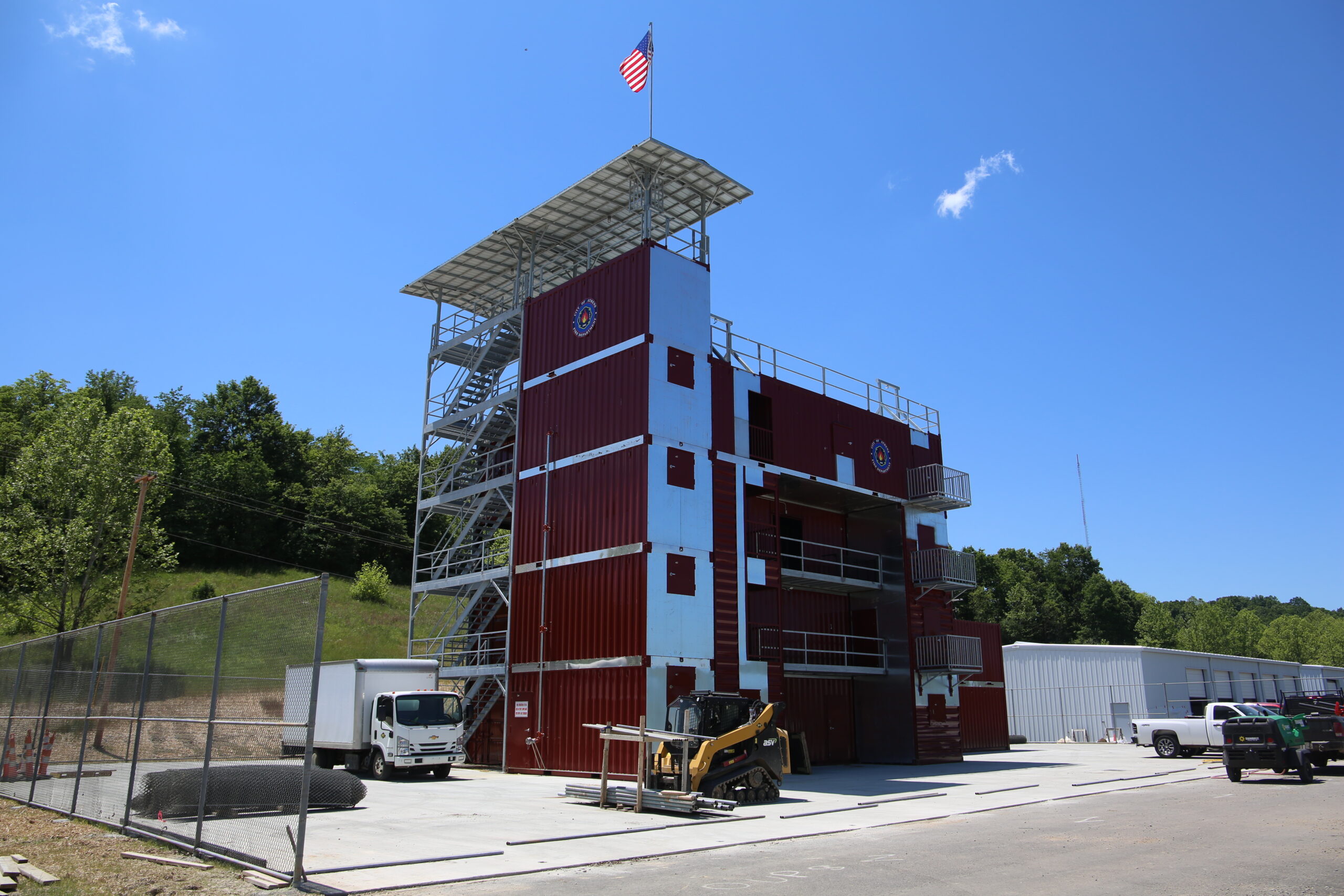
The training center, located on Kenny Drive, features a six-story building that firefighters, police and other first responders can use for training exercises.
Athens Fire Department Chief Robert Rymer said the facility cost around $5 million total, with half of the project paid for by the state. According to Ordinance 0-68-25, the city received $2.5 million from the 2024 state capital budget bill, as well as an Ohio Department of Transportation reimbursement grant for $200,000.
Otherwise, the city appropriated around $2 million from the street fund, $800,000 from the water fund, $400,000 from the sewer fund, and $381,000 to the storm sewer fund for the project, for a grand total of around $5.1 million.
The facility will serve as a training center for Southeast Ohio — not just Athens, Rymer emphasized.
“This isn’t just for the Athens Fire Department,” Rymer told the Independent. “It’s for fire, EMS [emergency medical services], police, volunteers, pretty much everybody, all the way down to Portsmouth and Chillicothe.”
Waterloo Fire Department Chief Craig Churchheus said the training center will be an asset as part of mutual aid in the area.
“I think it’s important that we all kind of work together, know what everybody’s thinking,” Churchhues said. “That’s gonna be gonna be good for everybody.”
Nelsonville Division of Fire Chief Harry Barber said any opportunities for firefighting training will be beneficial to the field and the public.
“Anybody that we can get in the door and start getting through training evolutions to get them involved, I think is a step in the right direction, and having just having another training center close to the area will get more options and get more opportunity for that to happen,” Barber said.
The building offers opportunities for firefighters to practice ladder operations, search and rescue, window entry, mazes, confined space rescue, repelling, and more. There also are simulators for fires in a garage, attic, bedroom, kitchen, and basement.
“Plus, we have the land out here where we can do trench rescue and dig the hole in the ground and practice when the hole collapses on top of a person,” Rymer said.
The facility comprises shipping containers stacked six stories high. Each includes monitors that detect when the temperature approaches 900–1,000 degrees Fahrenheit, the maximum temperature used in training, Rymer said.
The shipping containers are estimated to last at least a couple decades, he added. The fifth floor of the building is not for burning in but for other exercises, like search and rescue.
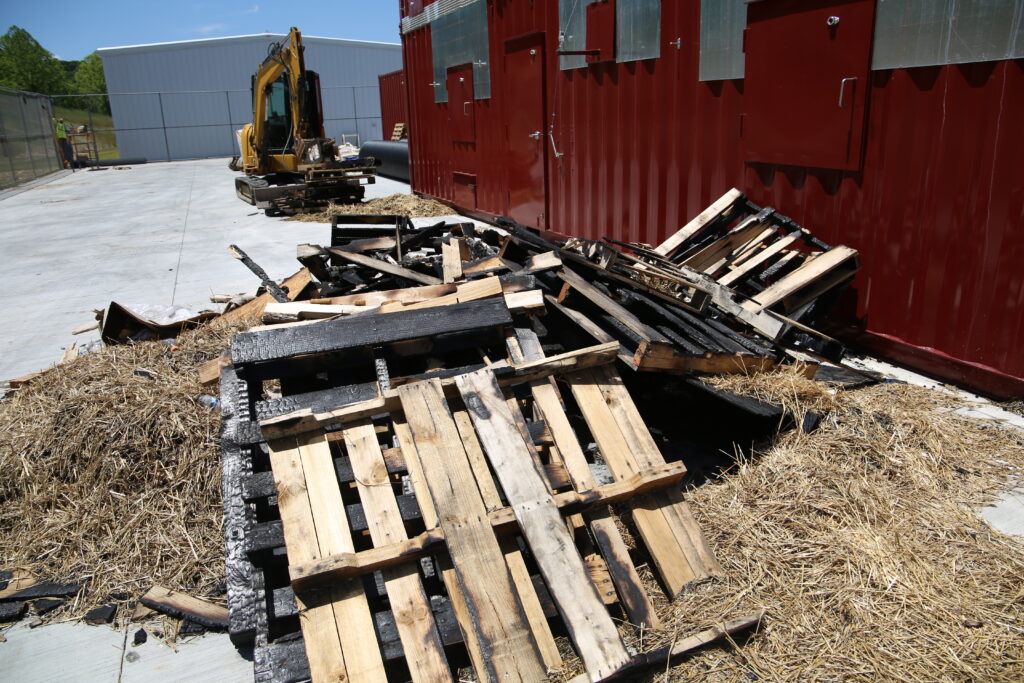
The fire department is also limited in what it can burn in training sessions. It burns wooden pallets and straw in its simulations, both of which are relatively cheap, Rymer said; the pallets have been given to the fire department for free, and straw is around $7 per bale.
Rymer said he’d like to be able to train with boxcars, as Athens County has railroads. He said he’d also like to see the facility used to train the public in basic fire safety, such as how to use a fire extinguisher.
The project also included the construction of a shared-use storage building that will replace old city storage buildings.
Firefighters needed
Rymer said the need for firefighters continues to outpace the workforce, and funding.
At a total of 21, the Athens Fire Department has around the same amount of staff it did in the 1970s, Rymer said. When a department has a smaller team, each firefighter needs to be trained on everything. Other departments, such as those in Columbus, have teams or individuals dedicated to certain tasks.
“These guys here have to be trained in all of that, and then decide, ‘What truck do I take?,’ and ‘Where we going to?,’” Rymer said. “We do quite a bit for being such a small department.”
Rymer hopes the facility will be a regional asset in recruiting folks to the field, as the firefighter workforce ages and shrinks across the country. He noted that the average age of a volunteer firefighter in Ohio is 54 and there is a nationwide volunteer firefighter shortage. The U.S. Fire Administration estimates that up to 70% of firefighters overall are volunteers. Annual training is required for firefighters, volunteer and professional, to maintain their certifications.
“That’s not just an ‘us’ problem,” Rymer said. “I’m almost turning 54 and then I’ve got four guys out there that are older than me, and then maybe two that might be in their 30s; everybody else is in their 40s.”
Barber echoed Rymer’s concerns about the nationwide decline in firefighters.
“Most of these volunteer firefighters that are dedicated are the age where they should not be fighting fire or in immediately dangerous to life and health fires,” Barber said. “It’s important to try to keep the youth engaged, and maybe this [training center] is a way that it’ll help.”
The Athens Fire Department made 260 runs in 1993, the year Rymer joined the department. That number jumped to 1,400 runs last year, and 2026 is on track to surpass that figure. Rymer said he’d like to expand his staff, as well as see a new station placed near the training center.
The training facility is over a decade in the making, he said. According to the Athens Fire Department’s 2023 annual report (most recent available online), the International Organization for Standardization and National Fire Protection Association, an Athens firefighter should undergo at least 110 training hours per year. That report recommended the creation of a training facility. Barber noted that the fire service is somewhat unique in its requirements for annual training hours.
“I’m very happy and very grateful for the state for giving us the funding for the administration supporting us on this, and for the public supporting us on this,” Rymer said. “I’m just hoping we can provide better training and give … more frequency for training and stuff for all the agencies in that area; the police department is going to use it well, all the volunteer departments [that are] trying to have a place that they can actually do this.”
