Bites, Camera, Fashion is a column from Davey McNelly, who is disabled, likes films and makes poor choices while trying to simplify his life.
I grew up with an active imagination, as did many of you probably did. In fact, I lived in my own imaginationland until I was in second grade and someone wanted to be my friend. I noticed they bit their nails and I picked up the habit as well, thinking, “Well, that’s a great way to spend your time.”
It took me 30 years to break the habit, and proves that friends can also be enemies (we will come back to this later). I still have an active internal life, something that I attribute to having a disability and reading lots of books.
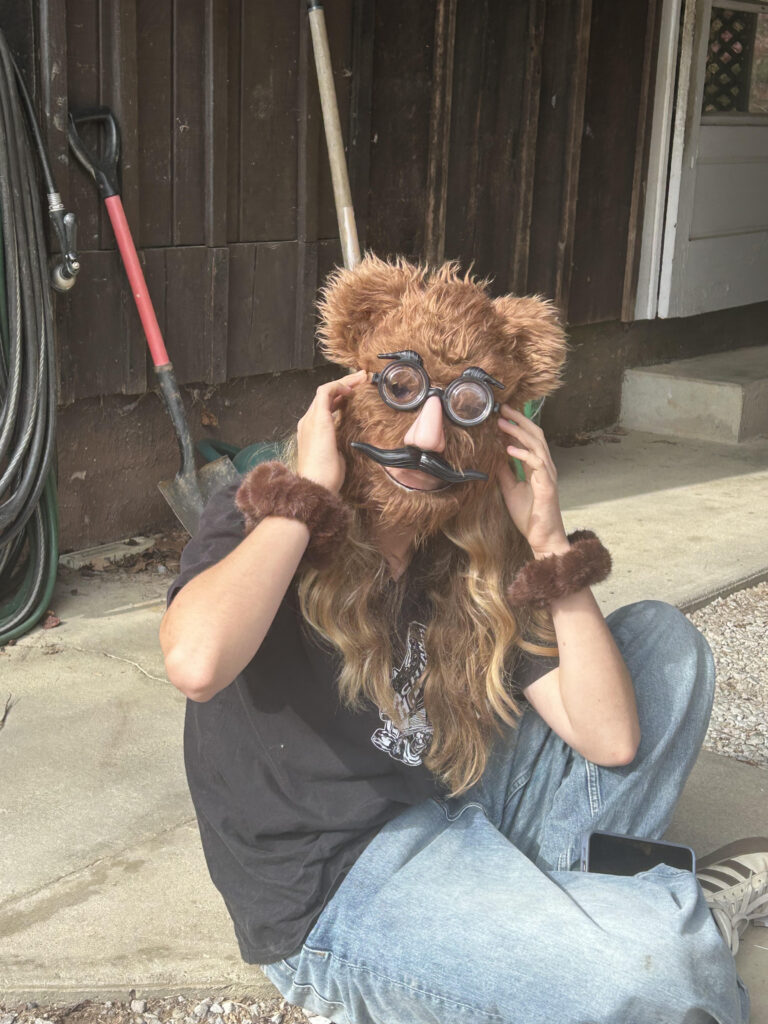
I also like long-cons. My second cousin is Andy Kaufman. I love Joe Pera’s comedy. My kids believed I was a bear in a human costume until they were in fourth grade and that I wrote the “Ghostbusters” soundtrack, among other things I made up. Reality is sometimes hard for me to exist in, especially when so little of it makes sense. I often focus on the absurdity to at least laugh at life. And yes, I adore Nathan Fielder.
But what can you really see, and know, about anything? The key word here is “can,” according to Elizabeth Holmes herself.
Bites
Mauvette’s is the best food in Athens. We all know it. But not everyone knows that she also serves the best sandwiches, only on Fridays. Jerk chicken with spinach, plantains and a creamy sauce on Hawaiian-style bread? Yes, please. Better yet, mahi-mahi marinated and cooked to perfection on a sandwich? Even better. And to top it off? Guava juice.
Mauvette’s is worth every penny, and I want to make a public apology to Mauvette for not going with her to cater my wedding. But you have to have the penny to spend it.
And a sandwich — what better food to take into a film?
Camera
Lance Oppenheim and Nathan Fielder’s documentary “You Can See Everything” is a masterclass of surrealism and absurdity in our modern age. For those who don’t know (like me before the documentary), Elizabeth Holmes is a con artist. She defrauded investors and sold everyone a bill of goods: that she had a machine that was able to test for nearly any kind of disease with a drop of blood. The machine could in no way do that. She said it “can,” when she meant to say “could one day.”
At some point in the documentary, someone says that this is how all tech CEOs are — they promise the moon in the hopes they will somehow deliver it (and to become billionaires of course). This country loves con artists (see: our politicians).
For some reason, Billy Evans, who is now Elizabeth Holmes’s partner, invites a film crew to live with them until she goes to jail. Ostensibly, it seems to be in hopes that the directors will “think differently” and do something to help Holmes in the public eye.
Evans (who is wildly manipulative) and Holmes (who also, as a reminder, is manipulative) try to manipulate the documentary to show that Holmes is a woman genius who also somehow needs a lot of support to understand anything at all and to tell her what to do.
That’s the first hour and-a-half of the documentary.
The second half? Let me take that egg bowl from you and give it a stir because you’re not doing it right (IYKYK).
The second hour-and-a-half features Evans and, in true Nathan Fielder style, layers upon layers of polite cringe, where you cannot believe what is happening. Do not look this up. Be surprised by what happens.
Recently, I was at a friend’s wedding and their therapist for 15 years came out and did a first dance with them in place of their father. It was awesome that my friend had that relationship, but also a little mindboggling in the (therapy-speak here) transference and countertransference of it all, in terms of client-therapist relationship. I felt the strangeness of that situation — timed infinity — watching the second half of this film. I am ready for a follow-up doc, where there are even more layers.
While the film is about manipulation, it’s also about the very nature of capitalism itself and the kind of world we live in, rife with artificial intelligence, Charlie Kirk, and a general uncertainty if we can ever truly know what is happening. The only thing I do know is that you should see this movie, if you “can.”
John Wilson’s “A History of Concrete” is another story. It is yet another “documentary,” in the loosest sense of the word. You have probably not seen Wilson’s HBO show, “How to with John Wilson,” which is a series of mind-numbingly fast observations of New York City life, replete with puns and finding humor in unintentional places. You would think I would love the show. I would think I would love the show. But I don’t. It’s a little too precious and my mind can’t settle in.
So then why did I watch a full-length documentary? Because the elevator broke at the Athena Cinema. It sounds like a joke but isn’t. I was stuck. So they offered me a private screening after hours until the Otis elevator repairman arrived.
Watching “A History of Concrete” was ironic to me, given how much those of us with mobility devices are advocating Athens to make concrete crosswalks, and how much I already know about concrete because of this. The city has already misspent hundreds of thousands of dollars (if not more) putting in worse and worse bricks, to the point where an Ohio University student who uses a manual chair said getting from campus to the Uptown CVS was like hiking up a mountain.
My favorite part of the doc was about a man who has a business in NYC steam-blasting chewing gum off the pavement. Fun fact: New York recently poured concrete that has gum-like markings already on it, so that the city doesn’t have to steam-blast it.
See this one if you love concrete or John Wilson. If not, cross the street.
Fashion
In short, it’s fashionable to make things accessible.
Also, I’m loving the Halloween costumes I am seeing this year. Originality is key, as is craft. Here’s a picture of my eldest child dressed as me this year, as a bear in a human costume. Don’t think too much about it.