
Changemakers is a column that highlights the work of local nonprofit organizations serving Athens County.
June 3, 2018, was the day Jessica Littler arrived at Serenity Grove Women’s Recovery House: a large, green house with a porch located just outside of Athens, surrounded by stately oak and hickory trees.
Although she had been to rehab multiple times, this was Littler’s first time in a ‘recovery house,’ where people go with the goal of transitioning back into independent living free of drugs and alcohol.
“I was like, ‘Oh my gosh, I get to live here?’” Littler told the Independent. “I immediately almost felt out of place because there’s no way that they house people like me at a place like this. Once they find out all the things I’ve done, they’re not gonna like me.”
Things from her past included years of drug addiction, a felony drug charge, homelessness and her three kids living with relatives. But the staff, board and residents at the recovery house made Littler feel at home — and never judged her.
Operated by the nonprofit organization Women for Recovery, Serenity Grove Women’s Recovery House is a Level 2 recovery house for women who have been sober for at least 30 days. The women who live there have already attended an inpatient or intensive outpatient treatment to establish their immediate sobriety.
A Level 2 home is monitored and structured, which is exactly what Littler needed.
“I would go to a 30-day program or maybe a 60-day program and they would say ‘All right, bye,’ and you would go right back to the same place with the same people and the same environment,” Littler said.
Hailing from Clinton County, Ohio, all of those bad influences were there when Littler would leave rehab. So when she was ready for recovery, she called an aunt who lives in Athens County.
After spending 90 days at Rural Women’s Recovery Program in Athens, Littler was ready to transition to Serenity Grove Women’s Recovery House and its 12-step model for recovery.
Littler and her fellow residents followed structured days: daily morning meetings and activities including music therapy and yoga, weekly Tuesday night dinners, and regular sobriety meetings, like Alcoholics Anonymous and Narcotics Anonymous.
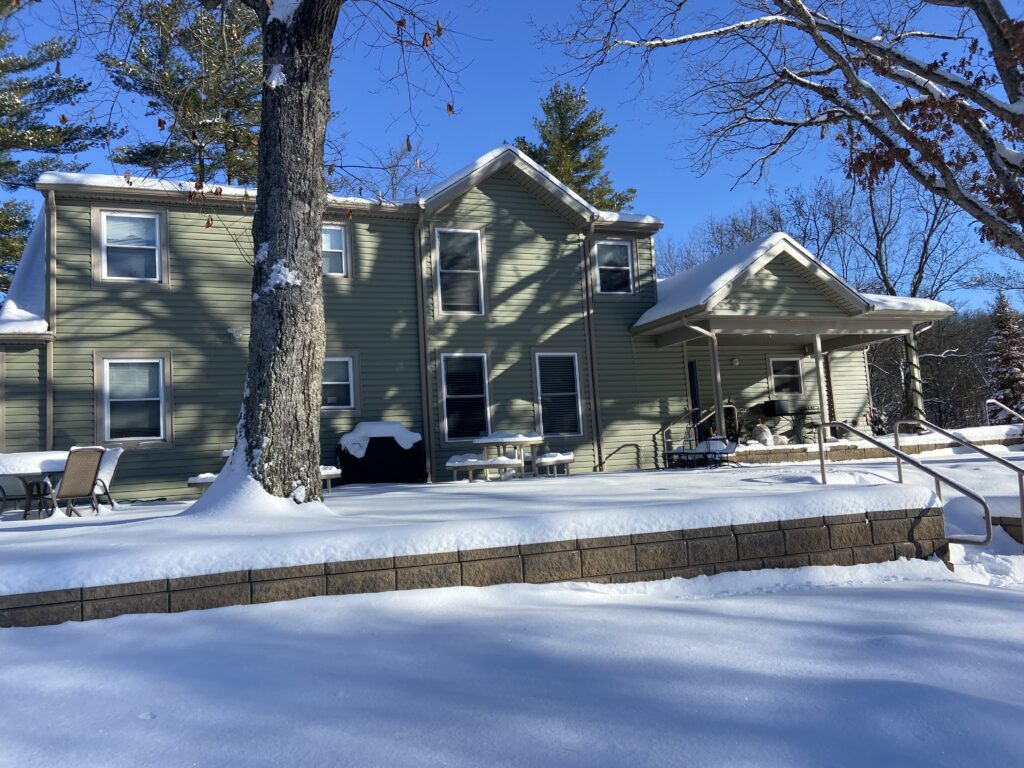
The house hosts up to eight residents, all who pay rent; a sliding scale begins at $100 per month and tops out at $480 per month. All residents start at $100 their first month as they begin to look for work.
There is not a push to overschedule work beyond what is required to get back on one’s feet. Littler understands the rationale.
“It took me almost six months to learn how to sleep for the night. My brain was hard wired to get no more than two hours of sleep a night due to meth,” Littler said.
But Littler persevered with the support of her peers plus the staff, volunteers and board members at Serenity Grove Women’s Recovery House.
Little by little, the women there rebuild their lives: get a driver’s license or state ID, get a job, open a savings account, save for a car. Staff help women apply for jobs, counseling, food benefits and whatever they need to gain momentum toward independent, clean living.
“There are so many instances where people in the community are like, ‘Don’t do drugs and get your life together.’ But they are unwilling to help you do that,” Littler said. ”They’re unwilling to rent their places to you, they’re unwilling to give you a job. It’s those situations that teach you that ‘I am apart. I am not included in society.’”
But Serenity Grove Women’s Recovery House provided community — and advocated for Littler. When she couldn’t get a bank account, Women for Recovery Executive Director Betsy Anderson helped her persevere. OUCU helped with a savings account, then a checking account, and eventually assistance with getting a car.
“I’ve seen her … go to bat for one of the girls that didn’t have this, that and the other,” Littler recalls. “(She built) trust that way.” Littler said her motto became, “I just need people to give me the same chance Serenity Grove did.”
Local business owner Deb Fulks heard Littler speak at a recovery event and offered her a job at Court Street Coffee, where she has now worked for more than six years.
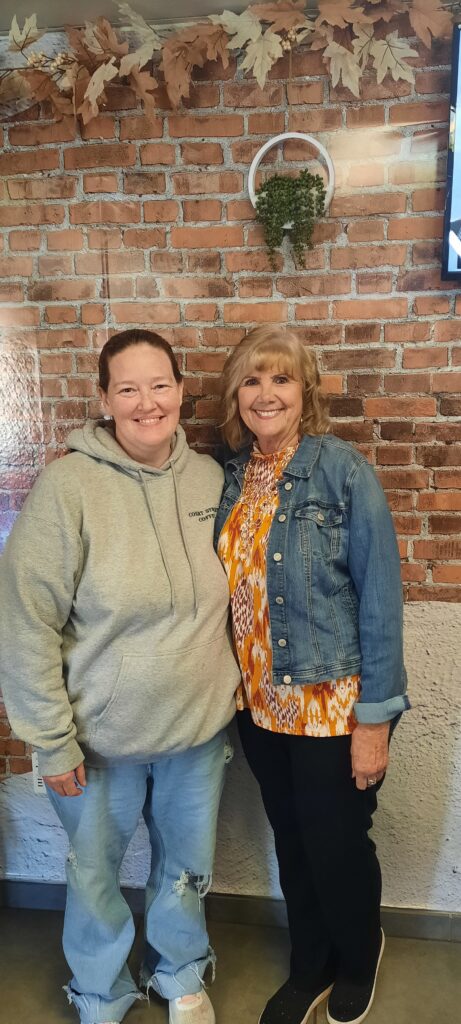
Growing up in a family of poverty and addiction, it was no surprise to Littler that she struggled until she found Serenity Grove Women’s Recovery House.
“For me, personally, they have broken a generational cycle,” Littler said.
Women for Recovery Executive Director Betsy Anderson refers to a term given to her by Ohio University sociology professor Thomas Vander Ven, “cumulative disadvantage,” to describe this cycle.
Anderson, in contrast, grew up in a financially stable household in Athens. But addiction does not discriminate. Anderson recognized her problematic drinking in her 40s. As a person in recovery herself, she is also a peer to the residents at Serenity Grove Women’s Recovery House.
Serenity Grove Women’s Recovery House opened its doors in April 2018. The Athens County Foundation was one of its first supporters.
“We hadn’t even opened, and they were part of a grant that helped us get a washing machine, a dryer, and a hot water tank,” Anderson said. “They’ve always supported us since.”
Grants, opioid settlement money, resident rent and a levy from the Athens-Hocking-Vinton Alcohol, Drug Addiction and Mental Health Services Board (317 Board) provide most of the money required to run Serenity Grove Women’s Recovery House.
Still, Anderson describes her budget as frugal. Because of this, the organization turns to the public for donations.
“Personal donations are really critical,” she said..
Women for Recovery asks that women stay at Serenity Grove Women’s Recovery House for 90 days, but the average length of stay is about eight months — and that’s actually a good thing, Anderson said. The longer someone stays, the more she stabilizes. Littler says the staff jokes about having to kick her out after 18 months.
“There’s a cliché that addiction is isolation, even if someone is drinking or using [substances] with other people,” Anderson said. “Recovery is connection — community and connection.”
Littler is now on the Women for Recovery board of directors. Hers is not the only success story to come out of Serenity Grove Women’s Recovery House.
The organization is not required to track women after they leave the recovery home. But out of the 82 women who have lived at Serenity Grove Women’s Recovery House, 50 are still in touch with Anderson, indicating that they are still in recovery.
While addiction has taken its toll — one former resident is in prison, another died of an overdose — others have gone on to earn degrees and have reunited with their children, like Littler, who now lives with her three children and a new grandchild.
Women for Recovery invites members of the community to volunteer and to donate financially, but Anderson has one more ask of the community.
“I would love for stigma to continue to be reduced. When someone has a cancer diagnosis, people bring casseroles and send cards,” Anderson said.
“People who have a substance use disorder diagnosis are sometimes cast off and looked askance at,” Anderson said. “It is in fact a disease. The good news, for those of us who have it, is it is a treatable disease and can be kept in remission. Recovery is real. It’s possible and it’s real. It is achievable.”
