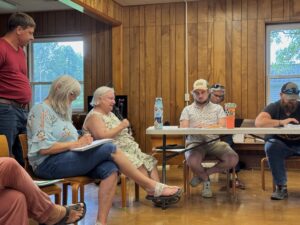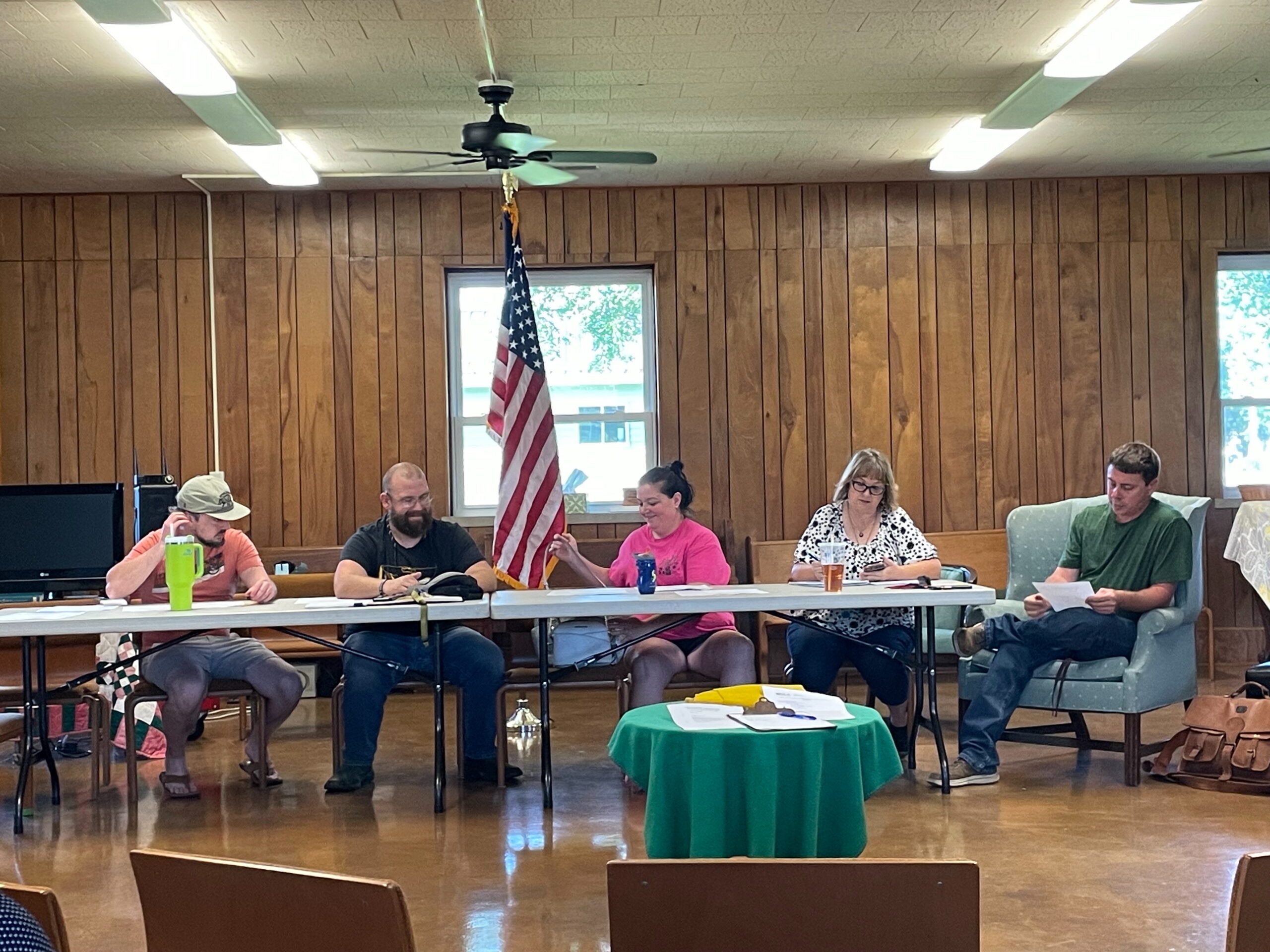
CHAUNCEY, Ohio — During an often tense special meeting of Chauncey Village Council on Aug. 27, residents and property owners pushed back on Mayor Frank Campbell’s desire to abolish the village zoning code.
Campbell, who was elected in November, said at the meeting that he ran for office to eliminate community zoning codes.
“I feel that zoning was abused and there was a lot of stuff put in it that I don’t think should’ve been put in,” Campbell said Thursday.

Specifically, Campbell said he objects to the possibility of fines and criminal charges for residents who violate the zoning code. Landowners should have control over their property, Campbell said, and levying fines in a village affected by poverty is unfair and unwise.
Rob Delach, a resident of Athens who owns property in Chauncey, acknowledged that the existing code may be restrictive for the village, but he disagreed with Campbell’s plan.
“I don’t feel that eliminating zoning here will make things better,” Delach, who chairs the Board of Zoning Appeals in Athens, said at the meeting.
He said the village needs zoning to protect property values and set rules for companies that “can do anything they want to” without an enforceable code.
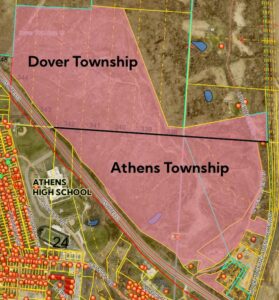
Delach noted that developers are eyeing Dover Township as the potential site of a new data center due to the area’s lack of zoning. In July, the Independent reported that developers had inquired about land-use regulations on a property straddling the Athens-Dover township line. Athens Township has zoning regulations, but most townships — including Dover — do not.
“I think you’ll see there’s been precautions taken,” Campbell replied to Delach’s concerns. The mayor also suggested changing the zoning map to the current land usage map.
Campbell repeatedly asserted that precautions are in place to protect residents, but he did not elaborate on specifics during the meeting.
Delach said he understood the desire to handle zoning violations “administratively,” but argued that fines and charges should not be struck down entirely. “I think it makes sense to have some criminal charges as a last resort only,” he said.
Martin Stern, a member of the village zoning board, said there is already an administrative process in place for zoning violations.
“The zoning inspector doesn’t give out tickets,” he said, a paper copy of the code in hand. “They give out letters and letters and letters” before imposing penalties.
Stern also objected to Campbell’s statements that the process of establishing the zoning code was unfair for local residents. “The idea that we didn’t have input on this, this took two years,” Stern said.
“And you didn’t listen to a single person that came in,” interjected councilmember Joe Jenne Jr. “Not a single one.”
Campbell repeatedly suggested passing ordinances to address community concerns and property issues instead of relying on zoning. Mollie Fitzgerald, executive director of the Athens County Economic Development Council, said at the meeting that she’s unsure of the difference.
“It sounds like what’s being discussed is just zoning, but we don’t want to call it that,” Fitzgerald said.
Campbell told Fitzgerald that he is not interested in changing the zoning code.
“If I could vote, I would vote it out completely because I feel it was done very unfairly to the local people,” he said. “I have no interest in having zoning.”
Amy Renner, the former mayor of Chauncey from 2019 to 2024, told the Independent that she strongly supports zoning in the village, and she rejected claims that residents were not consulted on the code.
“I think that zoning is a necessary evil,” she said. “It’s never going to be perfect. No zoning code is.”
Concerned with the possibility of gentrification due to the Baileys Trail System, Renner said Chauncey formed a planning commission in 2020 to make zoning recommendations and shield the community from risk.
“I can say with 100% certainty that all of the people working on [zoning] were doing it to protect Chauncey,” Renner said. “It went through a really rigorous process with public notices and forums. A lot of thought went into it.”
The volunteer committee—which included three residents, a village council member and the mayor—solicited public input over the course of two years. Chauncey adopted the zoning code in 2022.
Renner also referenced the potential for data center development in the area, and she noted that without a zoning code, Chauncey was “prime for developers not developing things in sync with what the village wanted.” She said that the current code helps Chauncey have a say in what developers may seek to build in the area.
“A lot of communities are scrambling to get regulations in place to be part of that decision making process,” she said. “And zoning is the perfect vehicle for that.”
This is not the first time Campbell and the current council have taken aim at initiatives passed by the previous village government.
This past spring, the council considered repealing an anti-discrimination ordinance protecting renters, including LGBTQ+ people. Campbell, at a meeting in May, told attendees that he needed the ordinance to be repealed, while Jenne referred to the renter protections as “fake.”
In June, the council voted to preserve the anti-discrimination measure. At the same meeting, the council repealed a previous village resolution calling for a ceasefire in Palestine.