
ATHENS, Ohio (WOUB) — A new homeless shelter in Athens County is on schedule to be completed in May, and some units may open before then.
This is a far cry from the situation a year ago, when the project seemed like it might be doomed, at least as envisioned, because construction bids kept coming in way over budget.
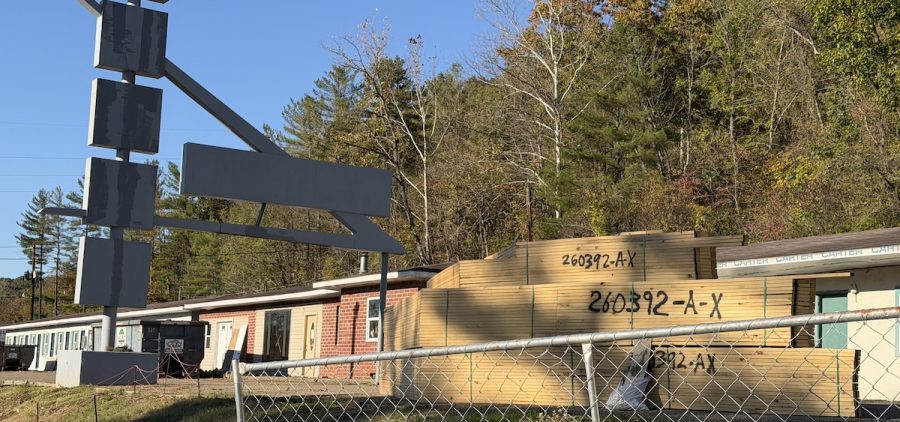
The shelter will occupy the old Sunset Motel on Columbus Road in Athens. When the conversion is completed, it will offer 26 units, including one family unit with two connected rooms.
Some of those units are in a building separate from, and newer than, the original motel. These will likely be ready for occupancy sooner than the others, said Kelly Hatas, executive director of Hocking Athens Perry Community Action, better known as HAPCAP.
HAPCAP is overseeing the motel conversion project and will run the shelter once it’s completed.
Each unit will include a kitchenette, with a small refrigerator, microwave and sink. The space between the motel’s two original wings, which had been the office and the residence for the owners, will become a communal area with a full kitchen.
“So if folks during open hours would like to go cook themselves a meal using the stove, they’ll be able to do that,” Hatas said. “I think ideally we’d also like to work towards having community meal nights, perhaps once a week.”
With the exception of the family unit, each unit will include one or two beds. Guests will not be required to share a room with someone they don’t know. This means some of the beds will go unoccupied, but it also means guests will be able to have more privacy and a greater sense of security.
“I think it’s really going to provide an added layer of security for folks who are staying there, especially those who may have experienced trauma,” Hatas said.
HAPCAP will partner with other organizations, and hire some staff of its own, to work with the guests to help ensure their basic needs are being met, including access to food, health care, counseling and job training.
There will be no limit on how long guests can stay, but each will develop an action plan for making the transition into permanent housing.
“They’re going to have to be working towards leaving really from the minute they get there, but for everybody that’s going to look different,” said Jessica Stroh, HAPCAP’s director of community services.
The challenge will be finding affordable housing in a region that already cannot meet the demand, especially as home prices continue to rise. The median home price in Athens County from January through August was over $271,000. This is well over what an individual earning the average wage in Athens County can afford, and it could be a stretch even for a two-income family.
This could create a bottleneck at the shelter, Hatas said.
“We don’t have enough affordable housing units in Athens County, in the region,” she said. “And so even if somebody’s ready and willing (to move out of the shelter), if they can’t find a unit that’s affordable, that’s not going to be setting them up for success. And so I do worry about that.”
Another challenge is the shelter will be serving a seven-county region that at any given time likely has far more people in need of housing than the shelter can accommodate. Many counties in southeast Ohio do not have a shelter, or if they do it’s a place to spend the night, not a temporary home.
Also, people without housing may be more successful staying closer to the community that is familiar to them.
“Most people that are unhoused, they want to stay in their own counties, they want to stay around the resources that they know,” Stroh said.
It’s best to view the shelter as just one piece of a much larger solution required to address the full scope of the region’s housing needs, said Valerie Stillson, HAPCAP’s chief development officer.
“No one organization can solve the housing problems that we’re facing in our communities,” she said. “That’s really what it comes down to. And we’re glad to be a part of that and getting us closer to that. But we are just one step.”
This story was originally published by WOUB and is republished here with permission.
