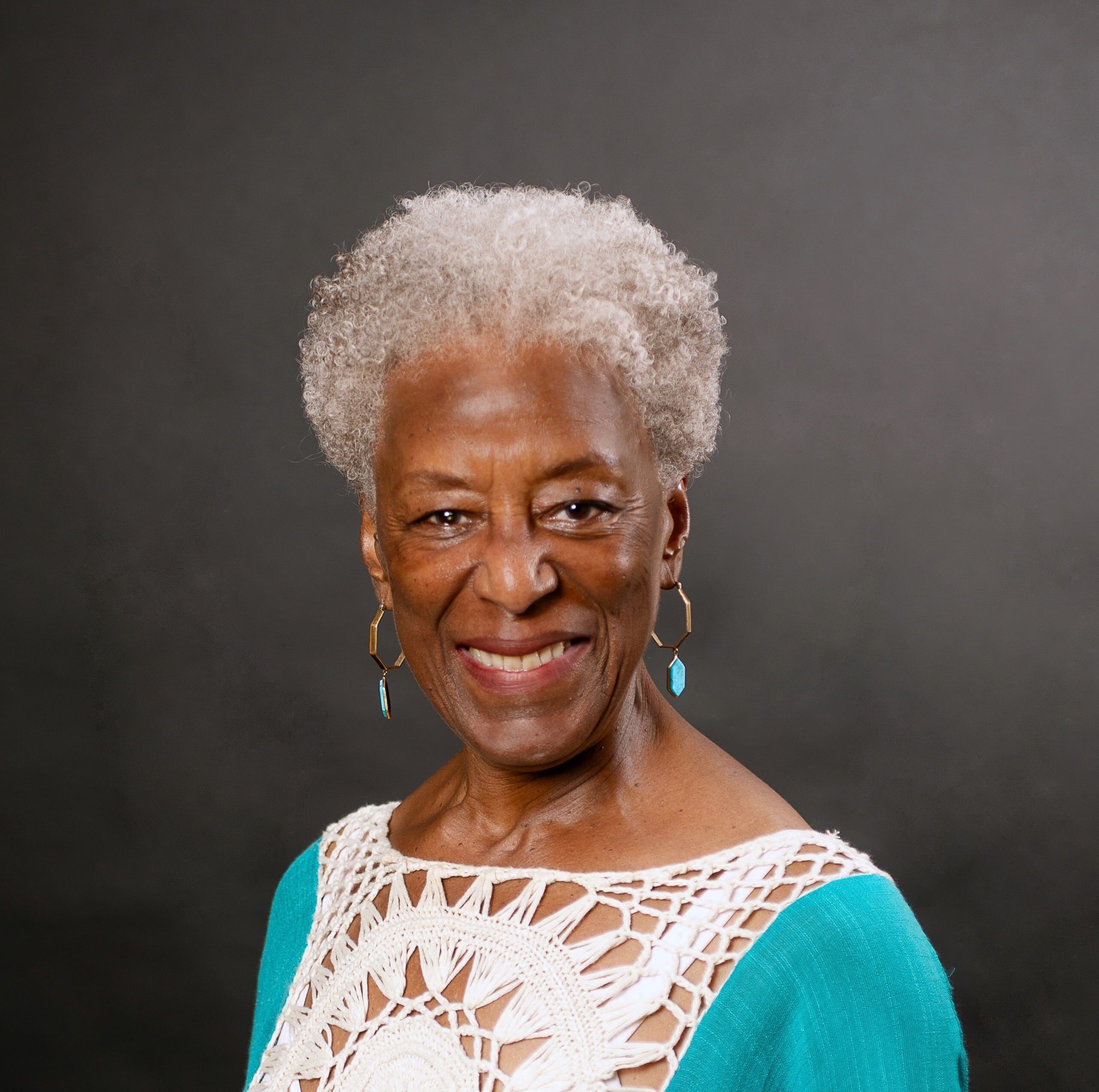
ATHENS, Ohio — Trevellya Ford-Ahmed, communications and media director at Mount Zion Black Cultural Center and professor emerita of West Virginia State University, has been awarded a 2025 Black Appalachian Storytellers fellowship.
Ford-Ahmed — who earned a Ph.D. from Ohio University and is known by many as Dr. Tee — is one of six Black Appalachian storyteller fellows this year. The National Association of Black Storytellers, in partnership with Mid Atlantic Arts and South Arts, awards the fellowships.
Ford-Ahmed is a coal miner’s daughter, having grown up in Ward, West Virginia, as the youngest of 13 children.
“We lived in a little coal mining town of maybe 500 — company store, all nine yards, and we were the only black family that lived there,” Ford-Ahmed said. “My dad was a union organizer, who, as I understand, was pretty well respected because of that — which is why, I guess, we lived there and no other Blacks did. So that was the way I was raised.”
Ford-Ahmed will receive $5,000 in unrestricted funding as part of the fellowship, as well as an award created by Black Appalachian artist, and an annual membership to the National Association of Black Storytellers.
Fellows also attend the National Black Storytelling Festival and Conference, where they will be recognized, and are invited to return and perform at the festival next year.
Ford-Ahmed said the dollars from the fellowship grant will go towards, in part, ongoing renovations at Mount Zion Black Cultural Center. She’s also working on the final episode of “Black Wall Street Athens,” which may come out early 2027. The final installment will bring viewers up to date with the Mount Zion project.
The cultural center, at 32 W. Carpenter St., is set to open in one year.
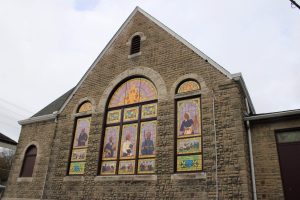
Meet Dr. Tee
One of Ford-Ahmed’s first exercises in her fellowship was a Lyceum Lunch Oct. 16 at the Southeast Ohio History Center, where she gave a talk, “Another Quintessential Coal Miner’s Daughter.”
In an interview, and in her talk, Ford-Ahmed noted that Appalachia in America’s cultural consciousness has long been whitewashed and stereotyped as a region. Those misconceptions actively erase Black folks’ — and others — legacies in the region.
“The quintessential ‘Coal Miner’s Daughter’ is Loretta Lynn — never me,” Ford-Ahmed said. “Because usually folks, period, don’t think that Blacks come out of Appalachia.”
In the coal town, Ford-Ahmed said her family grew up gardening and raising chickens and pigs in their company town.
“As a matter of fact, I could never get too close to a chicken,” she said.
She grew up hearing storytelling during church sermons, Sunday school and holiday gatherings. The Baptist church she attended was about 10 miles from her hollow, where Black folks from around the area gathered to worship.
Ford-Ahmed started school when she was two years old, she said, because the local Black school would not have had enough students to stay open without her enrollment — something she only learned recently.
“I was somewhere and I was kind of bragging about the fact that I went to school at two,” she said. “And I said, ‘I guess I was just pretty talented.’”
Her brother, however, burst that bubble, she said.
“‘Brat’ — which is what he always called me — ‘you filled the quota.’ I was like, ‘Huh?’ … I never heard that. … I get to be 80-some years old and find out, it wasn’t because I was brilliant — it was because I filled the damn quota.”
From that one-room school with its pot-belly stove, Ford-Ahmed said the adults in her life fostered her learning and creativity. She remembers doing performances at age four and cheerleading in junior high.
“By 10, I was playing the piano for the church choir,” Ford-Ahmed said. “I was always really interested in the piano. Mom said I used to play on the furniture but I had no idea I was going to end up playing in the church, my dad’s choir.”
She also performed in declamatory contests, “a type of spoken word where you learned a poem, or you learned a story or something, and you presented it to a broad audience,” Ford-Ahmed said. “I won the state contest one year, doing James Weldon Johnson’s [‘The Creation’].”
One of her first mentors was her teacher, Ms. Henderson.
“I guess she was our second mom,” Ford-Ahmed said.
When her family moved to Rand, West Virginia, Ford-Ahmed said she had another great teacher who inspired her, Mrs. Winona Jackson.
She graduated high school at age 16. She left home to go to school in Chicago, where her sisters worked and where she studied theater.
“Of course, I left West Virginia like everybody else did, and like they’re still doing,” she said. “I went to school in Chicago, and I worked really hard on my West Virginia accent so that I didn’t have it so much, because at that time, ‘Beverly Hillbillies’ was probably the biggest show happening on [TV] — it was embarrassing.”
Ford-Ahmed said she told people she was from Arizona instead of West Virginia. She also noted how imagery stemming from President Lyndon B. Johnson’s War on Poverty negatively impacted how Appalachians were perceived outside the region.
She later attended New York University for her masters degree in communications, where she also taught.
“After that … I would go visit my parents, and my mom would say, ‘All of my children left West Virginia, and nobody gave anything back. You’re my baby, you’re the last one. You’re supposed to come and give something back,’” Ford-Ahmed said.
That’s when she dropped off her resume at universities in West Virginia.
“That following year, my mom died in March, and I got a request from West Virginia State [University] in April, saying, ‘We’ve had your resume on file for some time now, we’d like to fly you in for an interview,” Ford-Ahmed said. “Well, shit — I was afraid not to go.”
Ford-Ahmed obtained her Ph.D. in mass communication from Ohio University and she taught at West Virginia State University, a historically Black university, for decades.
Ford-Ahmed retired in 2017 and moved back to Athens and so began her monumental work with Mount Zion Black Cultural Center.
“Miss Ada Woodson [Adams] was knocking on my door within a couple of weeks,” she said.
Woodson Adams is the president of Mount Zion. She is also the former president of the Multicultural Genealogical Center in Chesterhill, Ohio, which she co-founded alongside her late husband, Alvin C. Adams.
“Next thing I knew, I was working on the board, and she had me going here, and going there, working so hard — I think, why did I retire?” she said.“It’s been enriching and so much fun.”
Opening October 2026: Mount Zion Black Cultural Center
Mount Zion is in the midst of a $5 million capital campaign and recently received over $7 million from the state’s Appalachian Community Grant Program, Ford-Ahmed said. The cultural center is set to open October 2026 with the Ada Woodson Adams Library.
“We’re working toward getting some pieces of a traveling exhibit from the [National Afro-American Museum & Cultural Center],” she added. The exhibit is called “Queens of the Heartland.”
The museum will also honor Francine Childs, who held a doctorate of arts and letters and was a professor emeritus of Ohio University. Childs was an activist, educator and pastor, serving as the first woman pastor at Mount Zion Baptist Church, through 2004.
“We’re introducing two new queens of the heartland: Dr. Francine Childs and Ms. Ada Woodson Adams,” Ford-Ahmed said.
Its grand opening next year will be just the beginning of a new era for Mount Zion, Ford-Ahmed said.
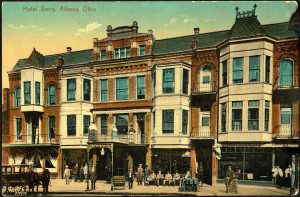
Hopes for the space also include a performance area and cafe, and potential expansion by acquiring nearby properties that were once owned by Black entrepreneur Edward Berry.
Berry donated the corner property on which Mount Zion Black Cultural Center stands.
The cultural center will be a home not only for regional Black history, but also for Black students at Ohio University following the state-mandated closure of the Black Student Union and other programs, Ford-Ahmed said.
The Advance Ohio Higher Education Act, or Senate Bill 1, adopted this year forced the defunding of universities’ student groups and closure of centers considered diversity, equity and inclusion initiatives.
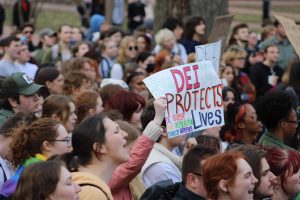
“They have no money, they have no place to gather. They have no — whatever,” Ford-Ahmed said.
“And I was telling them about [plans for Mount Zion Black Cultural Center]. They said, ‘We wanted to have a Halloween fundraiser.’ … And so I said, ‘Well, if you hang on until next year, we’ll have a space.’”