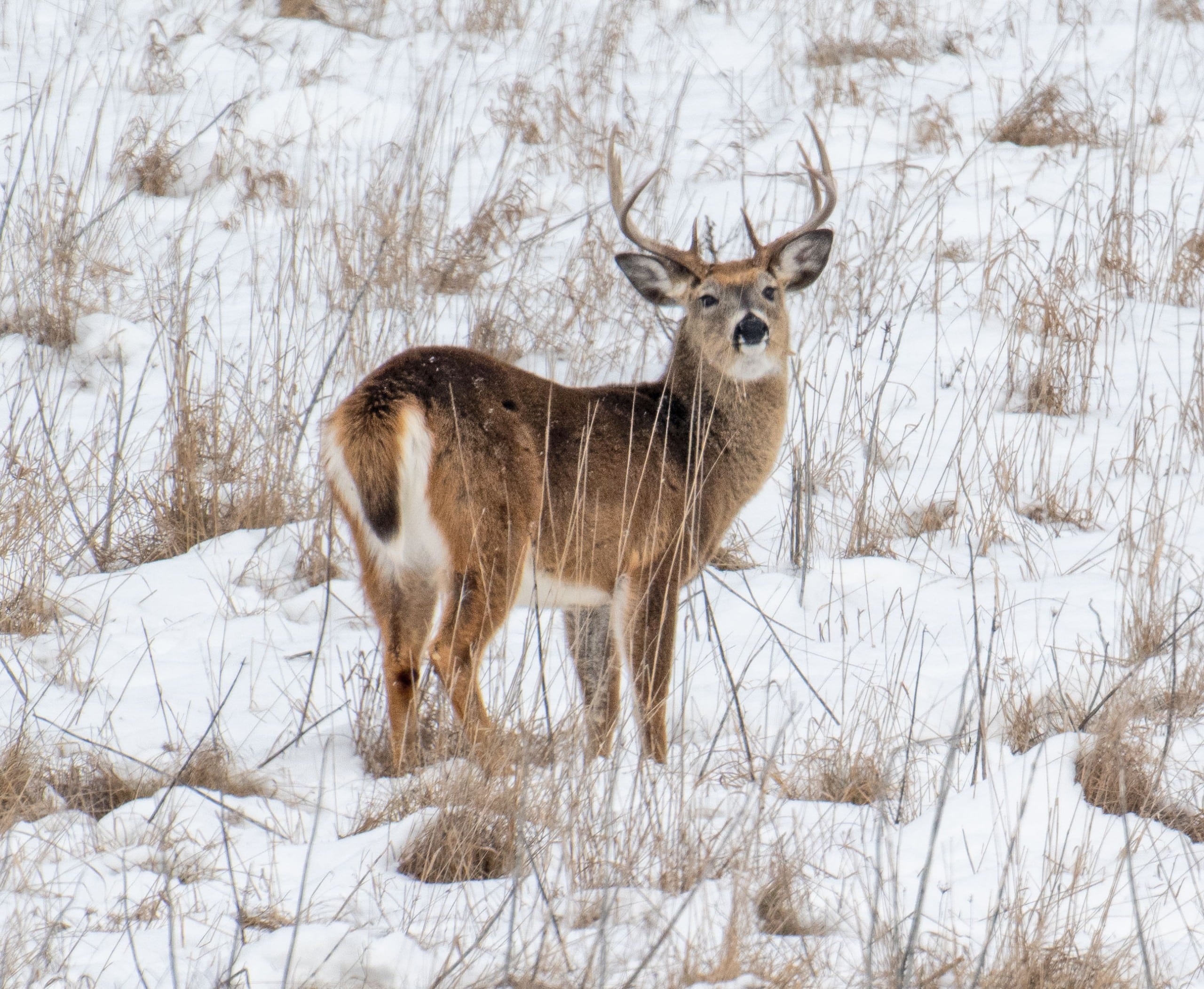

WASHINGTON COUNTY, Ohio — An outbreak of disease and bag limits during the 2025–26 hunting season combined to dramatically decrease the regional deer harvest compared to historical averages.
In Washington County –– where the epizootic hemorrhagic disease outbreak was most dramatic last year –– hunters bagged just 783 deer in the 2025–26 season, compared to a previous three-year average of 4,087, according to data released by the Ohio Department of Natural Resources.
In Athens County, hunters bagged 917 deer compared to the three-year average of 3,306; in Meigs County, hunters bagged 1,060 compared to the three-year average of 3,338.
State officials and hunters described the regional outbreak of epizootic hemorrhagic disease last summer and fall as unprecedented. Ohio Wildlife Council Chair Mike Rex said “that’s an understatement.”
“I don’t think that anybody that pays attention to deer and wildlife could have ever imagined the scope and the magnitude of die-off that we saw in this part of the state,” Rex told the Independent.
The Ohio Department of Natural Resources received 9,281 reports of dead or sick deer in 2025 –– by far the most ever reported. Those illness and death reports can be largely attributed to EHD.
About 55% of reports came from Athens, Washington and Meigs counties.
EHD is spread by midges and kills infected deer primarily through internal bleeding and fluid in the lungs. Deer infected with EHD often die near bodies of water, as the disease also causes high fevers and dehydration.
“The outbreaks we’ve had in the past were localized to a drainage section, a township,” Rex added. “This blanketed hundreds of square miles – blanketed. … It was unlike anything we’ve ever seen before.”
Ohio experienced EHD outbreaks in 2024 and 2022, with just over 2,000 dead or sick deer reported in 2024, more than in the previous outbreak. During both outbreaks, hunters bagged deer at levels near averages from preceding three-year periods for Athens, Meigs and Washington counties.
The most recent outbreak began in late summer and began to slow in October, when the midges that spread the disease began dying back after the first frost, Rex said. However, hunters felt the impact throughout the hunting season, Sept. 13, 2025–Feb. 1.
In response to the crisis, the Ohio Division of Wildlife reduced the deer bag limit for each hunter from three to one in those counties, and from three to two in Morgan County, effective Dec. 1, 2025. That policy change was approved by the Ohio Wildlife Council in November 2025, and was shaped by calls from hunters to protect deer populations.

Rex, who chairs the Ohio Wildlife Council, expects similar restrictions on the deer season in those counties for the 2026–27 season as the deer population recovers, he said.
“I would hope, and I can’t say for sure, but I would certainly anticipate the Division of Wildlife will have some sort of a reduced bag limit going forward, for the immediate future, for Athens, Meigs, Washington and probably Morgan counties,” Rex said. “I can’t imagine them just saying, ‘Okay, we’re going back to usual next year.’ The herd can’t sustain it.”
Rex said he believes the region’s deer population will recover.
“I think the deer will recover. I think they will come back,” Rex said. “What is concerning is, was this an anomaly? Was this a once in a lifetime event, or is this just a sign of the times? And I don’t know that anybody can answer that question.”
Long prevalent annually further south, EHD has been spreading north as a result of climate change. Ohio deer do not have immunity to the disease, unlike the counterparts farther south.