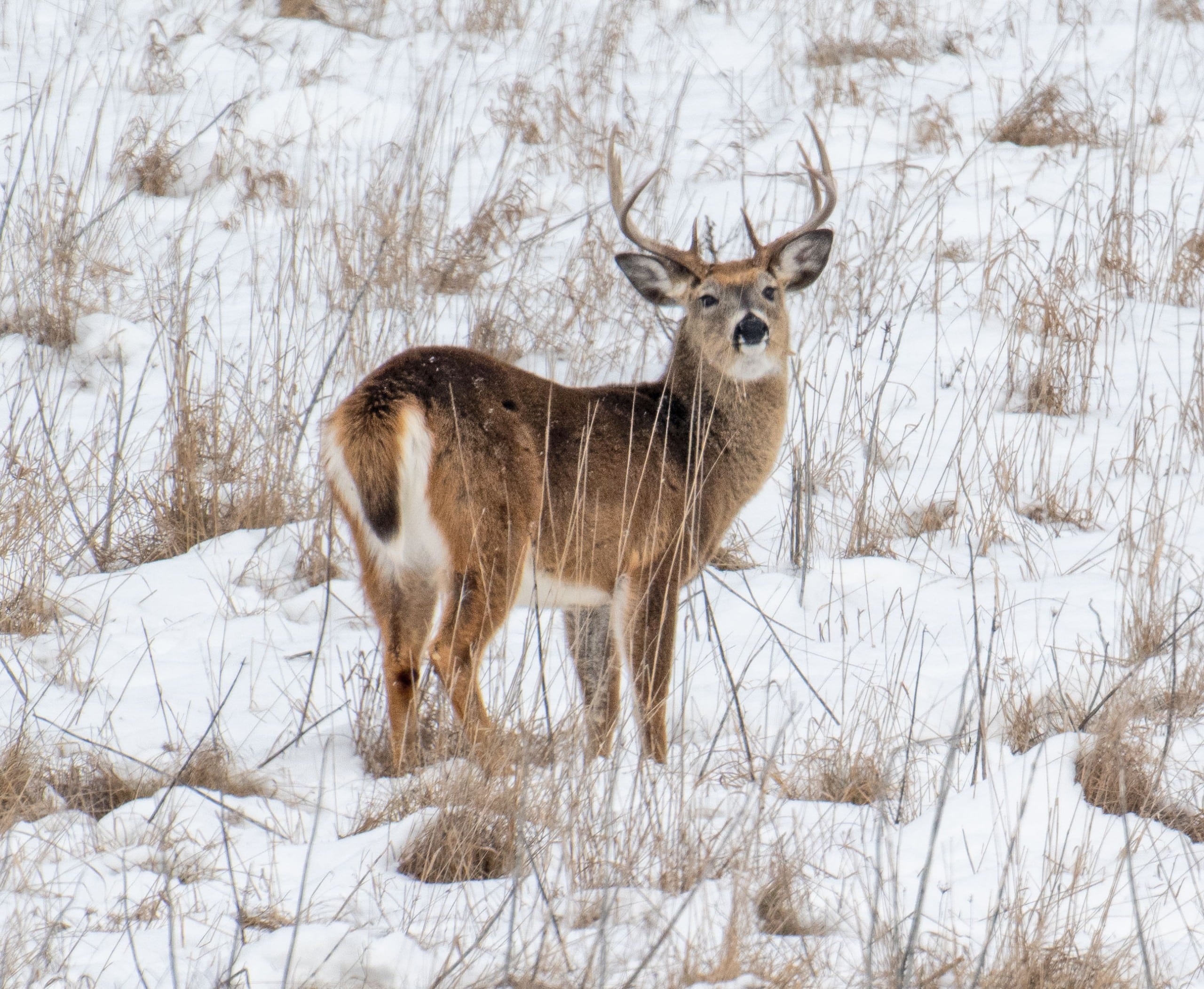
ATHENS, Ohio — The City of Athens’ first-ever deer archery season harvested four does and one buck — and insight into how to make future hunts more successful.
Sixteen hunters participated in the pilot project, taking five deer across 13 city properties, according to Katherine Ann Jordan, the director of the city of Athens Arts, Parks and Recreation.
“We think it went really well,” Jordan said. “We got some good feedback from the hunters. I haven’t touched base with all of them yet, but the ones that I have were able to harvest five deer. So I think that was five more than have been previously harvested in our area.”
While five deer may not seem like a huge impact, it’s an added bonus for a pilot program whose primary purpose was to gather data. Jordan previously told the Independent that the city’s aim for the first hunt was to get a better idea of the number, gender and locations of deer in Athens.
Michael Tonkovich, the deer program administrator for the Ohio Department of Natural Resources, which was not involved in the planning of the city of Athens hunt, echoed Jordan’s sentiment.
“I’d say that’s a great start, because if it was simply information gathering and their expectations were much lower than what I’m envisioning, then, of course, it sounds like they’re in a good spot,” Tonkovich said.
Jordan said that with the data they’ve gathered, the city is looking to make three changes to the program: allowing both sexes to be harvested all season-long, altering the city properties included in the hunt, and reducing the costs associated with the hunt.
Hunters were restricted to harvesting only does in the season’s first three sessions from October to December. Bucks were added for the last two sessions, from December to February.
“From my conversations following up with the hunters, we learned that there were a lot more antler deer that they were seeing, or that they were seeing in the locations that they could shoot [with their bow and arrow],” Jordan said. “Our program for the first three sessions was doe-only — trying to follow that philosophy that is within deer harvesting practices and management — is that does are the ones that are supposed to be prioritized, to manage herds.”
Adding bucks to the hunt isn’t a good idea, warned Tonkovich, who said he frequently hears the “only seeing bucks” comment from hunters. That doesn’t jibe with deer demographics, he said — there generally are 2.5 adult does for every adult buck.
More male deer may have been sighted because they are highly visible during breeding season, from October to November, because of the size of their antlers and their movement outside their usual range. Reducing the buck population would do little to address the overall problem, Tonkovich said.
“[Buck seasons] have their place but, but they’re not going to be appropriate in a situation like this, where you are trying to reduce your herd’s population. You have to educate folks, because there’s so many opportunities to hunt on public lands,” Tonkovich said. ”Rather than simply say, ‘We need to reduce deer populations,’ a good bit of time spent should be explaining to participants why the hunt is so important.”
And allowing bucks to be harvested could encourage trophy hunting, he said.
“The thing that they’re going to have to be mindful of, though, is … when they make it either sex, I can assure you that folks are going to be focusing on antlers and they will need to address [that] immediately,” Tonkovich said.
Another change prompted by hunter feedback is to combine, eliminate or trim a few of the properties included in the hunt because “some hunters felt like they were still too close to homes,” Jordan said.
“We’re just making sure that we’re taking that into account,” Jordan said.
Jordan said another reason for altering properties is that challenging terrain on some of the land made it difficult to hunt. In light of that feedback the city also plans to assign a terrain difficulty rating to the properties included in the hunt.
The city charged hunters $100 to cover costs associated with organizing the hunt. That may have been a barrier to participation, Tonkovich said.
“I don’t know why anyone would pay $100 to hunt,” Tonkovich said. “There’s public land opportunities, which are free with a license, which one would obviously have if they are hunting in the city of Athens.”
To encourage greater participation, Jordan said that the city may work with the Buckeye Hero Hunt, a program that provides assistance to Ohio veterans who want to hunt.
“They reached out to me because they always have more hunters, more archers who are interested in hunting, but they don’t always have enough with their Buckeye Hero Hunt weekend,” Jordan said. “So we’re going to work together to figure out how to get them incorporated into the lottery.”
The 2024 Ohio deer hunting season was the fourth-most successful in state history according to ODNR, with over 238,000 deer successfully harvested. Athens County ranked 20th among Ohio’s 88 counties, with 3,663 deer harvested.