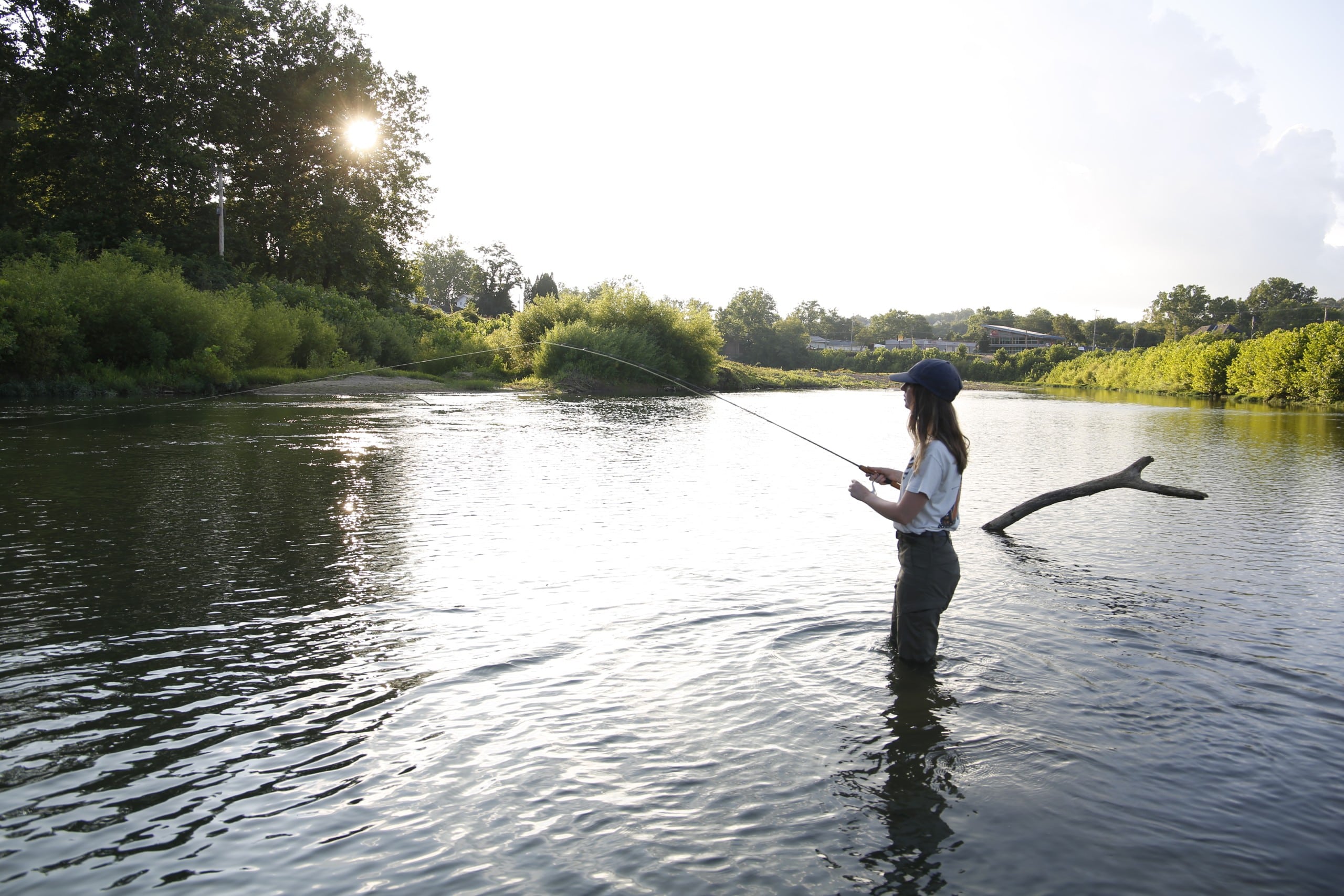

ATHENS, Ohio — The Hocking River winds through Fairfield, Hocking and Athens counties before discharging into the Ohio River. The 102-miles-long ecosystem is a smorgasbord of aquatic wildlife, ranging from hard- and softshell turtles to numerous species of fish to aquatic flora.
The river has always served as a source of food for the people living in the region — including the indigenous people that first gave it its name. Whether you want to eat your catch or throw it back, here’s how you can take up fishing in the Hocking.
Step 1: Get your fishing license.
Ohio law requires all anglers in Ohio to have a valid fishing license — with some notable exceptions:
- Youths under 16.
- Those fishing in privately owned bodies of water.
- Those assisting a mobility or visually impaired angler, provided they are only using one fishing line.
- Active duty U.S. military members on leave or furlough.
Ohio has an annual free fishing weekend, when anyone can fish without a license. This year’s weekend was in June, so keep an eye on the Ohio Department of Natural Resources’ website for 2025.
Annual fishing licenses cost $25 for Ohio residents and $37.44 for nonresidents. You can purchase a license online or in-person at ODNR’s District 4 office at 360 E. State St. in Athens.
Free fishing licenses available to certain veteran groups, people with physical impairments and residents of state and county institutions.
Step 2: Get your gear.
Beginner anglers may feel overwhelmed by the sheer amount of lures, bait, lines and more available to them.
Matt Hangsleben, the fish management supervisor for ODNR District 4, recommended that newbie fishers look into the fish species they want to catch before buying gear.
“In spring, bass are going to be more active,” Hangsleben said. “Same thing with crappie — if you can find some deeper holes, some cover and slower moving water, crappie will be hanging around those in the spring.”
A 5- or 10-pound fishing line will be more than enough to cover most fish in the Hocking River. If you want a more impressive catch, try for flathead catfish — anglers have pulled specimens in the 40- to 60-pound range in the past.
New anglers will get the most for their money from jig heads and twister tails, said longtime fishing enthusiast Dan Imhoff, who is retired from the Ohio Environmental Protection Agency. But if you just want to catch some fish, there’s nothing wrong with the classic earthworm on a hook.
“If I was after anything-that-bites, I would take some worms and put them on the bottom,” Imhoff said.
Step 3: Go fishing at the right time.
In general, fish are crepuscular: They are most active at dusk and dawn. This means that the only thing anglers fishing at noon are likely to catch is a sunburn.
“The morning and evenings are going to be better (times to fish),” ODNR’s Hangsleben said. “People fish at night on the Hocking too, but once you get to the middle of the day, fishing will be a lot tougher. Especially this time of year with it being so hot, the fish get a little more sluggish.”
Step 4: Find your fishing hole.
Finding a good spot to cast your line is just as important as having the right gear. The river near White’s Mill is a particularly popular fishing spot because it’s deep and the rapids functionally separate two types of fish populations.
“White’s Mill is a little bit of a barrier for fish,” Hangsleben said. “We typically see a different fish community below White’s Mill, more similar to what you find in the Ohio River — whereas the upper part of the Hocking you tend to get more smallmouth bass, more native suckers.”
If you want to find a spot of your own, Imhoff suggested looking for riffles — shallow areas that are often full of fast-moving water — with some log coverage, which provides natural shelter for fish.
“Generally, I look for deeper water,” Imhoff said. “If you look right where [the river] transitions from a riffle to a deep hole, a lot of fish feed there. They wait right there and wait for food to wash down the riffle.”
But don’t get too attached to a single spot. Hangsleben recommends that new anglers make a conscious effort to move their fishing spot often. Beginner fishers have a bad habit of “setting up camp” at one spot and never moving, he said.
Step 5: Be mindful of regulations and safety.
Ohio’s fishing regulations can be found online or picked up in person from Ohio Department of Natural Resources offices. No specific size or bag limit regulations currently apply to fish in the Hocking River, beyond the standard statewide fishing regulations.
However, anglers looking to eat their catch will want to note the Ohio EPA’s fish consumption advisory guide; eating excessive amounts of wild fish can pose some health risks. You can eat as much black crappie as you like, but rock bass should be eaten no more than twice a week. Walleye, smallmouth bass and freshwater drum should be eaten only once a month.
Imhoff encourages anglers to take a safety first approach, warning against the danger of wading too far into the river and getting swept away by the flow of water. (This is especially important when fishing near the White’s Mill rapids or when the river is running high after rain.) And of course, wear sunscreen and stay hydrated.
Step 6: Have fun.
Fishing isn’t just about the catch — it’s about spending time in nature and enjoying the beauty of the surroundings, Hangsleben and Imhoff said. A good fishing buddy or book also make for a great day on the water.
“Fishing is mostly about failure: Think about how many casts you’ll make in a day and how few fish you will catch,” Imhoff said. “Hopefully you’re enjoying every cast and being out in nature.”