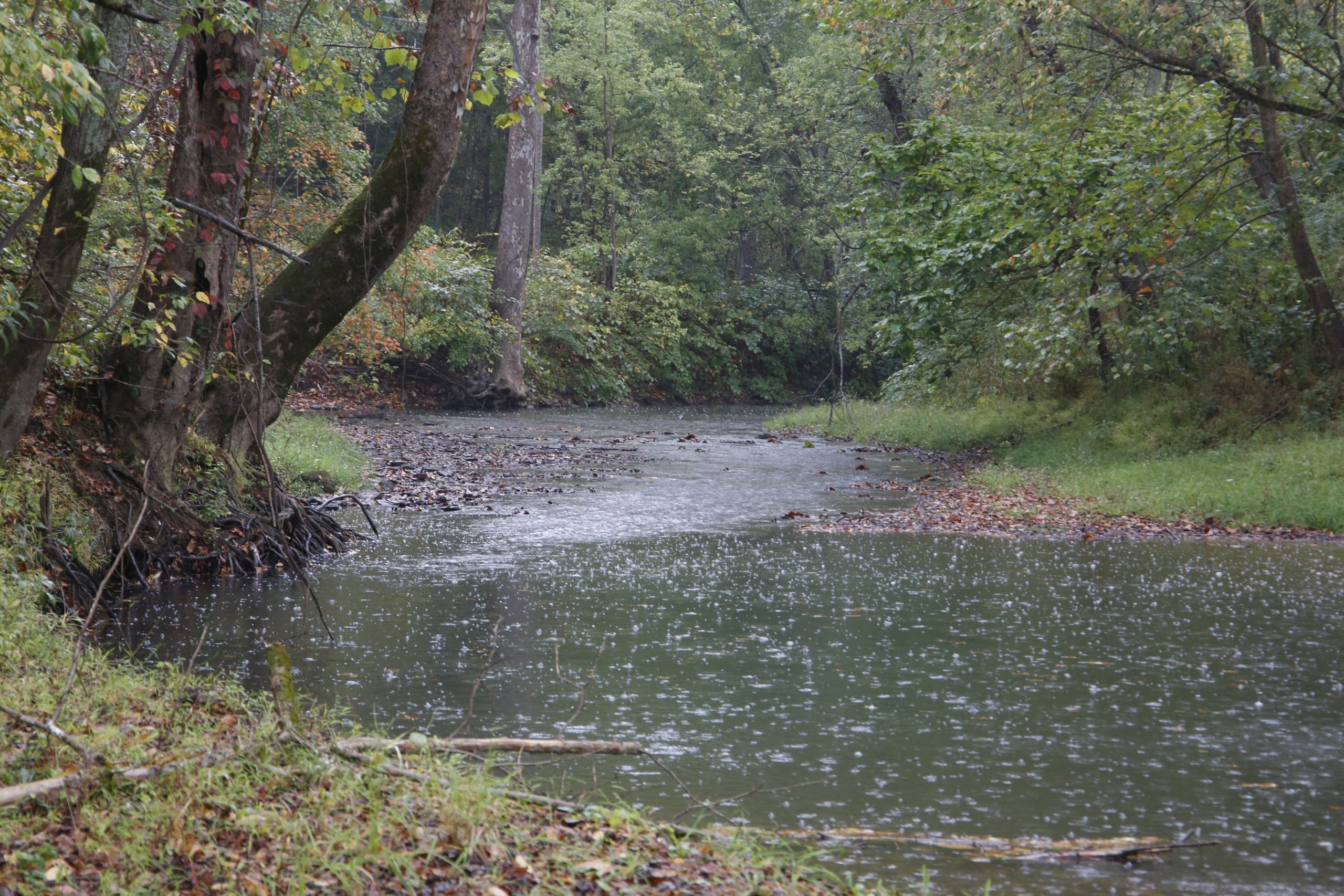
ATHENS COUNTY, Ohio — A recent report from the Ohio Environmental Protection Agency concluded that the Hocking River is an “exceptional warmwater habitat” and that its water quality has greatly improved.
The research is part of a broader effort to measure the water quality of Ohio’s waterways that has been going on for over 30 years. Ohio EPA Director Anne Vogel said these reports are “used to identify and to focus [Ohio EPA] efforts immediately.”
The study consisted of five tests that were conducted at 81 different points along the Hocking River, including 17 sites along the river itself and 64 sites on its tributaries. The Ohio EPA has sampled from these sites over the past 30 years, creating a basis to measure this year’s results against, said Kelly Capuzzi, an environmental supervisor at the Ohio EPA.
“We will look at historic data and we’ll go back to those same sites so that we can look at the trends that have happened over the years,” Capuzzi said. “If we have a point source facility, like a wastewater plant that we’re interested in getting data from, we might sample upstream and downstream from that wastewater plant.”

An Exceptional Habitat
In the case of the Hocking, the exceptional warmwater habitat designation means that the river will be subject to stricter standards for temperature, dissolved oxygen and ammonia.
As the designation’s name suggests, the Ohio EPA found that the Hocking River is the ideal environment for 75 species of fish and nearly 400 macroinvertebrate species. These species were studied specifically because they are “indicator species,” organisms that indicate the health of an ecosystem by their presence and population size. Amphibians, such as frogs and salamanders, are often used as indicator species because they are sensitive to environmental change.
However, the main Hocking River has few amphibians; they are mostly found in tributaries and creeks. Using fish and macroinvertebrates as the indicator species made the agency’s habitat quality data more comparable to other waterways in the Hocking River watershed.
The study found that much of the watershed provides a good to exceptional habitat for macroinvertebrate species, such as insects and crayfish, as well as for fish. Overall, the watershed’s fish index of biotic integrity has gone up by roughly 10 points in the last 30 years, according to Ohio EPA data.
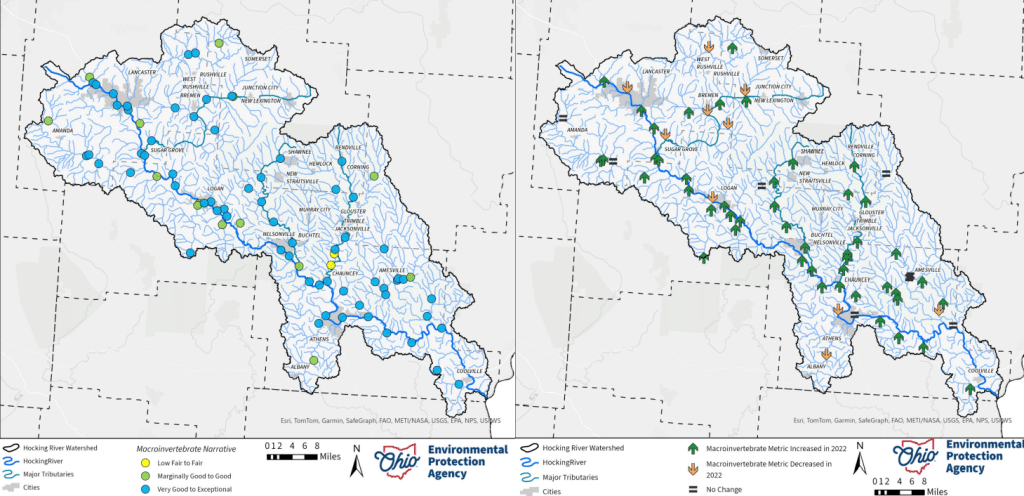

The Ohio EPA uses the “index of biotic integrity” to measure habitat quality. The index consists of 12 different factors, with each receiving its own score. The maximum score a habitat could achieve is a 60 — a high-quality habitat — and the lowest is a 12.
A score above 40 is considered “good” and any score above 50 is considered “exceptional,” said Capuzzi.
The only section of the Hocking River watershed that scored less than 40 is the section of Sunday Creek downstream from the Truetown discharge site. The discharge adds 988 gallons of acid mine drainage to Sunday Creek per minute and kills off life for the next seven miles of stream due to its high acidity and heavy metal concentrations.
Local groups such as True Pigments and Rural Action are already working to lessen the effects of the discharge. Comparing Ohio EPA data from the 1991 and 2004 watershed survey, the habitat quality of Sunday Creek has already improved.
Dr. Natalie Kruse Daniels, a professor in Ohio University’s Voinovich School of Leadership and Public Service, researches watersheds and acid mine drainage. Kruse Daniels, who was not involved in the EPA’s study, believes that the True Pigments will further improve the habitat quality downstream.
“For the fish and macrovertebrates, True Pigments will be a big deal [on Sunday and Monday Creeks],” Kruse Daniels said.
The highest scoring sampling site is a tie between a sampling site along U.S. Route 50 near Guysville and just outside the City of Athens on Harmony Road. Both sites received a score of 54 on the index of biotic integrity.
The Hocking River Commission, a local nonprofit formed with the goal of preserving and restoring the river while promoting its recreational use, worked with the Ohio EPA to host a public forum discussing the results of the study in November 2024.
Attendees of the forum and members of the Hocking River Commission shared that they were happy to hear about the improving status of the Hocking.
“I’m surprised the river is doing as good as it is,” said Dan Imhoff, treasurer of the Hocking River Commission. “I was pleasantly surprised.”
“Forever chemicals” and the Hocking
Water sampling does not test for per- or polyfluoroalkyl substances, better known as PFAS or “forever chemicals.” However, another Ohio EPA study, which has yet to be published, did measure the amount of PFAS in Ohio’s waterways.
“We didn’t find in the Hocking or any other large rivers in Ohio any levels of PFAS above the aquatic life standard,” Vogel said.
When asked if there was a difference between the consumption standard and aquatic life standard, Vogel responded, “There isn’t a consumption standard in the Ohio Department of Health, and that is because the science hasn’t really gotten there yet.”
PFAS research on Ohio fish and waterways, however, could lead to a consumption standard being created.
“The Ohio Department of Health, in collaboration with the Ohio Department of Natural Resources and Ohio Environmental Protection Agency, is in the process of developing a protocol for sampling and analyzing Ohio sport fish for PFAS,” the Ohio Department of Health said in an email. “This effort could result in updates to future advisories to include PFAS.”