Was this the best year for ramps we’ve had for a while? In early April I saw the banks of creeks looking positively furry, covered with delicious, light-green leaves. I think we may be in the last gasp of their season—when I went, on Monday, to pull some to make a final batch of pesto for the freezer, the hotter weather had them wilting and yellow-y. I’m hoping some of you readers may also be in the mood for one more fling with our garlicky springtime friends.
I adapted this recipe from one shared in an old column from New York Magazine, for roasted carrots with winter-greens pesto. The original recipe called for pesto made with leaves of arugula and mint in a 2:1 ratio, and I actually do recommend trying the recipe that way, as well. That is a good winter option to eat alongside roasted chicken. (And now my garden mint is coming up, and can always use a pruning—being ahead of itself already, in classic mint fashion.)
But, however good the original may be, I do like this ramp-pesto substitution. The carrots are sweet, the olives are salty, and the garlic of the ramps works well with both those things. We are almost into the phase of the year where we will turn up our noses at bags of carrots from the store, so glutted we will be with fresh, interesting non-root-vegetable options at the market. Here’s to a last hurrah?
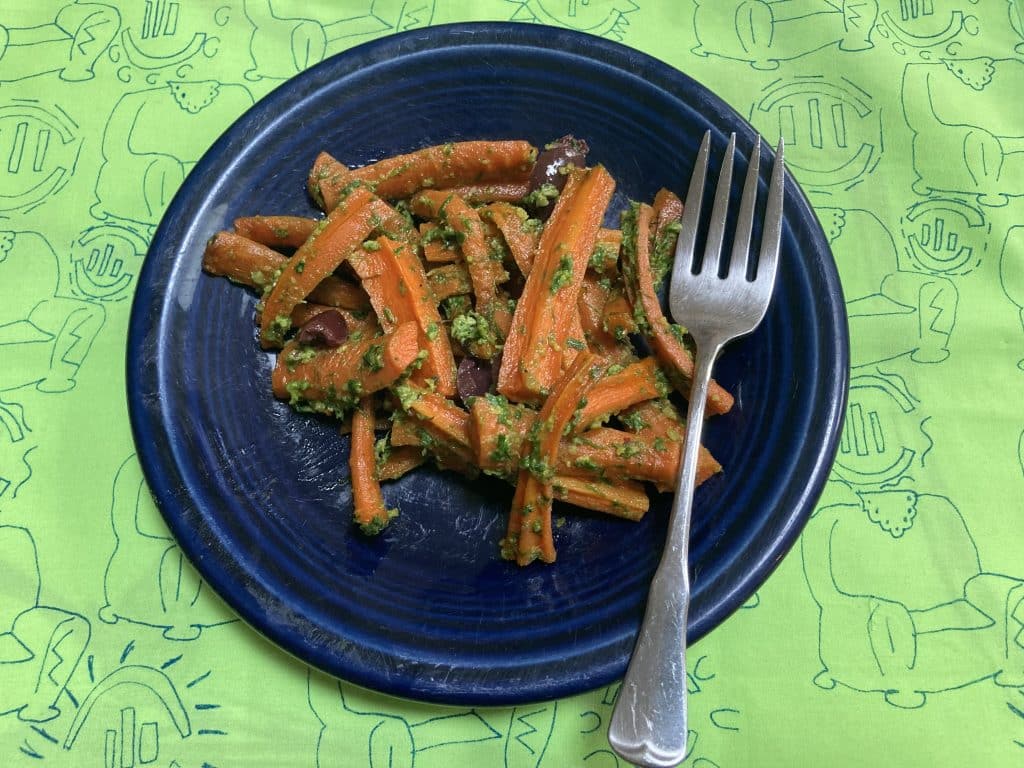
Sweet Roasted Carrots with Ramp Pesto and Olives
Adapted from Julie E. Farias/New York Magazine and Food52
Ingredients
For the pesto:
- 1 bunch of ramps (a hearty handful, or about 5 oz. on the kitchen scale)
- ½ cup walnuts (or substitute pine nuts)
- ⅓-½ cup olive oil
- ½ cup grated parmesan off the block
- Sea salt
- Pepper
- A squirt of lemon
For the carrots
- 2 lbs carrots
- 1 tsp olive oil
- Salt & pepper
- Thyme sprigs (optional)
To finish
- A handful of pitted, halved olives (Julie Farias recommended Gaeta; I didn’t see those in Kroger, so used kalamata, and it was fine)
Directions
- Set the oven at 350 degrees. Peel carrots and cut into batons. Toss on a sheet pan or two with oil, salt & pepper, and thyme sprigs, if using. Roast carrots for 1 hour. (If you are short on time or have other things going on in the oven, you can up the temp and roast for a briefer period. Just keep checking until you see they’re browning on the edges, and test to make sure they’re soft to the tooth.)
- Meanwhile, make pesto: First, toast walnuts lightly in a toaster oven or small cast-iron skillet. Put them in a food processor to cool.
- Prepare ramps: Wash and pick through. Blanching the ramps in boiling water for fifteen seconds, then setting them in an ice bath, produces a beautiful green color that is (I think) worth the extra work, but if you’re in a hurry, it’s fine to skip. If you did blanch, remove them from the ice bath, lightly squeeze out the excess water, and chop a little. If you didn’t, just chop a bit so the leaves will move nicely in the food processor with the rest of the ingredients.
- Assemble pesto: Put ramps in the food processor with the walnuts. Add parm, salt, pepper, and lemon. Process on “chop” until the mixture looks evenly chopped. Add olive oil slowly until it looks right. (I have seen pesto recipes call for a frankly wild amount of olive oil, in my life, and I’ve come to believe that eyeballing is the way!)
- Assemble the dish: Remove any thyme sprigs from the roasted carrots. Toss in a bowl with an amount of pesto that you think works. (This recipe makes way too much for one batch of carrots—I’d start with a third of a cup of pesto per 2 lbs carrots, then adjust.) Add olives, if you like.
- Freeze the rest of the pesto in ice cube trays, then turn out into Ziploc bags, to use in future pasta, batches of roasted vegetables, and sandwiches.