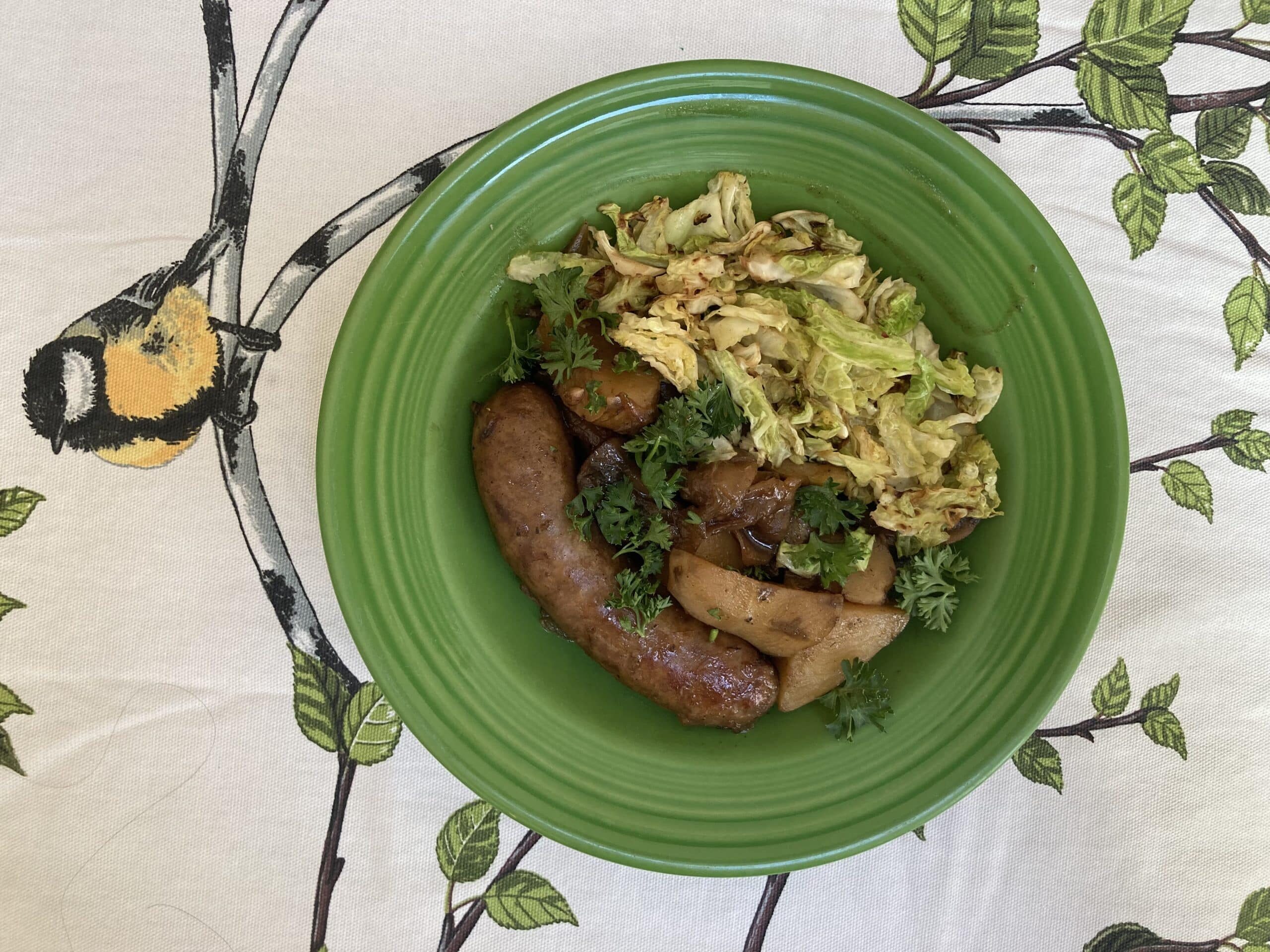

Sometimes I keep a subscription to a little-visited app or service around, month after month, out of pure stubbornness, just knowing that sometime, I will enter into a new era and put it to use. So it is with me and Eat Your Books, a website where you can input the names of the hard-copy cookbooks you own, creating a “shelf” that indexes all of their recipes.
The idea is, if you have an ingredient and aren’t sure what to do with it, you can search your books, rather than the entire Internet, for inspiration. I usually ignore this fine service that I pay for (as well as all of the cookbooks I’ve lovingly collected over the years), in favor of lazily searching online, but as AI glop takes over Google, the Eat Your Books concept is starting to make more and more sense.
I came home from the freezing-cold farmers’ market on Saturday with three pretty sunchokes, sometimes known as “Jerusalem artichokes,” from Sassafras Farm. I’ve never been able to understand how to use these root vegetables, which are actually members of the sunflower family. One of my many mandolin accidents occurred when I tried, about a decade ago, to make a sunchoke slaw. That kind of experience will make a person wary! But these Sassafras ‘chokes looked nice, and in February, one looks for variety where one can find it.
Plugging “Jerusalem artichokes” into my Eat Your Books account, I hit on a recipe in a beautiful 2011 cookbook by British writer Nigel Slater, Tender: A Cook and His Vegetable Patch, which I hadn’t opened in years. Slater’s name for this recipe—”A casserole of artichokes and pork for deepest winter”—felt highly correct, given the temperatures in Athens this past weekend. After I made it, and saw how brown, jumbly, and tasty it came out, I gave it the other, less poetic name, below.
Slater recommends serving this dish with “steamed cavolo nero, spring cabbage, or purple sprouting.” I get why he thinks a simple steaming might be the way to go for the accompaniment, but I had a ruffled savoy cabbage in the fridge and was thinking about the nice brown edges it would have when sautéed with butter, so went in that direction, instead. But any brassica you have, treated to a sautée or a steam, would do fine as an accompaniment here.
And now? I’m going to use Eat My Books, on the regular. It’s time!
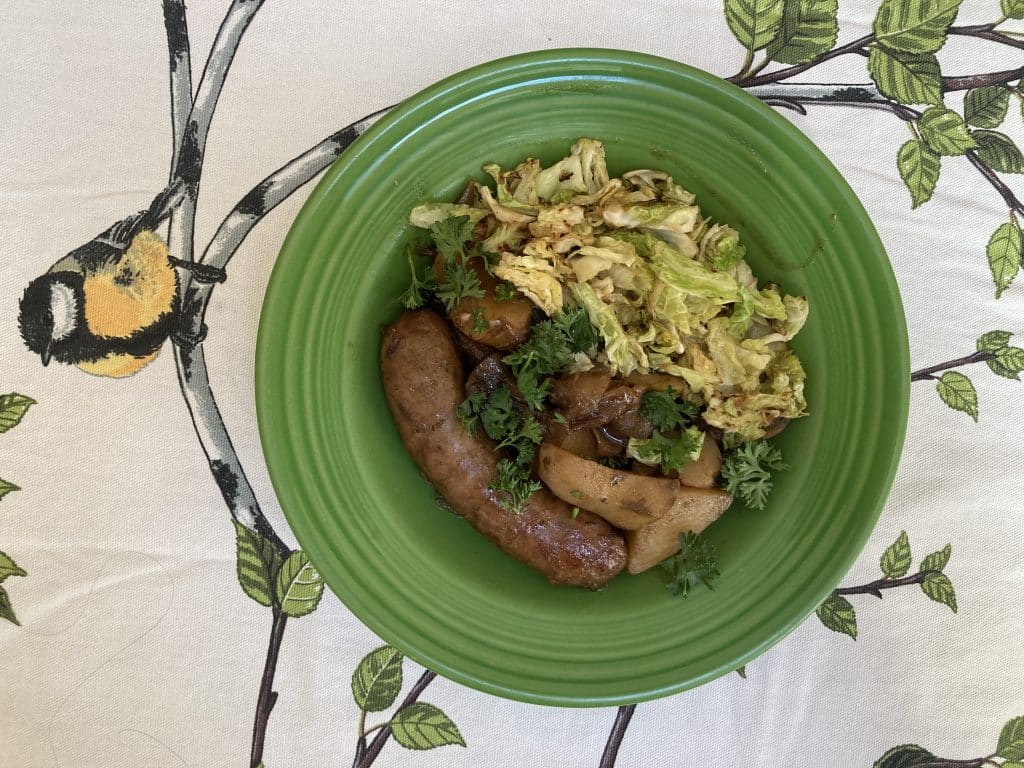
Hobbit Bowl with Sunchokes
Adapted from Nigel Slater’s Tender: A Cook and His Vegetable Patch
Ingredients
- 5-8 pork sausages
- Olive oil
- 4 medium onions
- 2 cloves garlic
- 9 oz small mushrooms
- 1 lb Jerusalem artichokes, or sunchokes, well-scrubbed
- A large lemon (try for one with thin-to-medium skin; if the only available lemon has a hefty half-inch of pith I’d skip this inclusion, or maybe peel its skin to include as zest instead)
- 1 tsp fennel seeds (optional, depending on whether you tend to like these)
- 2-2.5 cups beef or chicken or vegetable stock, to cover
- Handful of parsley
- A quarter or a half a savoy cabbage, depending on how many people you’re serving
- 2 tbsp butter (or substitute more olive oil)
Directions
- Haul out your big Dutch oven or other heavy pot. Warm some oil in it, on medium heat. Brown the sausages on all sides, really well. (This will take a little time, maybe 20 minutes.) Put the browned sausages aside.
- Peel the onions and cut into quarters or eighths, depending on their size. Put them into the now-empty pot, with a little more oil if your sausages did not render a ton. Let them brown and soften on medium heat, fifteen to twenty minutes. They should look deliciously burnished by the end of this step.
- Meanwhile, peel and slice the garlic and cut the mushrooms in half. When the onions look toasty, add garlic and mushrooms to the pot.
- Peel as much of the skin off your sunchokes as is possible and convenient, and don’t stress too much if there are spots on the ‘chokes that still have skin; it’s fine. Cut them into chunks, between 1 to 2 inches. Push the onion-mushroom-garlic mixture to the side of the pot and put the sunchokes in. You will really want the sunchokes to have plenty of room in there, to get some brown on all their sides. If the pot is too small, and the onion-mushroom-garlic mixture is crowding the sunchokes, you can remove it to a bowl.
- Now! Add the onion-mushroom-garlic mix back to the pot, if you removed it. Add the sausages back in as well. Cut the lemon into chunks, and add. Add the fennel seeds, if you’re using them, as well as a bunch of salt and pepper.
- Cover everything with the stock and bring to a simmer. Keep simmering for about thirty minutes.
- While you are simmering, core, quarter, and chop the cabbage quite thinly. Heat the butter or olive oil, in a large frying pan, at medium, then add the cabbage and sauté until it’s got nice brown edges and has softened.
- Now, back to the main dish. Test a sunchoke. Is it tender to eat? If it’s ready, but there seems to be too much liquid left over in the pot, and everything looks watery, set a strainer over a bowl and strain out the liquid. Put it in a small saucepan, reduce until it’s concentrated and intensely savory, acquiring some gravy-like qualities, then add back in.
- Chop the parsley roughly. Scatter over the top. Serve, with savoy cabbage on the side, or underneath!