In Inside Courts, retired judge Tom Hodson explains the complexities of the law and legal cases, helping you understand what’s at stake — and how it affects you.

On Election Day, three seats on the Ohio Supreme Court will be decided. Two of the Democratic justices seek re-election in spirted races and there is one open seat being hotly contested by both parties.
Since November 2022, candidates for the state supreme court have their party affiliations listed on the ballot. This is true of all appellate judges in Ohio, but not local trial judges.
Each party wants control of the majority on the court. Currently, the court tilts 4-3 Republican. However, if the Democrats sweep all three seats in this election, the power shift will be to 4-3 Democratic. If the Republicans sweep the races, the GOP will have a super majority of 6-1 and would be able to easily rubber stamp actions of Republican state office holders and the ultra-conservative Ohio General Assembly.
Issues
Lawsuits and lower courts have been deciding cases concerning regulations of reproductive rights, even though Ohioans passed a measure to protect abortion rights. In one such case, a lower court judge repealed a block to telehealth prescriptions. Many cases regarding abortion restrictions could make their way to the Ohio Supreme Court over the next couple of years.
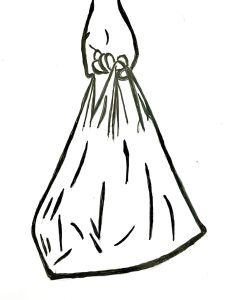
Also, there are issues such as school funding and the voucher system, gun regulations, and home rule — including Athens’ plastic bag ban — that likely will be on the next Ohio Supreme Court docket.

Other issues facing the court include LGBTQ+ rights, gender affirming care, and issues concerning gerrymandering. Just recently, with a 4-3 Republican majority, the court interpreted a ballot issue involving Issue 1 in a way that caused Democrats to scream party politics were at play.
The Republican majority upheld confusing and contradictory language being used in the description of the amendment for voters. Issue 1, a constitutional amendment, will determine how Ohio draws its legislative districts. It would take legislative redistricting out of the hands of politicians and put it under the control of a citizen’s commission.

The issue was placed on the ballot by 535,000 Ohioans who signed petitions to do so. The ballot language, however, was written by the partisan Ohio Ballot Board, dominated by Republicans and chaired by GOP Secretary of State Frank LaRose.
The ballot language as adopted reads exactly the opposite of the proposed amendment. The Board says the amendment would form a “new taxpayer-funded commission of appointees required to gerrymander the boundaries of state legislative districts to produce partisan outcomes.” The is totally contradictory to the intent of the amendment.
This language, supporters of the amendment argued, is unconstitutional because ballot language is NOT supposed to “mislead, deceive or defraud the voters.”
All four Republican justices found the confusing ballot language to be appropriate and accurate — much to the dismay of the three Democratic justices, all three of whom dissented.
Justice Michael Donnelly referred to a recent GOP majority decision finding “boneless” chicken wings means chicken served with bones:
Given that the four members of this court in the majority today apparently think that the word “boneless” means “you should expect bones,” Berkheimer v. REKM, L.L.C., 2024-Ohio-2787, ¶ 38 (Donnelly, J., dissenting), I’m sure it comes as no great surprise that they think that a constitutional amendment to “ban partisan gerrymandering” means to “require[] gerrymander[ing].

Justice Jennifer Brunner was equally critical of the majority’s decision:
The Ohio Constitution forbids the ballot board from prescribing ballot language that, among other prohibited actions, misleads Ohio voters. Ohio Const.,art. XVI, § 1. The majority opinion reflects an abject failure of this court to perform an honest constitutional check on the ballot board’s work. We should be requiring a nearly complete redrafting of what is perhaps the most stunningly stilted ballot language that Ohio voters will have ever seen. The ballot board’s actions, endorsed by a majority of this court, leave any objective observer scratching their head and asking, “Who’s in charge here—Ohio’s people or its politicians?”—which ironically is the essential issue the proposed constitutional amendment seeks to address.
Seats in contention
Three seats on the bench are up for grabs:
- Incumbent Justice Michael Donnelly (Democrat) is challenged by Republican Megan Shanahan, currently a judge in the Hamilton County Court of Common Pleas.
- Incumbent Republican Justice Joseph Deters is giving up his current place on the court — to which he was appointed in 2023 — in an attempt to unseat incumbent Justice Melody Stewart (Democrat).
- Democrat Lisa Forbes and Republican Dan Hawkins are vying for Deters’ unexpired term. Forbes is a judge on the Eighth District Court of Appeals. Hawkins is a judge in the Franklin County Court of Common Pleas.