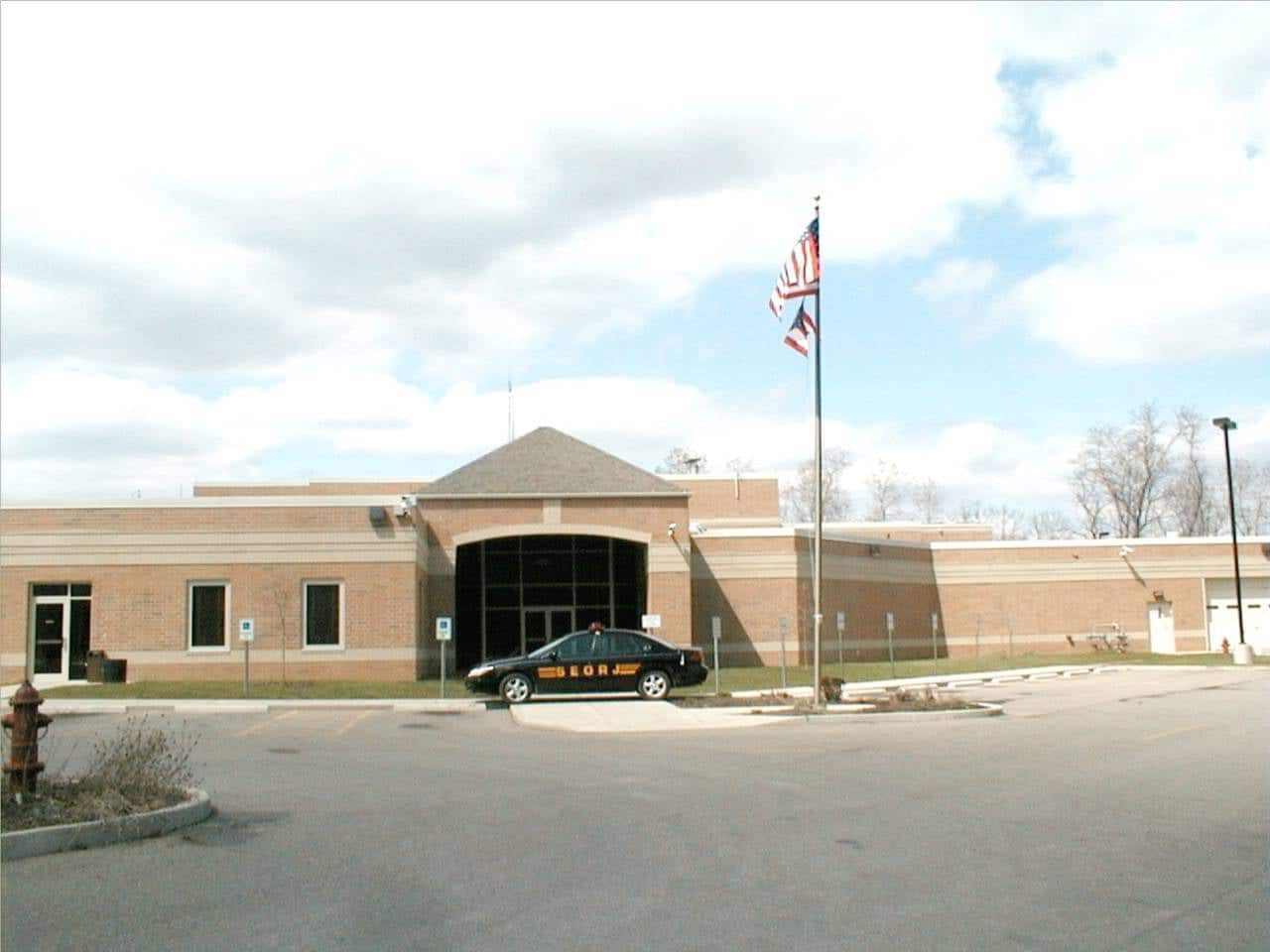

NELSONVILLE, Ohio — A lawsuit against Southeast Ohio Regional Jail employees over the death of a detainee will move forward, following a federal appeals court ruling today that an SEORJ nurse and supervisor is not entitled to qualified immunity in the case.
Jennifer Ohlinger, an SEORJ pretrial detainee, died after she fell and hit her head at the jail on June 25, 2018. James Gray, a nurse and medical supervisor for the jail, responded to the accident by ordering a blood draw and giving her an ibuprofen, rather than sending Ohlinger to the hospital, according to court documents. She died the next day.
Kelsea Mercer, Ohlinger’s daughter, filed a lawsuit against the jail, Gray and two other jail employees in 2020.
The Sixth Circuit Court of Appeals decision partially reversed a previous decision by a district court to grant summary judgment in favor of SEORJ and all of its employees.
“Viewing the facts in the light most favorable to Mercer, a reasonable jury could find that Nurse Gray acted recklessly, not negligently, in the face of an unjustifiably high risk to Ohlinger’s health,” the appellate panel found.
Gray had failed to call a doctor or hospital during three interactions with Ohlinger, and he “knew, or should have known, that Ohlinger had a serious medical condition requiring further medical attention.”
R. Craig McLaughlin, Mercer’s attorney, said he and Mercer are “very happy” with the appeals court decision.
“We believe the evidence was overwhelming that Nurse Gray violated Jennifer’s constitutional rights and acted recklessly by not sending her to the hospital that morning to be seen by a doctor,” McLaughlin said. “There’s no excuse for not even picking up the phone, even consulting a doctor.”
Attorneys for Gray did not immediately respond to a request for comment.
A previous appellate court decision from 2009 “was sufficient to put Nurse Gray on notice that he was violating a clearly established constitutional right,” the appellate court found. “Nurse Gray knew or should have known of a substantial risk of serious harm to Ohlinger because she had lost consciousness, had a headache, had been reported to have had multiple seizures, and had urinated on herself.
“Yet when his examinations did not line up with the facts as reported to him by Ohlinger, other inmates, and Officers Jarvis and Lowery, he gave Ohlinger ibuprofen and sent her back to her cell rather than calling for a doctor or sending her to the emergency room, which a jury could find was deliberate indifference. Therefore, we find that Nurse Gray was on notice that his conduct was unlawful, and he is not entitled to qualified immunity.”
The panel found that two corrections officers, Charity Lowery and Amista Jarvis, were entitled to qualified immunity because they had less medical responsibility. Qualified immunity is the controversial doctrine created by the U.S. Supreme Court that protects some government officials from allegations of misconduct.
McLaughlin said he is “disappointed” by that aspect of the appellate court’s decision.
“Although they were deferring on Nurse Gray’s expertise as a nurse, this whole crisis still could have been avoided if they simply talked to the warden or told their boss what was going on,” McLaughlin said.
SEORJ had argued in legal filings that Gray and the correctional officers had acted appropriately in their response to Ohlinger, although Gray admitted in a deposition that he should have called a doctor.
The case will now go back to the trial court judge. McLaughlin said “we’ll keep preparing for court” unless and until Gray and his attorneys “want to talk with us and can accept responsibility for what happened here.”
Months after Ohlinger’s death, Gray was criminally charged with stealing medication from the facility. He pleaded guilty in October 2019 and was sentenced to a diversion program, according to court records. He completed the diversion program in January 2022.
Charlie Adkins, a county commissioner and member of the board that oversees SEORJ, said Gray is no longer employed by SEORJ. Adkins declined to comment further.
SEORJ Warden Josh VanBibber did not immediately respond to a request for comment.
SEORJ, which is in Nelsonville but receives detainees from five Southeast Ohio counties, has faced scrutiny in recent years over protections for inmates. In 2020, inmates raised concerns about inadequate pandemic precautions at SEORJ. In 2021, Kayla Allbaugh, a detainee, jumped from a second story balcony at the jail and was hospitalized.
In September 2021, law enforcement reported a “mass disturbance” at the jail, an apparent protest by inmates.
NOTE: This story has been updated to include comment from Charlie Adkins.