ATHENS, Ohio — Last Thursday, April 3, Ohio University filed an objection with the State Employee Relations Board seeking to overturn the results of a recent faculty union election.
Over 70% of participating faculty voted in favor of unionization in the election held earlier this year.
In its objection, the university said that the union held members-only meetings during the campaign and that the election process was compromised by issues with faculty receiving mail-in ballots. Similar issues in other cases have led to re-run elections, the university said.
If the board agrees with OU’s arguments, the recent election results would be thrown out, and faculty would have to vote again.
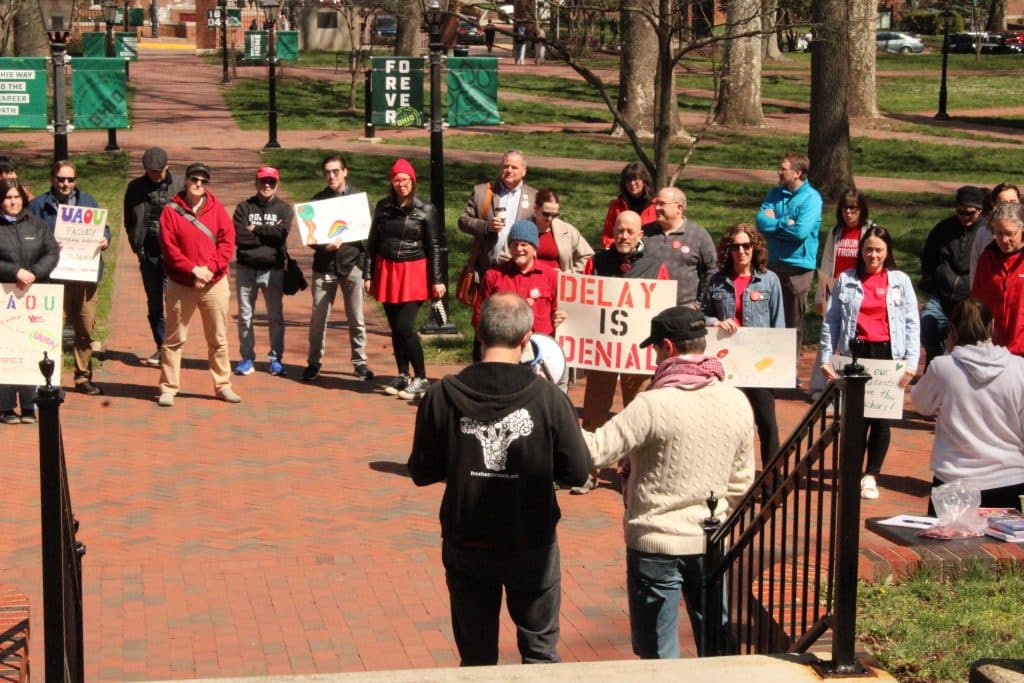
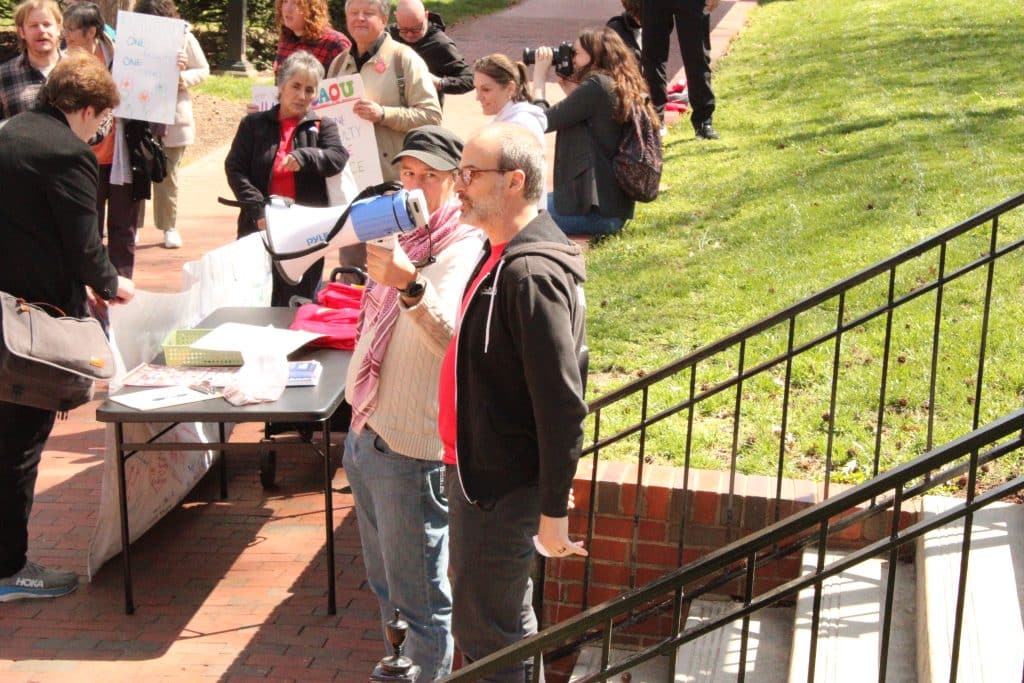
“Even if we have to do the voting all over again, we will win our union,” Kyle Butler, associate professor of instruction in the College of Arts and Sciences, said at a union protest Wednesday, April 9. “We won and we will win because the faculty are united.
“The election is over. We voted yes for our union,” Butler continued. “The university leadership strategy is denial through delay, pure and simple. Every day that the recognition of our union is delayed, it’s a day that our rights to collective bargaining are denied.”
OU filed the objection “In an effort to ensure and maintain a fair and equitable collective bargaining process moving forward,” OU Senior Director of Communications Dan Pittman told the Independent in an email. He said it would be “premature” to comment further.
Julie White, a union organizer who is a political science professor and Women’s Gender and Sexuality Studies core faculty member, criticized the university for continuing to invest resources into fighting the union.
“At this point, if we’re spending money on outside counsel, it should be money spent to protect our international students and to pursue academic freedom,” White told the Independent after Wednesday’s protest.

The university has been criticized by faculty, students and alumni for its failure to object to Senate Bill 1, which bans diversity and inclusion programs and practices, prevents faculty from striking, institutes post-tenure faculty reviews, requires “intellectual diversity” in the classroom, and more.
From March to October of last year alone, OU spent $125,000 on legal fees related to the proposed faculty union.
Rachel Terman, an assistant professor of sociology, told the Independent that OU’s decision to object to the result was “really disappointing and discouraging in terms of the relationship that we’re trying to build with the administration.”
Terman said OU’s decision to object was especially frustrating because more than 80% of faculty cast ballots, and unionization was approved by more than 70% of those who voted, according to an unofficial ballot tally by the State Employee Relations Board.
“Even if all of the people who didn’t vote voted no, it would still be the same outcome,” Terman said. “Given the numbers, it just feels like a slap in the face to faculty who came out and voted in large numbers and voted in favor loudly and clearly.”
OU said in its objection that “the vote tally has no determinative effect on whether a violation has occurred” and that the issues it alleges in the objection “affected the impression of all of the employees in the proposed bargaining unit.”
The union has until Monday, April 14 to file a response to OU’s objections, an SERB representative told the Independent in an email. The board will then investigate the objections.
“Prior to the Board reviewing both parties’ filings, it will be premature to provide any additional information on the scope/procedure of the investigation,” the SERB representative said.
Members-only meetings
OU argued in its objection that the union violated the Ohio Administrative Code by hosting meetings that were open only to members during the course of the campaign.
OU cited an OAC rule that states, in part, “During organizational or campaign activity, the employer or employee organization(s) may hold meetings to discuss representation or election issues, but attendance must be voluntary and available to all employees in the proposed or determined unit.”
OU said that the proposed faculty union, United Academics of Ohio University, violated that rule by hosting meetings open only to members. It provided documentation that the union had hosted members-only meetings through social media posts and emails included in a supporting affidavit.
At Wednesday’s protest, Matt deTar, an assistant professor in OU’s School of Communication Studies, dismissed the idea that UAOU ran afoul of the OAC by organizing meetings.
“I’m guessing that there may have been some administration meetings that I was not invited to,” deTar said.
OU said in its objection that holding members-only meetings was “not so subtly coercive.”
“Instead of inviting all bargaining-unit employees to its meetings, the Union got to ‘pick and choose’ which employees to include by holding ‘members only’ meetings during the campaign. This gave the Union an unfair advantage,” OU said in the objection. “The Union excluded bargaining-unit employees who may have expressed opposing viewpoints.”
White told the Independent that UAOU made every effort to reach the whole university community, however.
“Given the amount of outreach we’ve done – the number of forums completely open to the university and its faculty – I think it was disingenuous to claim that the union had been anything less than fully inclusive,” White said.
Similarly, Terman said, “The idea that the process has been closed off doesn’t ring true to me, because I think that we’ve … had many years and many ways for people to talk about this process and talk about their ideas related to unionization.”
Terman declined to address the specific legal issue of whether members-only meetings violate the OAC. The union’s attorney did not respond to a request for comment for this story.
Mail-in ballot issues
Another issue OU raised in its objection were the apparently extensive issues many faculty experienced in obtaining their mail-in ballots, which were sent out by the SERB. The affidavit OU submitted included many emails in which faculty complained of the issues receiving their ballots.
According to the affidavit, SERB sent replacement ballots to some faculty, and said that faculty could vote in person in Columbus. Additionally, SERB extended the deadline for faculty to mail in their ballots.
OU said in its objection, “The issue here is not that SERB and/or the United States Postal Service (“USPS”) failed to timely provide all eligible voters with a ballot, but that eligible voters attributed these procedural issues to University administration.”
OU said this may have influenced the opinions of faculty and encourage more faculty to vote in favor of unionization.
The university’s affidavit included an email in which a faculty member said OU’s communication around the mail-in ballot issues represented “another confusing and erroneous attempt by the administration to thwart our right for representation.” The faculty member specifically took issue with OU encouraging faculty to wait to contact SERB regarding delays with the postal service.
Terman told the Independent that UAOU was “always trying to be really clear about the process happening through SERB … We were encouraging people to contact SERB. We never encouraged people to contact the university, because we knew the university was not in charge of the election.”
Additionally, Terman said OU’s claim that the issues with the ballots would have influenced faculty members’ decisions doesn’t pass the smell test.
“We knew who our supporters were, and we were not surprised by the outcome at all,” Terman said. “I don’t see [that] there’s any evidence to suggest that the delays in getting ballots had any big, significant effect on the election outcome.”
UAOU is working with its legal counsel to respond to OU’s objection by the April 14 deadline.
Click on any of the images below to see them in slideshow view.
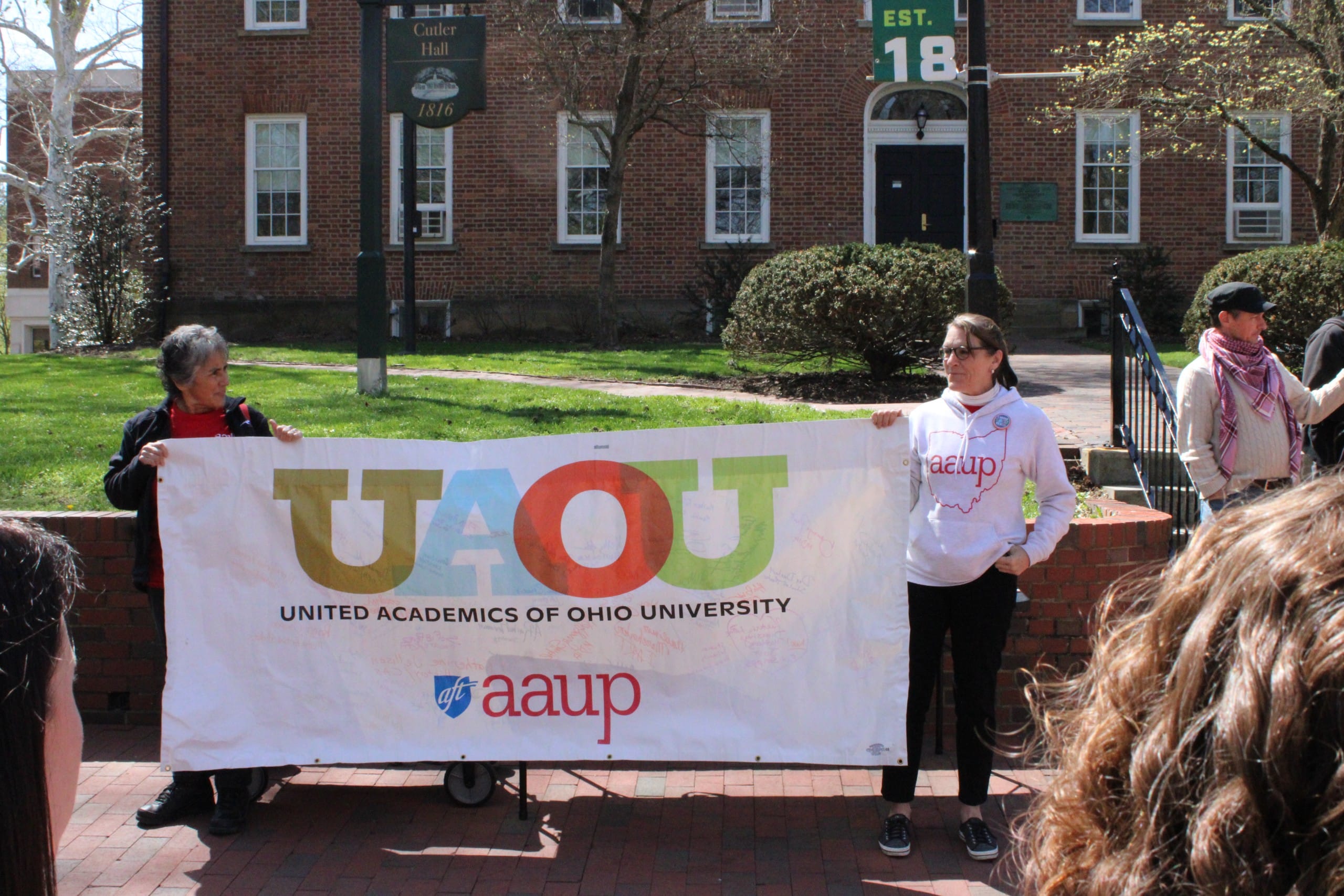

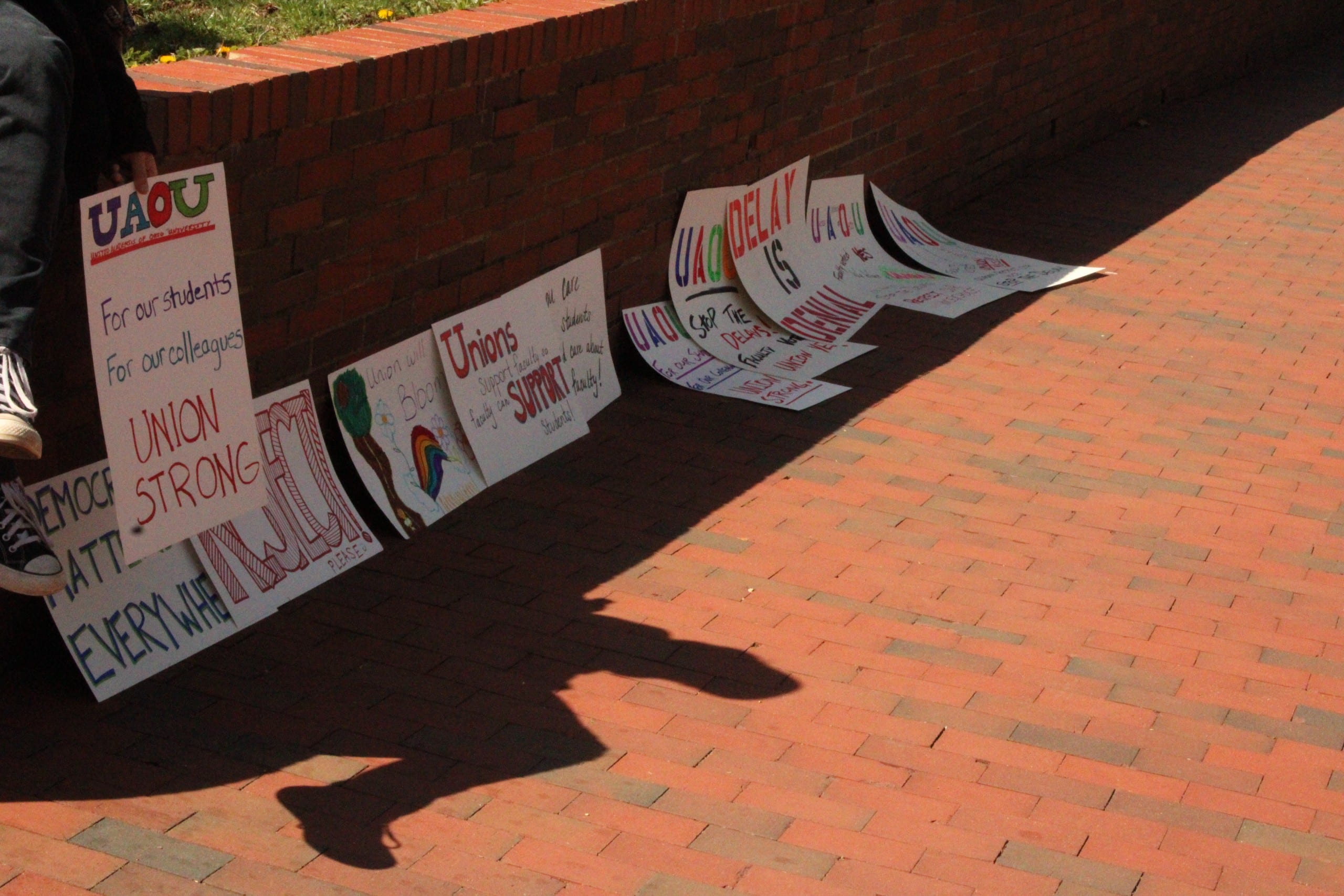


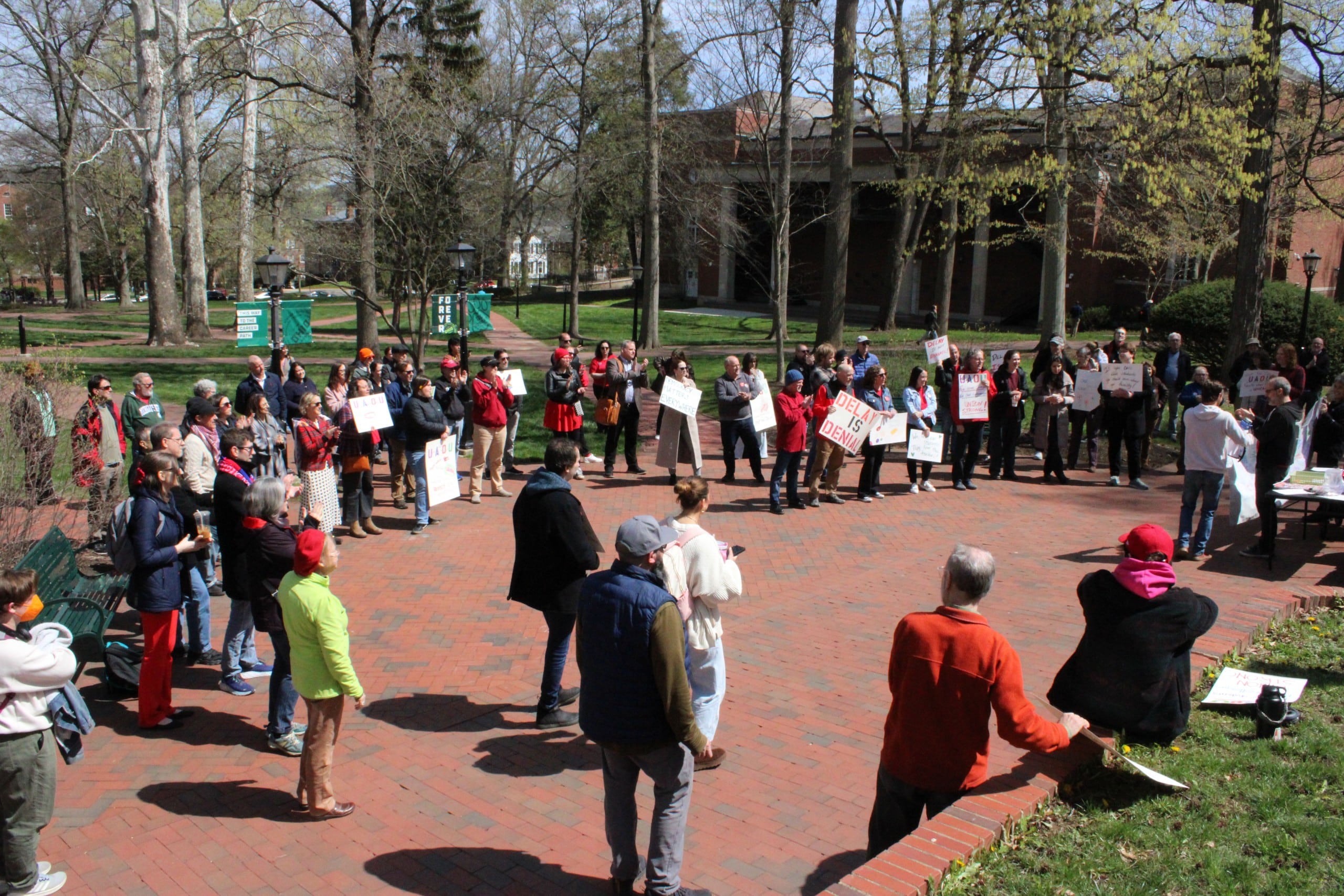

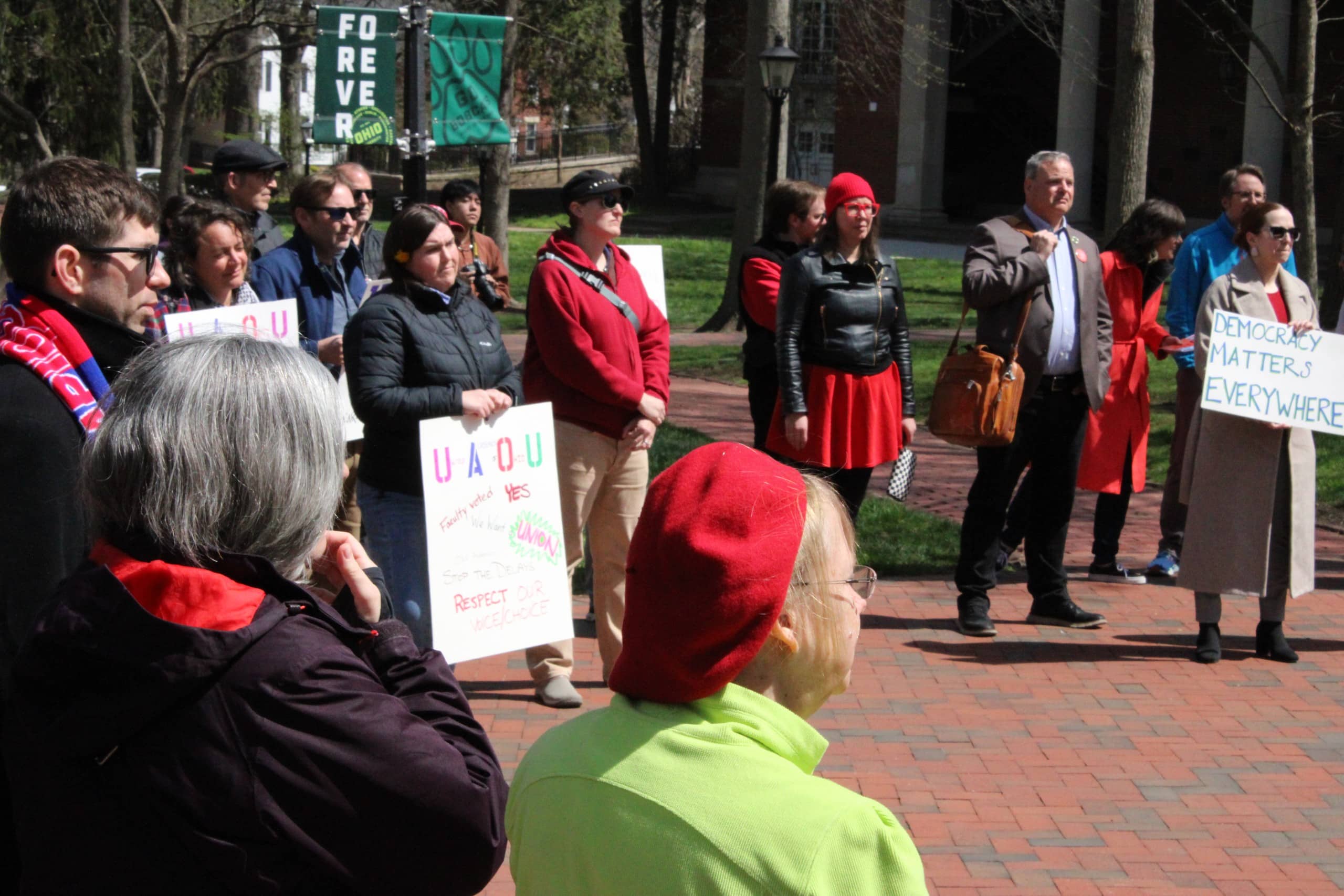

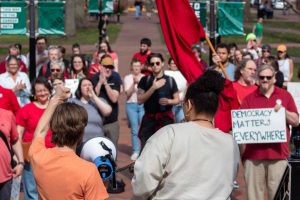
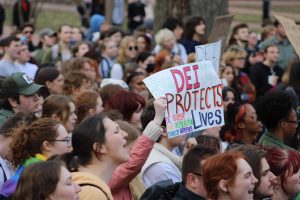
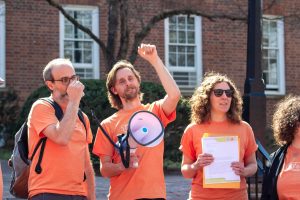
Scenes from Wednesday’s protest. All photos by Shiloh Antonuccio.
Shiloh Antonuccio contributed reporting to this story.
Correction: A previous version of this story misattributed Butler’s quotes to another faculty member who spoke at the April 9 protest. We regret the error.