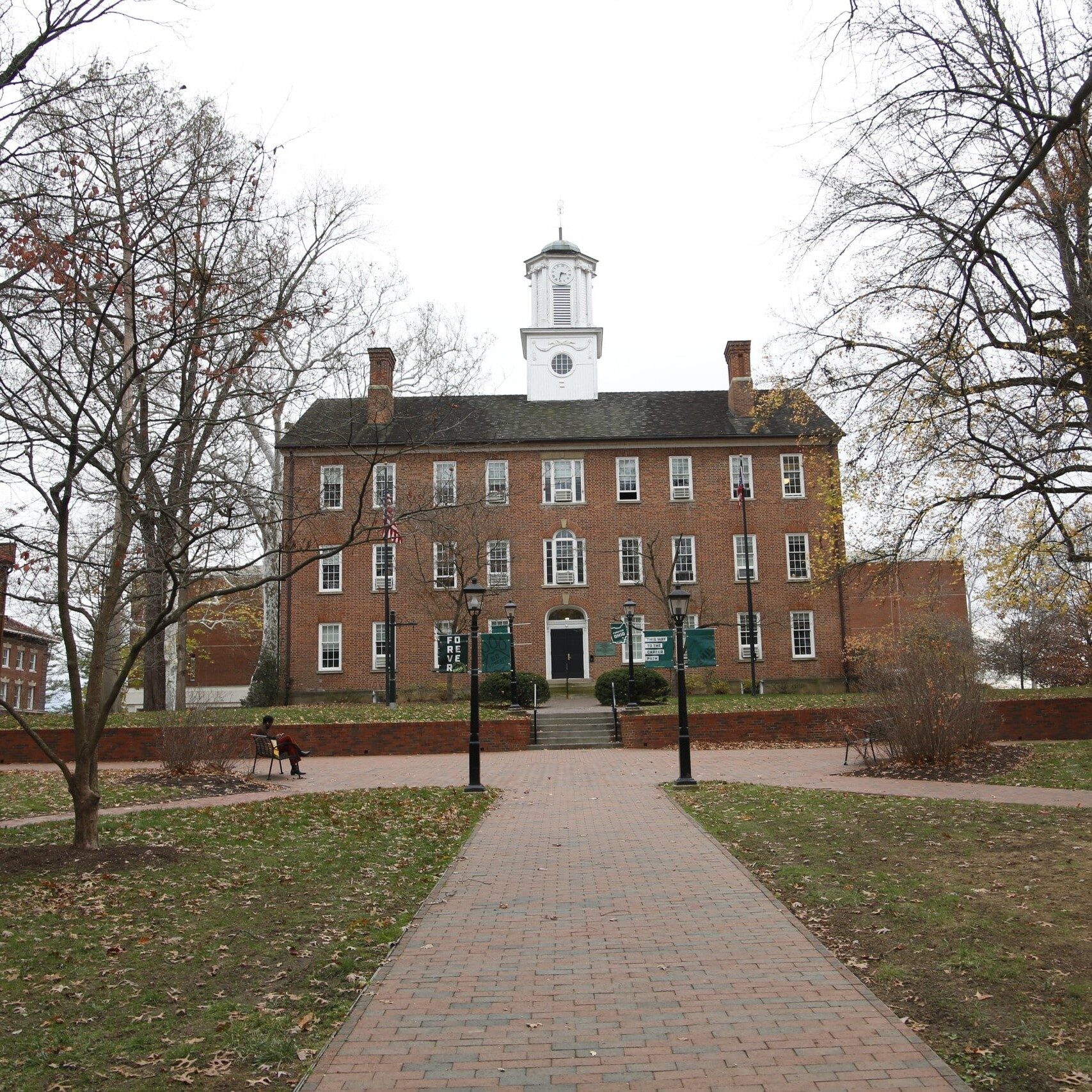

Half of my life was spent in a suburban Ohio bubble, but it burst after seeing through the fallacy of the American dream.
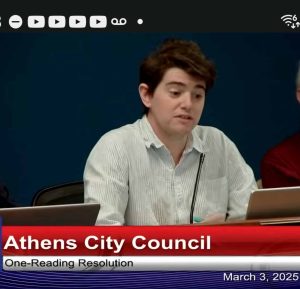
I am an undergraduate student at Ohio University studying English and political science. Searching for like minded people, I joined Young Democratic Socialists of America (YDSA) at Ohio University and now am on the executive board. Together, we spearheaded the draft resolution declaring Athens a safe haven for transgender and gender non-conforming people seeking gender affirming care, which Athens City Council passed unanimously this March. Though the resolution is a critical win, it is only the beginning of the fight against extremist policies. The Trump administration is targeting all marginalized communities, but right now, one group needs as much support as they can get: immigrants and undocumented Ohioans.
In keeping with Ohio University’s values of strong community connection and appreciation of diversity, the university’s administration must publicly reject any agreement or contract with ICE, an agency younger than the Shrek movie franchise.
The most common of these agreements is called a 287(g), named for its corresponding section in the Immigration and Nationality Act (INA) passed in 1996. Creating a direct pipeline from interactions with local police to detention and deportation, this program authorizes delegation between ICE and state and local law enforcement officers, giving them the authority to carry out the responsibilities of federal immigration officers. It is completely in the hands of local establishments to agree to these contracts, despite the ongoing pressures from the federal level. Ohio University’s local campus police force could be one of those local law enforcement agencies, but only if the university allows it to be.
The harm these agreements cause to the relationship between law enforcement and the community they are meant to protect is undeniable. We have seen this cynicism increase drastically across the country in wake of the Trump administration’s “Protecting the American People from Invasion” executive order, invigorating ICE to continue their cruel enforcement and infringement on civil rights.
Just during this fiscal year, ICE has reported 66,886 immigrants being detained, many of which have little to no criminal record at all. In typical law enforcement fashion, when officers make this agreement with ICE, there is a clear rise in racial profiling. As a result, community members have reason to believe that law enforcement does not prioritize their safety, and people living in areas with a 287(g) agreement often stop reporting crimes, particularly immigrants and other marginalized groups. If people are more apprehensive to call the police when they are victimized under these agreements, then it should be a no-brainer for the University to dismiss a 287(g) agreement. In a time of such uncertainty, the community Ohio University loves is one that deserves this institution’s unfettered support.
Similar to other higher education institutions in the U.S., Ohio University hosts international students from over 100 different countries. In addition to this, we have numerous international staff members, some of which I have had the pleasure of learning from. Students studying here need a visa in order to attend their university, so the Department of Homeland Security keeps a database of this information called Student Exchange and Visitor Information System (SEVIS). In an attempt to stoke fear in these students and staffers, the Trump administration deleted this database in April 2025. As a result, colleges and universities advised international students to flee the country, as their immigration status had been revoked, and many students self-deported. After weeks of chaotic litigation, the database termination was reversed, though it was too late for many who already had fled. As immigrants are pulled in a multitude of directions by the Department of Homeland Security, Ohio University must, at the very least, provide international students and staff with a layer of protection.
With the uncertainty of life under this administration, many Americans have had the privilege to ignore the attacks on civil liberties, but now is not the time to pretend to be apolitical. Getting involved in political action is a daunting task for most, but there are simple things everyone can do to make their voice heard. Right now, the ACLU of Ohio is circulating a petition demanding that our colleges and universities reject 287(g) agreements or future ICE collaborations. After you sign the petition, send it to every Ohioan you know and tell them to do the same. Additionally, there is a campus-specific sign on letter for faculty and staff with the same demands which can be found by reaching out to a regional ACLU of Ohio staff member.
Ohio University’s campus is a place for growth. Let’s keep ICE from stunting that of our peers.