ATHENS, Ohio — Athens County voters will see a number of issues on their ballots in November, including a statewide constitutional amendment.
Local issues include five countywide tax levies and 16 local levies. Of those, 14 are renewals, three are replacements, one is a replacement plus an increase, and two are new levies.
Ballots for Nelsonville will include a proposed ordinance to abolish the city charter. Voters in Athens Ward 3, Precinct 1, are being asked to approve Sunday sales of liquor at the Union Street Market.
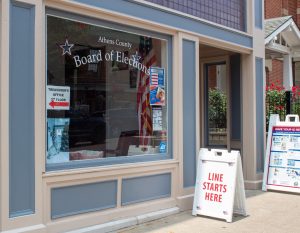
Election Day is Nov. 5. To participate without using an absentee or provisional ballot, Ohio residents must register to vote by Monday, Oct. 7. Early voting begins Tuesday, Oct. 8. Voters may register online. Find more information from the Athens County Board of Elections.
Learn more about how property taxes are assessed in our Voter Guide.

State and countywide issues
Issue 1
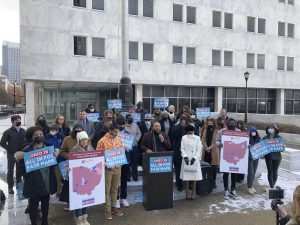
Ohio Issue 1 seeks to remove politicians from the state’s redistricting process. Currently, legislative district maps are drawn by the Ohio Redistricting Commission, which has seven members:
- One appointed by the senate president (Republican).
- One appointed by the speaker of the house (Republican).
- One appointed by the senate minority leader (Democrat).
- One appointed by the house minority leader (Democrat).
- The governor (Mike DeWine, Republican).
- The state auditor (Keith Faber, Republican).
- The secretary of state (Frank LaRose, Republican).
If passed, Issue 1 would do away with the Ohio Redistricting Commission. Instead, districts would be drawn by a newly created Ohio Citizens Redistricting Commission, whose 15 members would be private citizens with equal representation among Republicans, Democrats and independents. None of the members could be current or recent officeholders, members of their staffs or consultants, or lobbyists.
The Ohio Ballot Board rewrote the proposed ballot language, triggering a lawsuit from the bipartisan group behind the proposal. The Ohio Supreme Court case largely upheld the ballot board’s language on a 4–3 party-line vote. The language of the actual proposed amendment will be displayed at polling places.
Athens County Public Libraries levy
Issue 17 is a replacement and increase of a 5-year levy for the Athens County Public Libraries. The levy would replace the library’s existing 1.2-mill levy and add 0.3 mills for a total of 1.5 mills that would generate an estimated $2.175 million per year.
The Athens County Auditor’s Office estimates that property owners would pay $47 per $100,000 of appraised value per year.
Libraries Director Nick Tepe said that increase is needed to make up for a 30% cut in state funding to libraries following the fiscal crisis in 2008.
“Here in Athens, that resulted in reduction in hours, layoffs, and it really set us back on our heels here,” Tepe said. While state funding has increased slightly then, Tepe said, those increases have not kept up with inflation.
In 2014, voters passed ACPL’s first 1-mill levy. That helped with issues such as deferred maintenance, but it “wasn’t really enough,” Tepe said. The libraries successfully sought a 0.2-mill increase in 2019, but Tepe said that costs have soared due to inflation and the COVID-19 pandemic.
Libraries are a good investment of tax dollars, Tepe said.
“Here in Athens County, every dollar — every tax dollar that is spent on libraries — returns over $3 into the local economy; in terms of money that people save, in terms of economic development, getting folks the training that they need for their jobs, providing high-quality educational programming assistance with technology, access to the internet,” Tepe said. “There’s so many resources that we provide, and we do it very efficiently.”
The economic impact data Tepe cited came from the Ohio Library Council, he said, which “has worked with an economist to create a return-on-investment calculator. … It tells us what is the actual economic value to the community,” Tepe said.
The levy would also support the proposed upgrades at the libraries’ two biggest branches: the Athens Public Library and the Chauncey Public Library.
Improvements at the Athens Public Library would include new carpeting, lighting fixtures and additional meeting room spaces. The work in Chauncey is more extensive: It needs a larger building to accommodate the high usage of the current 1,000-square-foot building.
The library system has secured property in Chauncey for the new building, but it is still figuring out how to pay for construction.
“If we don’t have this levy supporting our operations, there’s no way that we would be able to take on a major building project like that,” Tepe said.
The recently formed library workers labor union — ACPL United — supports the passage of Issue 17, a representative said in a statement.
“The 5-year replacement levy, if passed, would continue a predictable and consistent funding source for county-wide library services and programs,” the union said in its statement. “Day-to-day, we are here to serve the county. … Our work is for you, and we are reminded of that every day. … This November, Athens County voters get to decide what the future of our libraries will look like.”
Athens County tuberculosis levy
Issue 19 is a renewal of a 5-year, 0.3 mill levy for continued testing and treatment of tuberculosis, as well as maintaining a reserve to deal with potential antibiotic-resistant cases. The levy would generate an estimated $213,000 per year; the cost to property owners is estimated at $4 per $100,000 of appraised value.
The Athens City–County Health Department is in charge of the state-mandated TB control unit. Most of its work is in testing, department administrator Jack Pepper said. Two groups of people make up the majority of tests, Pepper said: people whose jobs require a TB test and international students at Ohio University. Some of those students come from countries with high rates of tuberculosis infections, he noted, so it’s important to catch possible infections early on.
Tuberculosis tests administered by type and year
| Year | Skin | Blood |
| 2019 | 815 | 57 |
| 2020 | 564 | 30 |
| 2021 | 473 | 23 |
| 2022 | 511 | 37 |
| 2023 | 395 | 45 |
| 2024 | 211 | 24 |
Most TB cases in Athens County are latent infections; the person doesn’t feel sick and doesn’t show symptoms. Their disease isn’t contagious, but it will be if the infection becomes active TB.
Although TB is on the rise across the country, it is not rising in Athens County, Pepper said.
“It is only upon the rarest of occasions do we actually see active disease here in Athens County,” he said. “But as we see this increase around the country, it is our expectation that we will start to see an increase in active disease as well. It just hasn’t presented itself yet.”
State law requires counties to pay for treatment of those who can’t afford it. The county maintains a cash reserve of about $1 million toward that end; if passed, the levy would keep that reserve intact.
“The worst case scenario is that you have an antibiotic resistance case of tuberculosis, which can lead to long term inpatient care at a very specialized tuberculosis hospital, and it costs hundreds of thousands of dollars,” Pepper said.
Athens County EMS levy
Issue 20 is a renewal of a 5-year, 0.5 mill levy for the operation and continued maintenance of emergency medical services. The levy would generate about $557,000 per year, costing property owners $11 per $100,000 of appraised value.
“We run all emergency calls, all 911 calls in Athens County,” said Randy Crossen Jr., assistant chief of Athens County Emergency Medical Services. “We’re the only EMS provider in Athens County.”
In 2023, the county passed a 1.5-mill additional levy for EMS to address rising costs. According to the county auditor’s 2023 comprehensive financial report, the number of basic-level transports has risen fairly steadily over the past 10 years. In 2023, the number of basic transports was nearly double what it was in 2014.
The report also states that “the Ambulance Service Fund balance decreased by $240,195 or 169.84% due to increased expenditures for ambulance services during 2023.” The service ended 2023 with a nearly $99,000 fund deficit.
Athens County senior services levy
Issue 21 is a renewal of a 5-year, 0.25-mill levy for services and facilities for senior citizens. It would generate an estimated $278,000 per year. Property owners would pay an estimated $5 per $100,000 of appraised value per year.
The largest senior services program is Meals on Wheels, which is seeing increasing demand, said Kelly Hatas, executive director of Hocking-Athens-Perry Community Action.
“Unfortunately we are seeing food insecurity hit some of our seniors the hardest,” Hatas said. While food insecurity is rising among all demographics, it’s especially acute “with our senior populations who have potentially fixed incomes and aren’t able to manage the increased cost for food.”
In March, when voters approved an additional levy for Meals on Wheels, the program was serving 110 people. It now serves “about 160 home-bound folks who aren’t able to access the food they need and need home delivered meals in Athens County,” said Hatas.
The program again has a waiting list of about 60 people, Hatas said.
According to the county auditor’s 2023 comprehensive financial report, the senior citizens levy fund had a balance of $407,185 at the end of the year.
Athens County Children Services levy
Issue 22 is a renewal of a 10-year, 3-mill levy for Athens County Children Services. The current levy expires in 2025. If passed, the levy would generate an estimated $2.871 million per year, with property owners paying $60 per $100,000 of appraised value.
The levy is needed to cover rising costs for placing children in care, according to a press release.
“The lack of appropriate and available placements for children has led to a dramatic increase in costs associated with providing caring homes for children in recent years,” Executive Director Otis Crockron said in the release.
Crockron further noted that costs of care and placement of children was over $4.5 million in 2023 — an additional $1.77 million more than in 2015, when voters passed the previous levy.
“Unless more services become available and the crisis is abated, we will see the cost of placement continue to climb and we will require the support from our community to ensure that we are getting the care that is needed for our children,” said Matt Starkey, the agency’s
public information officer and community events coordinator.
Voters approved a different 2.5-mill, 10-year levy for children services in 2019.
According to the county auditor’s 2023 comprehensive financial report, the number of children in foster care has fluctuated annually over the past 10 years, from a low of 77 in 2014 to a high of 127 in 2023. The number of adoption cases and in-home client cases also has fluctuated but has not changed significantly.
According to the report, Children Services ended 2023 with a $5.3 million fund balance.
Villages and townships
Albany
Voters in Albany will vote on two public services levies, both renewals of levies that will expire in 2025.
Issue 3 is a 5-year, 1-mill levy for fire protection services in Albany. It is estimated to generate $14,000 annually from $24 per $100,000 of appraised property value.
Issue 4 is a 5-year, 1.5-mill levy for police protection services. The levy will generate an estimated $21,000 annually, beginning in 2025. Property owners would pay around $36 per $100,000 of appraised value.
Albany Mayor Tim Kirkendall did not respond to a request for comment in time for publication.
Amesville
Issue 5 is a renewal of a 5-year, 6.9-mill levy for current expenses. The levy is estimated to collect around $13,000 annually. The cost to property owners is $186 per $100,000 of appraised value.
“This levy is a renewal and does not increase rates for Amesville residents,” said Amesville Mayor Gary Goosman in an email. “These funds provide for basic village services, and no increase has been requested in over 40 years.”
Amesville Chief Fiscal Officer Tom McGuire did not respond to a request for comment in time for publication.
Glouster
Issue 6 is a renewal of a 4-year, 3-mill levy for the Glouster Police Department. The levy is estimated to generate $35,000 annually, with property owners paying around $80 per $100,000 of appraised value.
The Independent did not receive any on-the-record comment from a village representative in time for publication.
Townships
Alexander Township, excluding Albany
Issue 7 is a replacement of a 1-mill, 5-year tax levy for Alexander Township fire services, excluding the village of Albany. The levy would generate an estimated $117,000 annually at a cost of $35 per $100,000 of appraised property value.
Alexander Trustee Brian C. Grubbs and Alexander Fiscal Officer Judy A. Ellis did not respond to a request for comment in time for publication.
Ames Township, excluding Amesville
Issue 8 is a renewal of a 5-year, 1-mill levy for road maintenance. It is estimated to collect $21,00 annually, with property owners paying $22 per $100,000 of appraised value.
Ames Fiscal Officer Anita Weed did not respond to a request for comment in time for publication.
Athens Township, excluding city of Athens
Issue 9 is a renewal of a 5-year, 1.5-mill levy for road maintenance. The levy would generate $228,000 annually; property owners would pay $38 for each $100,000 of appraised value.
Athens Trustees Brian Baker, Steven H. Pierson and Ted J. Linscott did not respond to a request for comment in time for publication.
Athens Township (areas covered by The Plains Volunteer Fire Department)
Issue 10 is a renewal of a 2.5-mill levy for The Plains Volunteer Fire Department. The five-year levy is estimated to collect $126,000 annually. Property owners would pay $67 a year for each $100,000 of appraised value.
Athens Trustees Brian Baker, Steven H. Pierson and Ted J. Linscott did not respond to a request for comment in time for publication.
Canaan Township, including Athens areas
Issue 11 is an additional 1-mill levy for fire services to replace a levy that expired in 2023. The levy would generate an estimated $85,000 annually for five years. Property owners would pay about $35 per $100,000 of appraised value.
“We are not asking for additional money, but just asking for the same level as we had previously,” said township trustee Randy G. Wolfe.
The funds are split between the Ames/Bern Fire Department, which covers parts of the township north of the Hocking River, and the Richland Area Fire Department, which covers areas south of the river, Wolfe said.
“They both provide very good service to our township, and we wish to continue having them provide this service,” he said.
Dover Township, including Chauncey
Issue 12 is an additional 1-mill levy for fire department equipment. The levy would generate $61,000 annually for four years at an annual property owner cost of $35 for each $100,000 of appraised value.
Dover Township Trustee Stuart Neal said the township needs the funds to cope with current and increasing costs.
“The cost of fuel, the cost of electric, and maintaining the building and the equipment has gone up without an increase in levies for quite a few years,” Neal said. “We are barely making it through the year with what’s on our current levy. … I really need to ask the residents to step up and help us.”
If the levy passes, Neal said, the township also could replace older and damaged equipment and upgrade other equipment. Dover Township Trustee Christopher Russell did not respond to a request for comment in time for publication.
Trimble Township, excluding villages
Issue 13 is a replacement of a 5-year, 0.5-mill levy for fire protection to generate $13,000 annually and cost property owners about $12 per $100,000 of appraised property value. Trimble Trustee Paul Barrett did not respond to a request for comment in time for publication.
Waterloo Township
Issue 14 is a replacement of a 5-year, 1-mill levy for road maintenance. It would generate an estimated $51,000 annually and cost property owners about $35 per $100,000 of appraised property value.
Waterloo Trustee Gregg Andrews and Waterloo Fiscal Officer Kimberly K. Russell did not respond to a request for comment in time for publication.
York Township, including Nelsonville and Buchtel
Issue 15 is a renewal of a 5-year, 1 mill-levy for cemeteries operation and maintenance. The levy would generate an estimated $111,000 annually, with property owners paying about $25 per $100,000 of appraised property value.
York Township Board of Trustees President Timothy R. Warren said the township maintains nine cemeteries in the township and Nelsonville. The board supports the passage of Issue 15.
“This is a renewal so no new monies will be realized by the township, only the amount that was voted in years ago when the levy originally was approved,” Warren said in an email. “Obviously, costs have risen during those many years, but the trustees feel strongly we should live within our means and not ask for additional monies at this time.”
York Township, excluding Nelsonville and Buchtel
Issue 16 is a renewal of a 5-year, 2-mill levy for road maintenance and improvement. The levy would generate around $117,000 annually, with property owners paying about $50 per $100,000 of appraised property value.
York Township Trustees Warren said York Township “maintains and does snow removal for approximately 34 miles of roadway all inside York Township,” varying from asphalt to gravel.
“Here again even though material prices and cost of employees have risen dramatically over the many years since this levy was originally voted in,” Warren said in an email. The Trustees only seek a renewal of this levy for 5 more years at the same amount of the original.”
City issues
Athens liquor option
Voters in Athens Ward 3, Precinct 1 via Issue 18 will decide upon a local liquor option. Union Street Market, a carryout store at 26 W. Union St., is seeking a permit for the Sunday sale of wine and mixed beverages.
Nelsonville streets levy
Nelsonville voters will vote on two issues.
Issue 2 is a renewal for general construction, reconstruction, resurfacing and repair of streets, roads and bridges. The 5-year, 2-mills tax is estimated to collect around $100,000 annually.
The levy is “the primary and largest revenue source for street repair and maintenance for our neighborhoods,” said city Auditor Taylor Sappington in an email. The city would face an “immediate reduction” and “cut to all repairs for our roads,” if the levy doesn’t pass, Sappington stated.
“The state refuses to return its local government funding to places like Nelsonville and that means there is nobody coming to save us,” Sappington said in the email. “We must fund our roads if we want to continue repairs and thankfully this renewal would do exactly that, while not increasing taxes by a single dollar.”
Interim City Manager Devon Tolliver did not respond to a request for comment in time for publication.
Nelsonville charter abolition
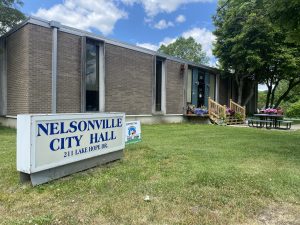
Issue 23 seeks to abolish their city charter and return the city to a statutory government with an elected mayor. The issue was added to the ballot Sept. 24 following a protracted court battle between the city council and its former president, Greg Smith.
If the charter that voters approved in 1994 is abolished, the city’s government would change significantly:
| Roles | Charter (current Nelsonville city government) | Statutory; defaults to Ohio Revised Code |
| Who oversees city operations, and how is the role filled? | City Manager, hired by city council | Mayor, elected by voters |
| Who oversees city safety and services, and how is the role filled? | City Manager, hired by council | City Safety and/or Service directors, appointed by mayor |
| How is the city council president determined? | President of council is appointed by council | President of council is elected; non-voting position |
| How is the city auditor determined? | City Auditor is elected | City Auditor is elected |
| How is the law director determined? | Law Director is hired by council | Law Director is elected |
| How is the mayor determined? Does the mayor have veto powers? | Mayor and Vice Mayor (ceremonial titles), appointed by council — no veto power over city legislation. Mayor serves as council president | Mayor elected by voters, has veto power over city legislation |
| How is legislation introduced? | Council introduces all legislation | Mayor may introduce legislation |
| How quickly may the council pass legislation? | Council passes ordinances on second reading | Council must have three readings |
This is the second and only successful attempt in a decade at placing the issue before voters. In 2015, an initiative to abolish the charter failed to make it past city council because it lacked a transition plan. This year’s initiative included a translation plan calling for a city election in November 2025 with new officials taking office on Jan. 1, 2026.
Correction: A previous version of this article incorrectly spelled Otis Crockron’s last name. We apologize for this error.
Update: This article has been updated since initial publication to include comments from Amesville Mayor Gary Goosman.