
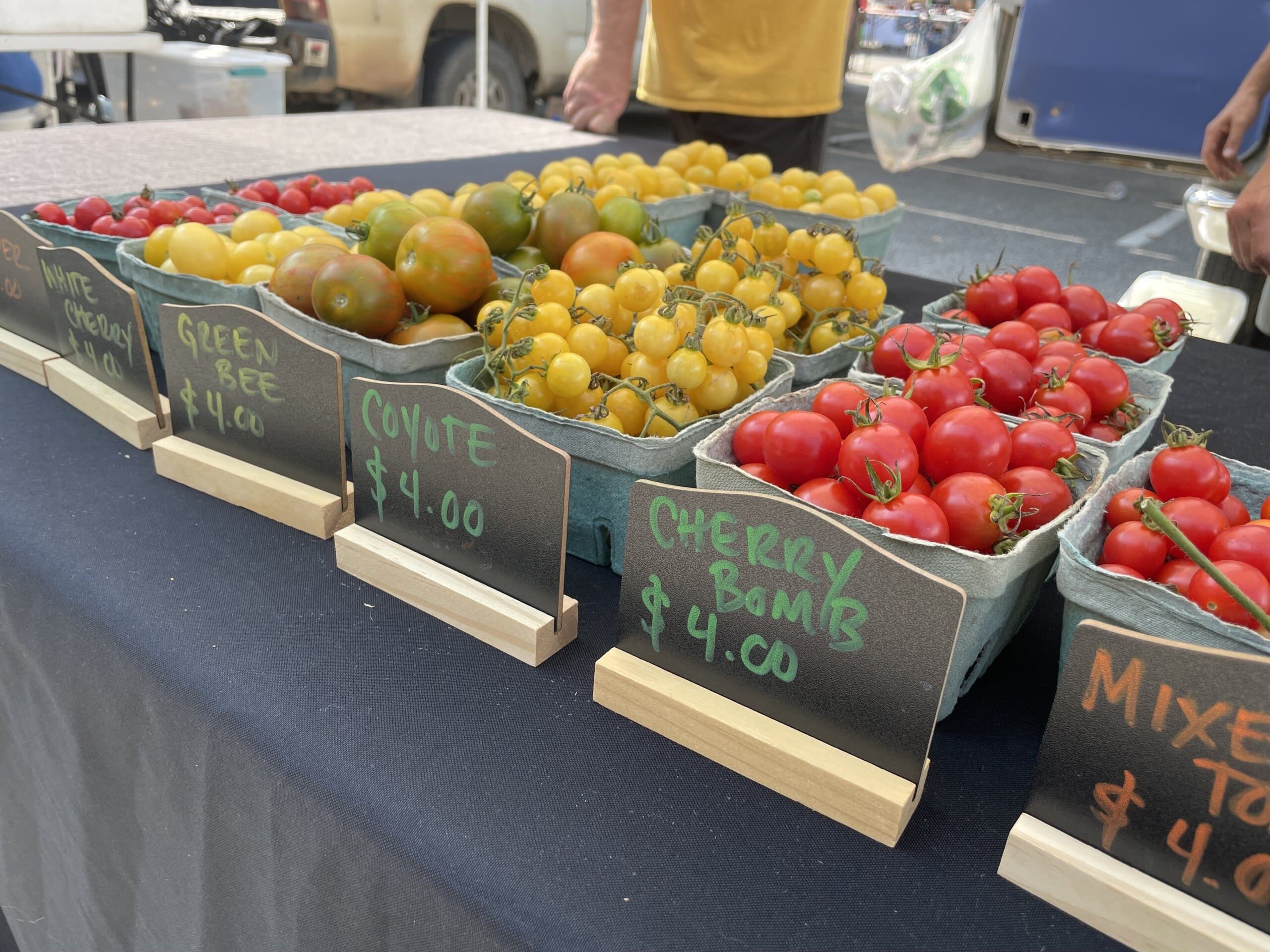
ATHENS, Ohio — Produce Perks, a program which helps local Supplemental Nutrition Assistance Program users purchase produce at local farmers markets, will not be paused in Athens County after a regional philanthropic group donated funds to keep the program going.
The Produce Perks program works by matching the first $25 spent in SNAP money at local farmers markets, essentially giving SNAP recipients an extra $25 that they can spend on fresh fruits and vegetables.
Tevis Foreman, the executive director of Produce Perks Midwest, told the Independent that Produce Perks and programs like it have been found to be highly effective, producing a $3 economic benefit for every $1 spent on the program.
According to Foreman, the Athens Farmers Market is one of the most active farmers markets in the state for Produce Perks. Roughly 18% of Athens County residents are considered food insecure and about 13% of county residents receive SNAP assistance, according to the Southeast Ohio Foodbank.
In addition to the economic benefit, the program has had a positive impact on the nutritional and general health of SNAP users. A systematic review of public health research found that programs like Produce Perks are directly linked with increased fruit and vegetable consumption, reduced food insecurity and improved blood glucose levels.
“[Produce Perks] increases consumer-based dollars that are being spent within the localized markets, so [program users] get increases in household nutrition security, food security, increased economic impacts within local economies,” Foreman told the Independent.
As part of anti-diversity, equity and inclusion efforts, after the Trump administration terminated a federal grant that supported the program, funding for Produce Perks became endangered in April 2025. Since then, Produce Perks has applied for funding from state and local governments, philanthropy organizations and the U.S. Department of Agriculture.
Foreman told the Independent that the Ohio Department of Jobs and Family Services and the Sisters Health Foundation have been key players in keeping the program active in Southeast Ohio. Both groups have provided funding for the program which has allowed it to continue to operate in several counties.
Produce Perks originally planned to pause services at the Athens Farmers Market starting July 1, as there wouldn’t have been enough money to fund the program. However, the Sisters Health Foundation provided a grant which will help keep the program active for the rest of 2026.
Foreman said he plans to use that time to keep looking for funding from federal, state and regional philanthropic groups.
“I am very optimistic that [Produce Perks] will continue into 2027 and beyond, I just can’t say that with absolute certainty,” Foreman said.
Local residents react to the near-pause
Chris Chmiel, an Athens County Commissioner and member of the Athens Farmers Market executive committee, told the Independent that he was anticipating a decline in revenue from the program’s pause.
“I sell vegetables, so I accept [Produce Perks]. At the end of the week when I count up all my money, it’s a portion of that,” Chmiel said. “It’s not a huge portion for me. I sell other stuff too, but I would say, [for] most people it’s going to be a portion of what they’re selling at the market, it’s going to impact everybody. How significant the impact is going to be, time will tell.”
Chmiel also described Produce Perks and programs like it as “smart policy” which stimulates the local food economy while promoting nutritional health.
Selena Loomis, a local resident who frequently used Produce Perks while on SNAP, told the Independent that Produce Perks is part of the reason they signed up for SNAP.
“I applied [for SNAP] in part to be able to use [Produce Perks],” Loomis said in an email to the Independent. “I have a past life working in sustainable/local agriculture and appreciate the ecosystem of that work that lives in Athens County –– I want to materially support that ecosystem as much as I can.”
Loomis later added that Produce Perks motivated them to regularly attend the farmers market and that the program improved their diet.
“It made it possible to get many kinds of food as well as plant starts from the market –– which improved my diet by increasing both the amount and quality of veggies I was eating,” Loomis said.
Loomis told the Independent that a pause in the Produce Perks program would be a “huge disappointment” and they couldn’t “afford to be part of the [farmers market] community” relying solely on their own income.
“[Produce Perks] was the only way I could afford anything at the farmers market on my grad school stipend,” Loomis said.
