ATHENS, Ohio – It’s no secret that this summer has been hot — so hot, in fact, that we just lived through the hottest day in human history. Earlier this summer many Athens County residents felt the heat when a historic heat wave kept many people indoors.
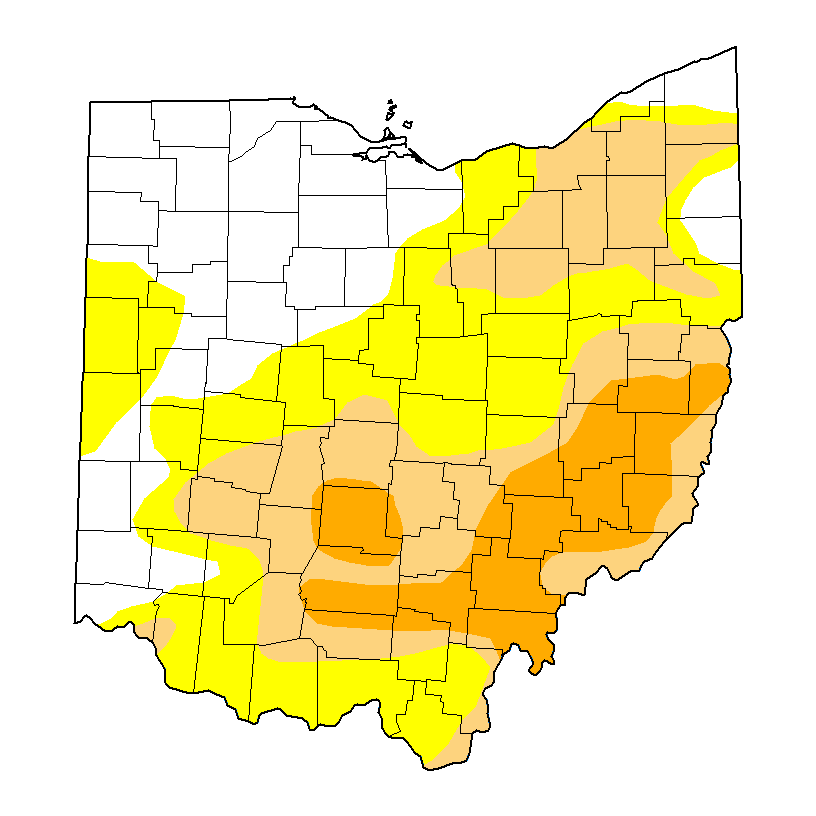
What may be less apparent — unless you’re a farmer — is that Southeast Ohio is currently experiencing a drought.
The National Weather Service defines drought as “a deficiency in precipitation over an extended period, usually a season or more, resulting in a water shortage causing adverse impacts on vegetation, animals, and/or people.”
Athens County officially entered a drought on June 18 with 100% of the county being considered “abnormally dry,” the lowest category on the U.S. Drought Monitor’s measurement scale. As of July 23, the county had progressed two categories up to “severe drought.”
Some portions of the county have had 25% to 50% less rain than normal since late May, according to the NOAA maps.
The last time Athens County had a severe drought was in September 2002.
The current drought has had a profound impact on the farmers in the region. In Athens County alone, more than 15,000 acres of crops and at least 6,000 livestock animals are affected by the drought, according to NOAA.
CJ Morgan of MoSo Farm on Enlow Road estimates that they have spent somewhere between $750 to $1,500 trying combat the drought’s effects on their 60 cattle and hogs.
“(The livestock’s) water consumption has definitely gone up,” Morgan said.
Morgan is worried about the health of his grazing land; the pasture grasses have been slow to grow back due to the heat and lack of rain. “Early on in the year, we bought some hay from a friend of ours just in case we ran out of grass because this is the most cattle we’ve ever had… If we have to, we’ll feed about a month’s worth of hay to let the pasture regrow.”
Eric Wagner of Wagner’s Fruit Farm, located in Washington County, has lost several major crops because of the drought.
“(It’s) been a pretty severe loss on blueberries and black raspberries,” Wagner said. “The apples, we are just starting apple season, so they benefited from the July rains. The peaches — even though we got some water on them — have been hurt in size.”
The farm has had to run its irrigation system more often than usual, resulting in a spike on their electric bill. Overall, Wagner estimated that the drought so far has cost the farm roughly $6,000.
Not all farmers are facing dire circumstances though. Some, such as Ronda Clark of Blackberry Sage Farm in Amesville, have had a relatively “easy” time navigating the drought.
Clark had already planned to scale back the size of her farm this year and already had an irrigation system in place to keep their crops watered.
“I’m doing all right,” Clark said. “It’d be nice to have a little bit more rain, but I’m not trying to produce as much as I normally do.”
The drought has not affected water quality, said John Simpson, general manager of the Le-Ax Water District, nor has there been a significant increase in water consumption. But the conditions have damaged some Le-Ax infrastructure, he said.
“Because it’s getting dry the ground will crack; sometimes that will pull the ground apart and break a pipe,” Simpson said. “We’ve had a couple breaks that we suspect would lend to that, but it’s really hard to determine because by the time we get there it’s not dry anymore.”
The National Weather Service predicts that drought conditions in the region will persist or worsen in the next month, but hope is in sight: The drought could end by the end of October for most of Athens County. The eastern portions of Bern, Rome and Troy townships may remain in a drought, although at a lesser level.