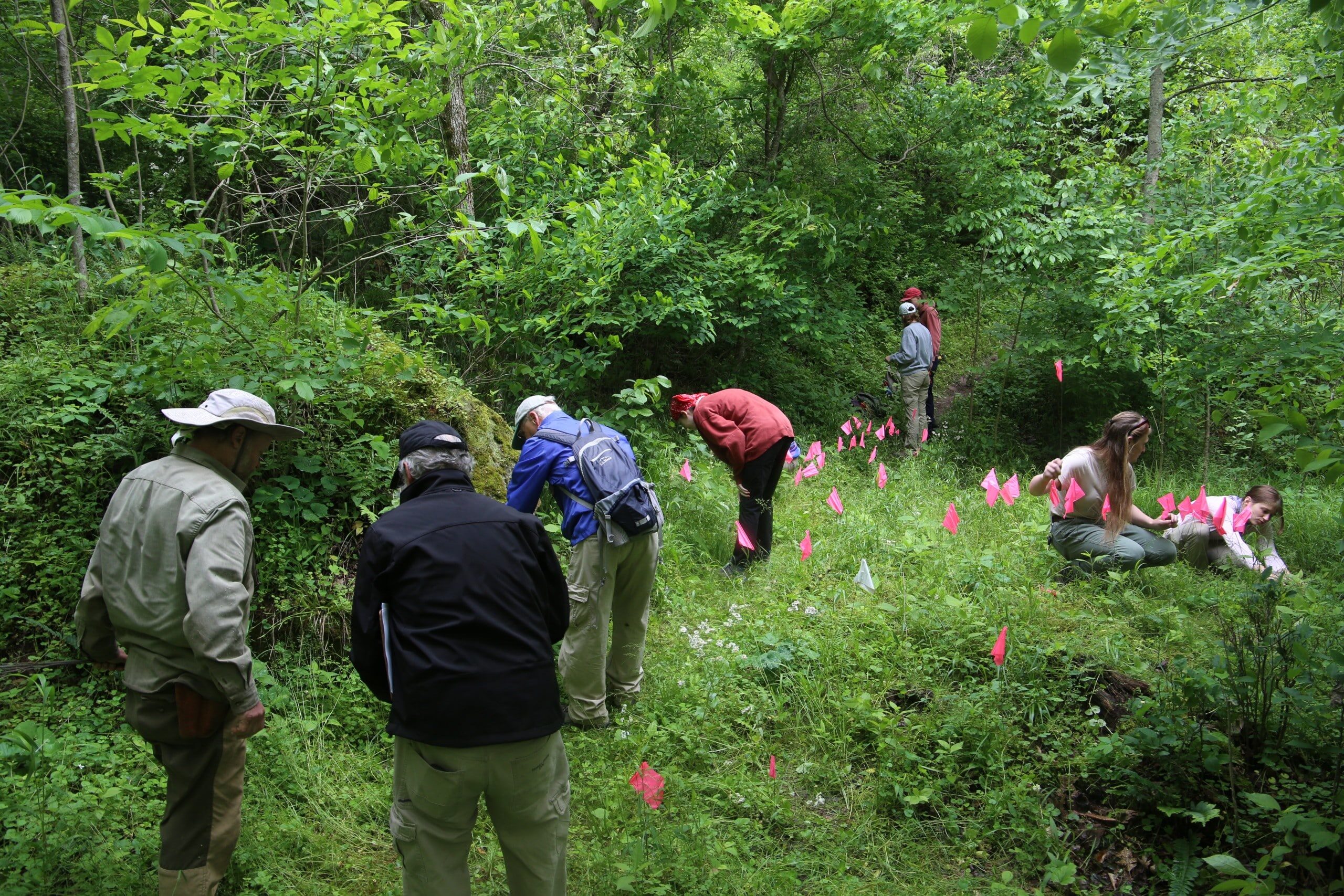

ATHENS, Ohio — The Athens Conservancy and Ohio Department of Natural Resources are working together to protect a plant once deemed extinct, which grows in large numbers at the conservancy’s Baker Preserve.
Athens Conservancy co-founder Phil Cantino first found the running buffalo clover (Trifolium stoloniferum) at Baker Preserve in 2015.
“Finding a federally endangered [plant] at an Athens Conservancy preserve – it was just great,” Cantino said.

Running buffalo clover was removed from the federal endangered species list in 2021, after decades of conservation efforts.
ODNR Division of Natural Areas and Preserves Chief Botanist Rick Gardner told the Independent that running buffalo clover once depended on the American bison, often called buffalo, to reproduce.
Rather than spreading by producing seeds, the plant spreads mainly through stolons — stems that grow along the surface of the soil and can produce new plants from their nodes. As they roamed, American bison would trample the stolons into the ground along their paths, helping new plants root and grow.
For millennia, Native Americans depended on vast herds of American bison, an estimated 30 million to 70 million. Over-hunting by white settlers and habitat destruction for colonial expansion nearly extirpated the species; the last recorded bison in Ohio was shot and killed in Lawrence County in 1803.
Without the American bison, running buffalo clover suffered dramatically; it was believed to be extinct until plants were observed in West Virginia in 1983. Specimens were found in Ohio in 1988, 81 years after the last previous sighting.
Since then, conservation efforts have allowed the clover to return to its native range. And although the plant has now been removed from the federal endangered species list, ODNR’s Division of Natural Areas and Preserves continues to focus on the plant’s conservation.
“It’s the attention and the management that has allowed it to be delisted,” said DNAP Field Botanist Iris Copen. “So if it loses that attention and it loses that management, then it’s gonna start quickly dropping again.”

Athens Conservancy is committed to supporting the plant, too.
This includes clearing invasive species and cutting back trees around the areas where the plant grows in order to ensure it receives adequate sunlight, said Athens Conservancy Land Steward Bill Rucker.
These efforts were on full display during an annual census count of the species last Friday, during which Athens Conservancy AmeriCorps members began clearing out non-native ground ivy that had begun crowding out the running buffalo clover.
The ground ivy, along with last year’s drought, appeared to have taken a toll on the running buffalo clover population this year, said Gardner and Cantino. The census this year counted 318 individual, overwintering running buffalo clover plants — the lowest number recorded since the first census count in 2016, which recorded 153 plants.
Far fewer plants were flowering this year, too, with only 18 recorded in bloom, compared to nearly 300 recorded in bloom last year.
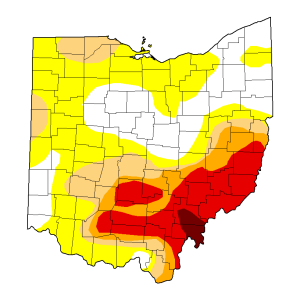
The population has gone up and down over the years, and Gardner said this year’s decline at Baker Preserve was “not too unusual.” He added that the lower count of flowering plants, an important measure of population health, was consistent with findings at other sites in the region this year.
Cantino, however, said the decline seen this year was “disappointing” and stressed the need for the conservancy to expand quality habitat for the plant and continue its ongoing management activities.


These management efforts have evolved over the years.
Initially, Cantino said the discovery of the plant at Baker Preserve motivated the conservancy to reroute the trail where the clover was growing. However, that was not actually the most effective conservation strategy.
“One of the consequences of its need [for disturbance] is one of the places you find it is growing right on trails, where we’re taking the place of the buffalo,” Cantino said.
Despite humans’ role today, the plant likely still grows predominantly in areas once roamed by the American bison.
“Whenever you see running buffalo clover, [there’s a] pretty good chance bison and elk were walking around in that area,” said Gardner.
Relying now on human stewardship, Gardner said that the plants at Baker Preserve are in good hands.
“Athens Conservancy has been doing such a great job of managing the site over the years and keeping it as one of the top sites in Ohio,” Gardner said.
Running buffalo clover can be distinguished from the non-native white clover which grows abundantly in Ohio and the native buffalo clover by its stolons. Running buffalo clover is also set apart by the leaves on the plant’s flowering stems, large leaves and large white flowers, and the absence of a light chevron pattern on its leaves.


Ohio ranks third for documented numbers of running buffalo clover, behind Kentucky and West Virginia, Gardner said.
In addition to Baker Preserve, running buffalo clover can also be found in Athens Conservancy’s Blair Preserve, where it was introduced. It has also been found at other parks in the region, including Clear Creek Metro Park.