
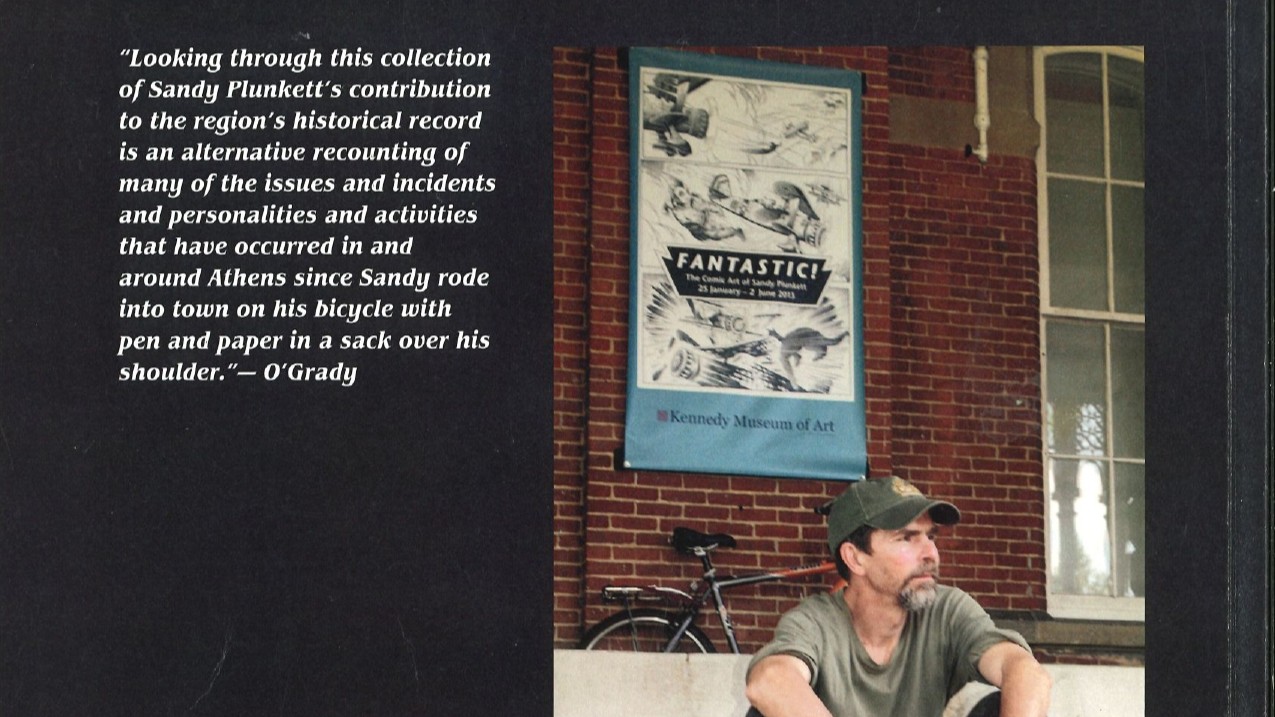
ATHENS, Ohio — A new book from the Southeast Ohio History Center highlights Athens history through work by local artist Sandy Plunkett.
“A Brush, With History: The Illustrative Art of Sandy Plunkett” is a 35-year retrospective and catalogue, based on an exhibition of his work displayed in 2023–2024 at the history center.
The history center is hosting a book talk and signing at 5:30 p.m. next Thursday, July 30, at 24 W. State St., Athens. Proceeds from the sale of the book support the history center.
Plunkett said he never set out to capture Athens’ history — “It was just a pure coincidence.”
Plunkett’s local work features everything from commercial illustrations to political cartoons. His iconic style is found on Shade Winery’s wine bottles, an image of The Ridges featured on T-shirts, Ratha Con’s logo and Athens Halloween advertisements. He once traded a commission — a logo for a farmer — for a year’s worth of berries.
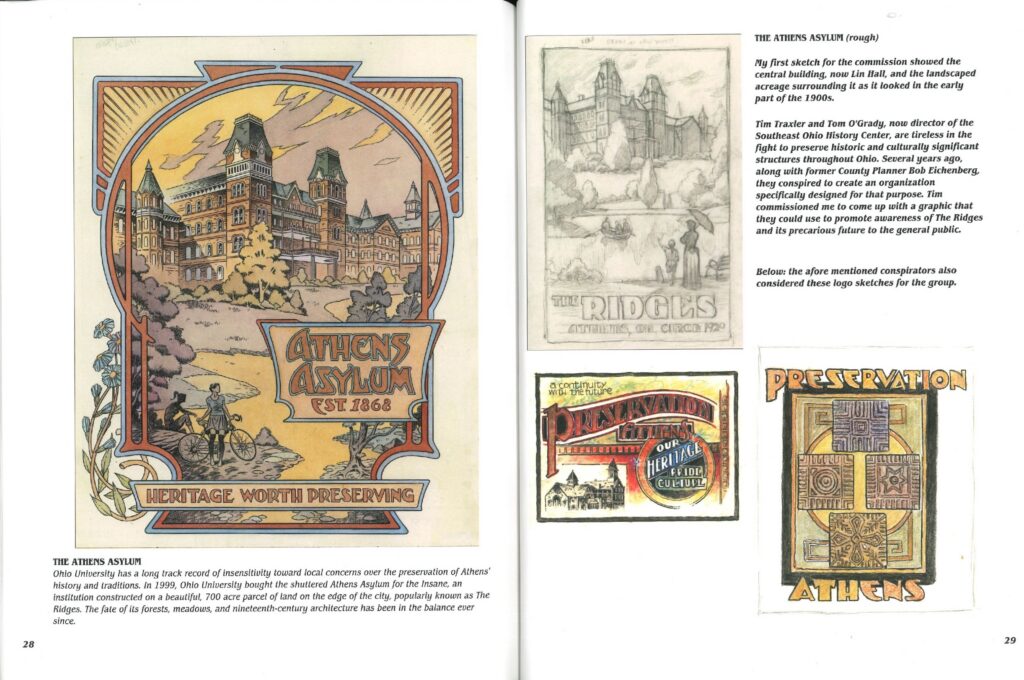
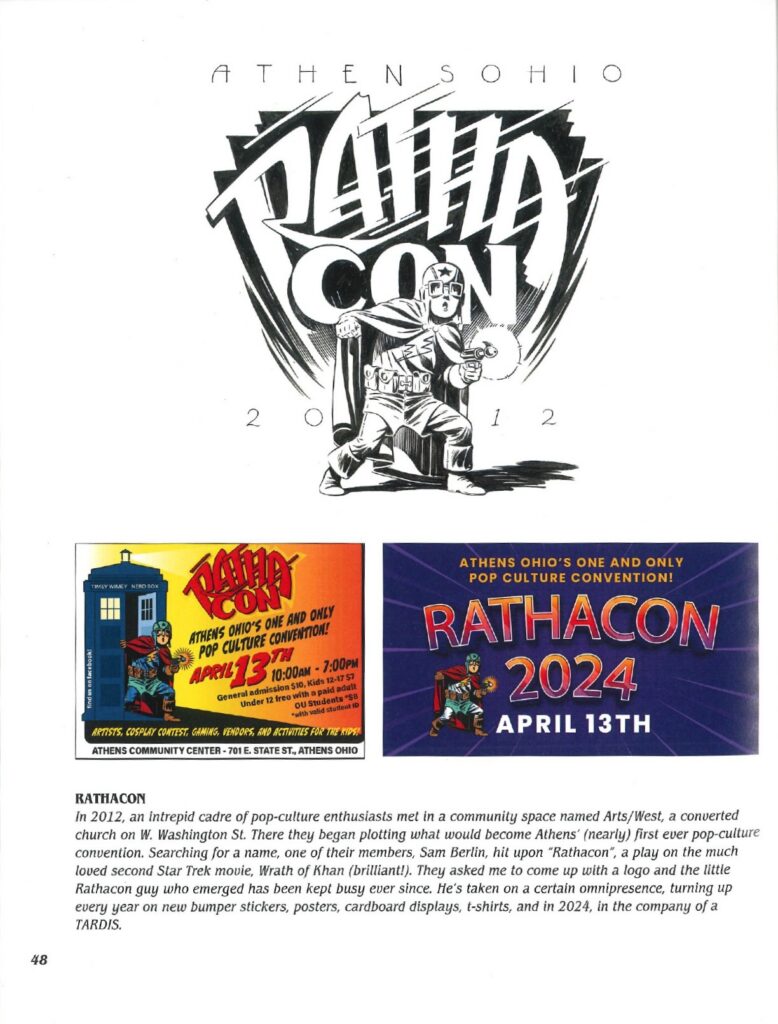
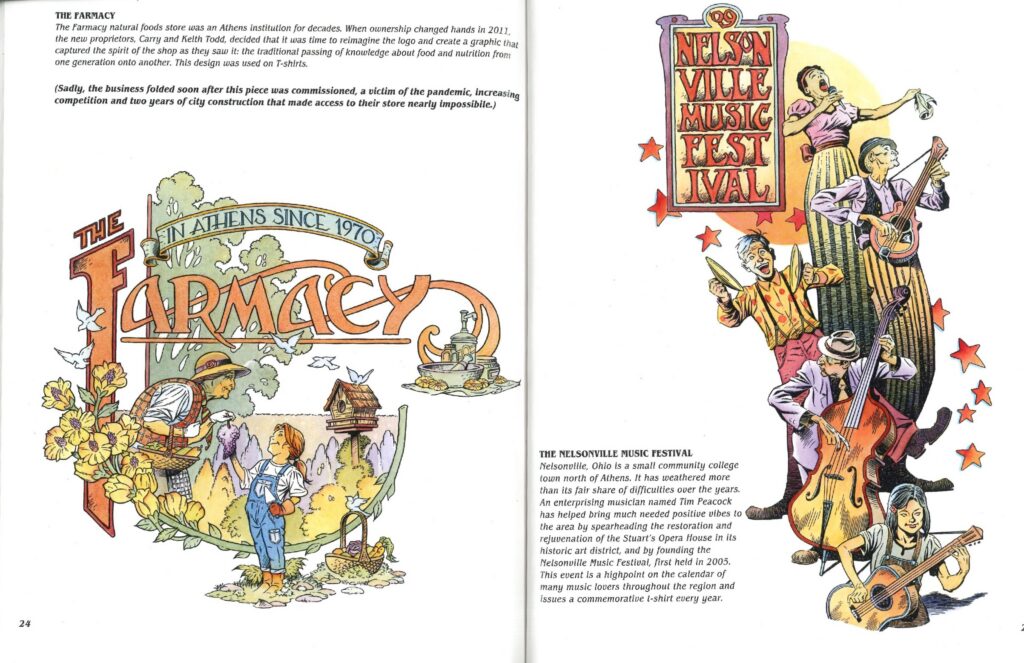
Plunkett uses a variety of tools for his illustrations, but generally uses watercolors and India ink with a brush, he said. His career as an illustrator began in the mid–1970s, when he began working for Marvel comics, he told the Independent.
During his time at Marvel Comics, he wrote and illustrated comics such as Spider-Man and Doctor Strange. He continues to do commissions for comic book fans and collectors, whose numbers have only grown over the decades.
Plunkett said he “avoided art classes in high school,” and attended a state university for only one semester before he drew up a portfolio and took it to Marvel Comics. It took him about four years to “break through,” he said.
“I grew up reading Marvel comics, and that’s basically what my dream job was,” Plunkett said.
Plunkett grew up in New York City and lived there until 1990, when he moved to Athens after visiting for several years in a row.
“I was impressed by two things immediately: the warmth of people, how [they] just welcomed me into their arms, and the beauty of the land. I kept visiting for probably about another five or six years, and then I decided, OK, I’m much happier here than I am in New York City,” Plunkett said.
Plunkett said “It was a bit of a leap of faith,” moving to Athens. The industry was also on shaky ground, he said.
“In the mid ’90s, there was this big implosion in the comic book industry, and a lot of people were laid off — I’d say somewhere between half and two-thirds of people who were relying on the income,” Plunkett said.
When Plunkett moved to Athens, the Athens News ran a front-page article about him. Later, owner Burce Mitchell asked Plunkett to do spot illustrations and political cartoons.
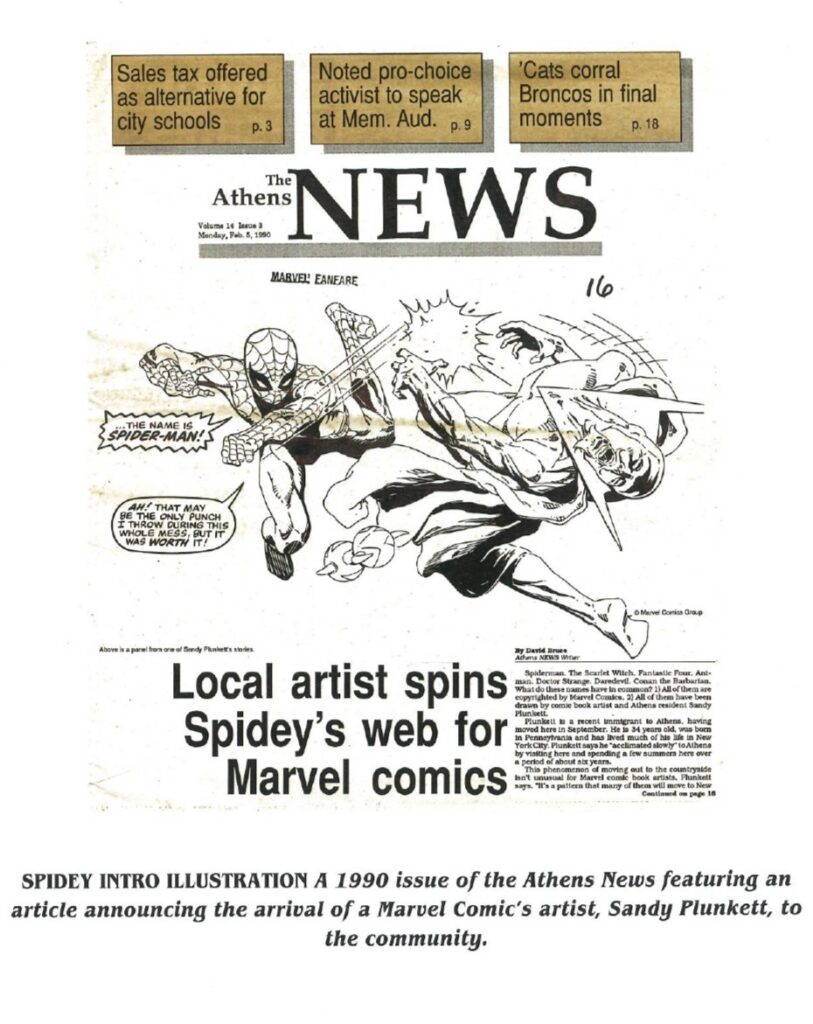
“For something like 20–25 years, I was contributing a few illustrations made on a very irregular basis,” Plunkett said.
One of Plunkett’s first commercial jobs in Athens was to design a bar T-shirt with the phrase “Life is a beach.”
“I illustrated that, and slowly — well, not too slowly, because Athens is a small community — more people contacted me [for work],” Plunkett said.
Former Athens News Editor Terry Smith recalled working with Plunkett for years on-and-off as a political cartoonist. Smith worked at the Athens News from 1986 to 2020.
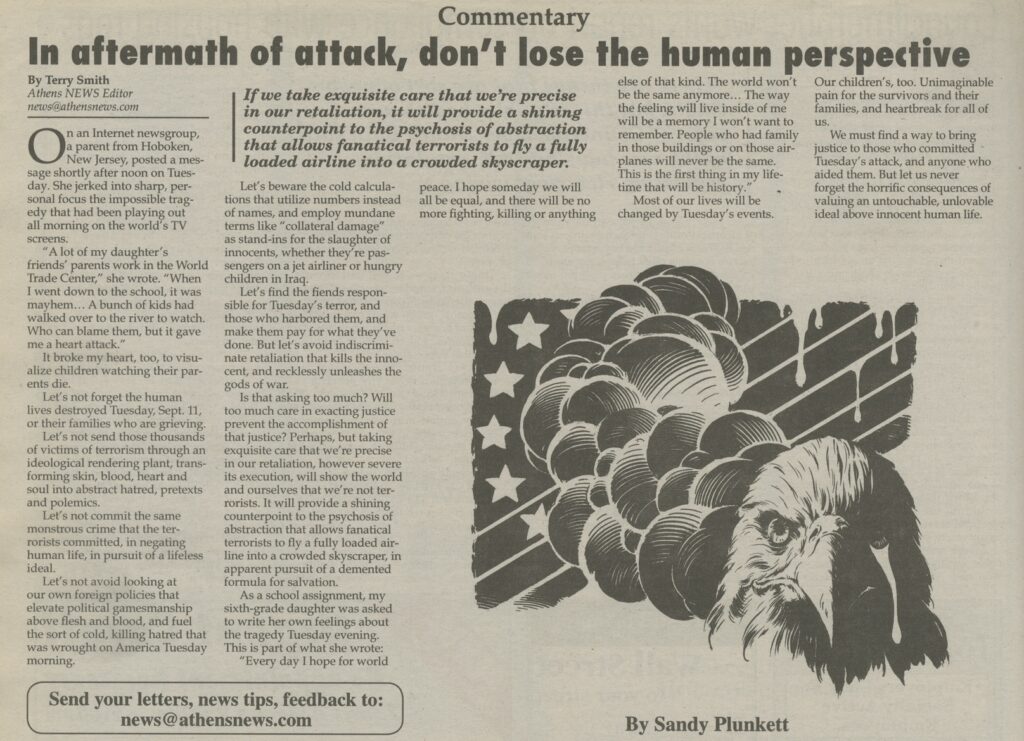
“When he felt like doing a political cartoon, he would send it, and we would run it,” Smith said. “It was totally up to him.”
Smith said Plunkett also illustrated covers of special editions of the Athens News, specifically the special edition prior to the Athens Halloween block party.
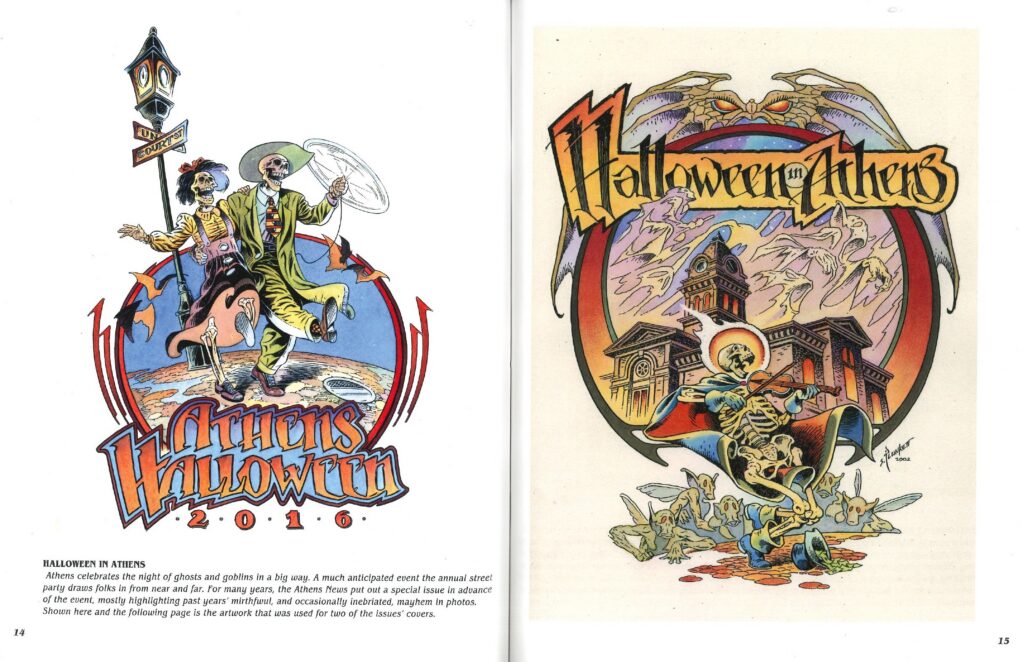
“His contributing his work to the paper elevated our own, made us a classier paper,” Smith said.
Plunkett said he quit doing political cartoons around the same time the Athens News came under the ownership of Adams Multimedia.
”That broke my heart because when I got here, [the Athens News] was really kind of like the pulse of the community,” Plunkett said. “So that hurt when it first sold. When it finally closed, I thought, ‘Well, this is a mercy killing. I’m kind of glad it’s out.’”
Plunkett has seen many changes in Athens over the years.
“It’s changed a lot and it’s not surprising that I have some problems with how it changed,” Plunkett said. “When I got here in the ’80s, first when I was visiting, I had this feeling like it was the town time had passed by, and the feeling was much, much different, much looser. The university did not have such a large footprint in town.”
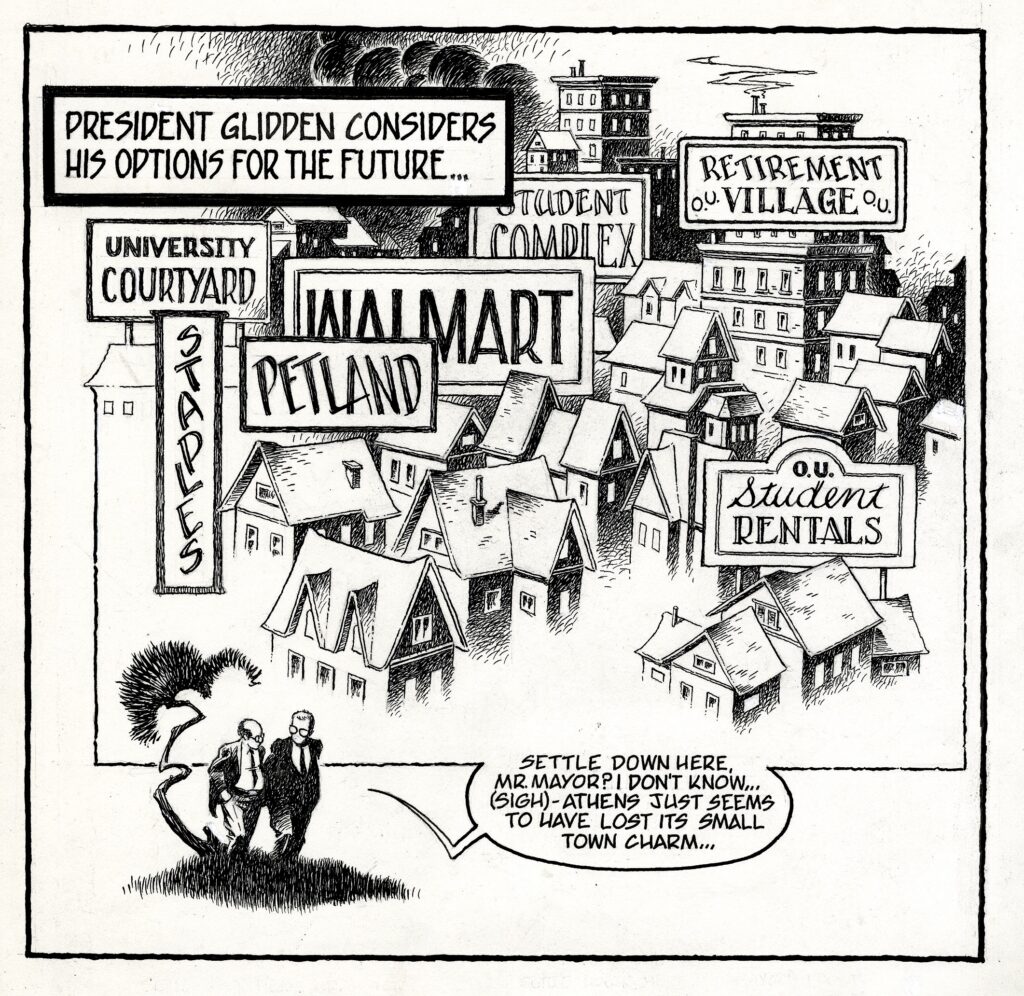
Plunkett said the local art scene also changed due to the availability of computers.
“Businesses in town, even back in the late ’90s, were using images taken off the web, and maybe some design program, or else they could do their own design,” Plunkett said. “So that did affect me.”
Plunkett said his commission work hasn’t been affected much by artificial intelligence, which can now create designs through prompts. AI could technically generate an image using his illustrations available online, he said.
However, Plunkett said he feels “fairly safe” because AI cannot replicate the effect of an original piece.
“People really do love being able to touch the original, see the pen marks, brush marks,” Plunkett said.
“Most collectors have been following my work, and they see it evolve, and that’s something right now that AI can’t reproduce,” Plunkett said. “It’ll give you something that was in my style from the 1980s, but won’t match the work I’ve been doing in the 2000s.”
