Summary:
Under former Executive Director Jen Seifert, the Survivor Advocacy Outreach Program embarked on several ambitious initiatives that expanded the organization beyond its traditional focus on advocacy and direct supportive services for survivors of domestic violence, sexual assault, and stalking. New programs offered workforce training and housing. A $22.5 million grant from the state of Ohio is underwriting ambitious initiatives such as 3D-printed housing and mental health facilities, aiming to address economic factors affecting survivors. Seifert’s execution of these rapid changes led to internal staff concerns about direction and mission creep, as well as a toxic workplace culture that eventually contributed to Seifert’s firing in July. SAOP is moving forward with the projects Seifert launched.
NELSONVILLE, Ohio — People remain in abusive relationships for a variety of reasons: fear, isolation, cultural expectations, among others. However, many factors are material, and often rooted in harsh economic realities.
As leader of the Survivor Advocacy Outreach Program, former executive director Jen Seifert increasingly sought to address not only immediate needs for support, but also underlying material realities for survivors. There were two issues that she believed would change the game for healing and prevention.
“We kept seeing that there’s kind of two levers — jobs and housing,” Seifert told the Independent in a March 25 interview.
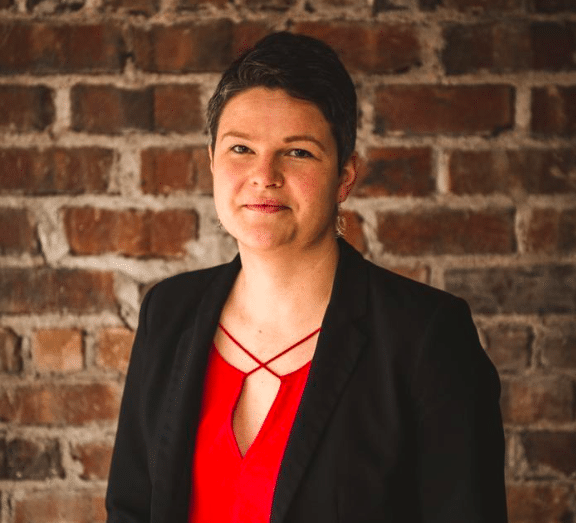
Between 2021 and 2024, SAOP launched two major, interrelated initiatives to move those levers, supported with millions in public funding. However, Seifert’s approach to growing the organization, along with the scale and pace of change, caused some employees to question Seifert’s actions.
Seifert was “doing things that have never been done before, which is great, except that a lot of people got hurt in the process,” said a former employee.
Employees’ concerns with Seifert contributed to her termination from SAOP in July 2024. Seifert declined to comment for this series.
Without Seifert at the helm, SAOP is continuing to pursue the projects she envisioned. In this story, the Independent looks at how Seifert’s ambitions for SAOP brought the organization where it is now, and affected both its programming and its staff.
The Independent conducted over a dozen interviews for this series, including with six former and two current SAOP employees and two former board members. Several others spoke to the Independent off the record, so we can’t publish their comments.
The Independent chose to grant anonymity to current and former employees who requested it because of the sensitive nature of the conversations. Where possible, the Independent attempted to confirm information provided anonymously with multiple sources.
SAOP board communications chair Tanya Conrath and SAOP board president Rebekah Crawford provided only written statements in response to the Independent’s request for interviews. Interim director Madison Trace did not respond to multiple requests for an interview for this story but answered some questions by email, and offered to talk more about developments at SAOP later this year.
SAOP’s evolution
The Survivor Advocacy Outreach Program started in 2013 as a rape crisis center housed within Ohio University’s Women’s Center. The organization separated from OU three years later, following months of controversy after the university officials interpreted state felony reporting laws to mean that the center’s services could not be confidential.
According to its website, SAOP’s mission is to empower “the community and all survivors to live free of sexual violence, domestic violence, human trafficking, and stalking.”
“When I joined (the SAOP board), I feel like the mission was very succinct in the fact that we’re serving survivors,” said Reagan Neviska, who served on the board from early 2020 until November 2022.
In 2021, SAOP launched a new initiative to serve survivors in a more holistic way: New Leaf Justice Enterprises. The program, established first in Nelsonville, serves people “impacted by trauma, incarceration, and substance misuse,” according to SAOP’s 2020-22 annual report. It is a social enterprise, meaning it relies in part on a market-driven approach to address social problems.
The program has three main components:
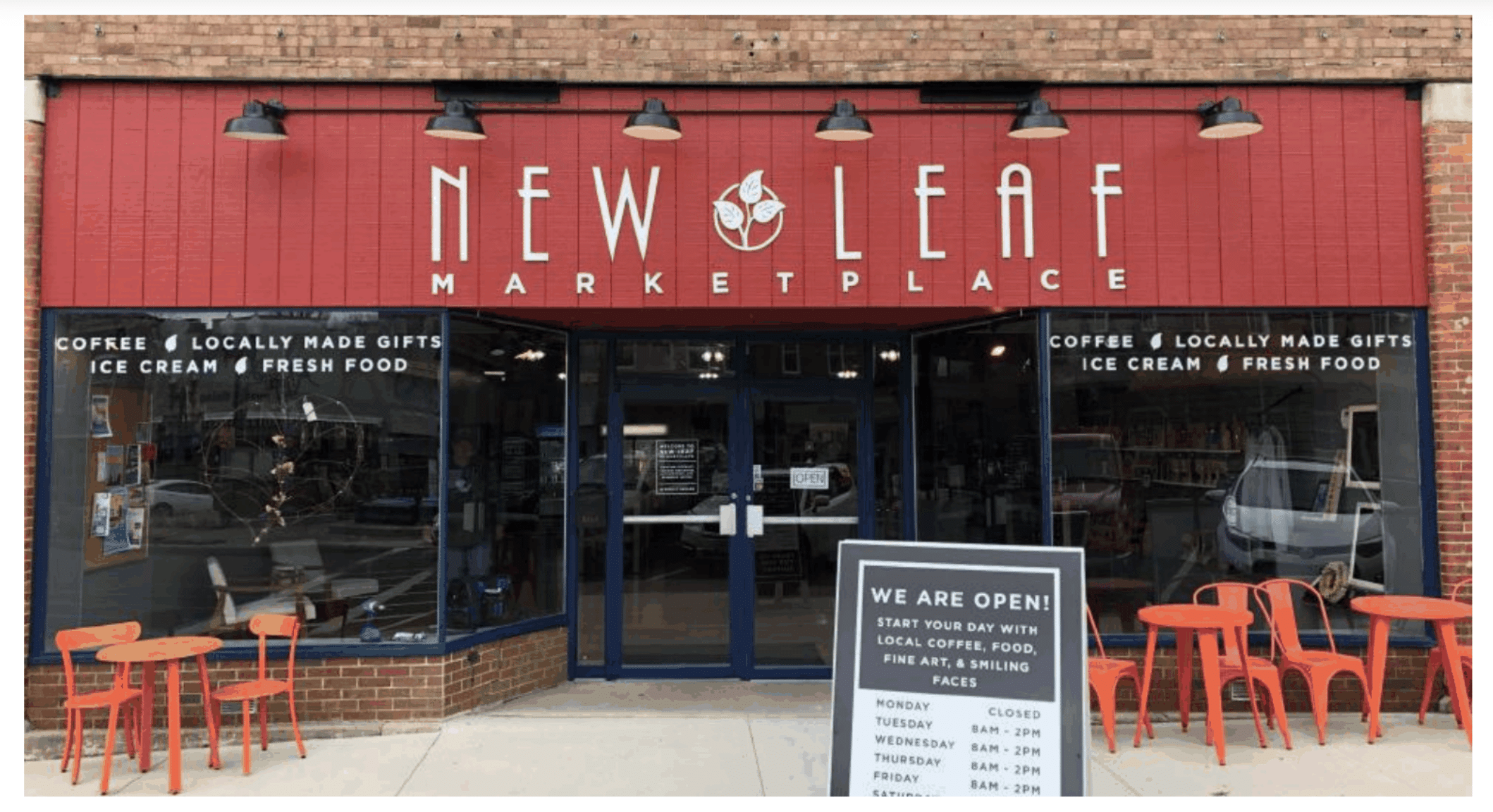
- Workforce training. In Nelsonville, clients work at the New Leaf Marketplace, a “coffee, ice cream, and locally crafted goods shop” which opened after SAOP moved its offices to the city in 2021.
- Supportive services, including counseling.
- Free, long-term housing managed by SAOP, within walking distance of workforce training and supportive services.
Multiple current or former employees spoke highly of New Leaf.
“With the New Leaf program, we were able to provide individualized care to each program participant where we could focus on individual goals and supports when it came to healing, recovery, education, employment, and financial literacy,” a current employee said in a written statement. “Very quickly we could see tangible results in the confidence and skills that program participants were developing.”
Despite positive experiences, the program also had issues as it rolled out, one current and multiple former employees told the Independent. Problems employees cited included a lack of clarity around given policies, the inefficacy of the storefront business, a lack of clear direction and expectations from Seifert, and issues in determining which clients would be a good fit for the program.
A current employee told the Independent that encountering bumps in the road wasn’t a huge surprise, given that the organization was rolling out a major new initiative. And the issues with the program were dwarfed by its impact.
“Through Jen’s leadership and vision, we were able to create these innovative approaches to our work that have had a long lasting impact on participants in the program,” a current employee said in a written statement. “It was so exciting, and we were able to do things that we had never dreamed possible.”
A bold new initiative
Less than two years after launching New Leaf, SAOP began a dramatic expansion with $22.5 million in grant support from Ohio’s Appalachian Community Grant Program, created with American Rescue Plan Act funds. SAOP’s grant was the largest of the four grants announced at the time.
The grant was framed around supporting SAOP’s New Leaf program in Nelsonville and its expansion into Glouster, Middleport and Athens. The grant is organized into six major projects, according to September communications between SAOP and the ACGP; Trace confirmed the projects in a Nov. 20 email.
The two most costly projects focus on constructing housing, including with 3D printing technology. Other projects include building a trauma telehealth hub and advocacy center in Athens in collaboration with Nationwide Children’s Hospital; creating mental health drop-in centers in Meigs and Gallia counties; transforming the Knights of Pythias building in Glouster into a hub for remote work and local food businesses; and improving streets and sidewalks in Nelsonville.
ACI infographic by Corinne ColbertThe exact scope of each project and their respective timelines are still in development, Trace said.
“We look forward to delivering on transformative projects in Glouster, Chauncey and across Athens County, and to sharing those successes with the community in 2025 and 2026,” Trace told the Independent in an email.
SAOP has folded its major grant-funded construction initiatives into Appalachia AHEAD, an SAOP-subsidiary focused on advancing 3D-printed housing and construction technology across the region.
“We have been working on the social issue, which is how do people get better jobs, so they aren’t severely rent burdened or they can buy a home,” Seifert said in the March interview. “But, housing is also a technical issue. How do we build it affordably, how do we build it sustainably, and how do we do it faster?”
According to its website, Appalachia AHEAD aims to transform “the affordable housing and construction industry … by establishing a vertical alternative building material supply chain, a trauma-informed property/construction management program, and two affordable 3D printing housing social enterprises — one that produces housing and the other that produces robots and materials.”
At first, Seifert’s vision for AHEAD inspired many in the organization.
The initiative originally “was presented to all of us as ‘We’re building housing for survivors, we’re 3D printing houses so that survivors can graduate into homeownership,’” one current staff member said. “That was this really exciting thing of, like, ‘Oh my God, this is gonna change people’s lives.’ … We all got on board so fast.”
Eventually, though, the employee said it became clear that AHEAD’s focus was not exclusively on serving survivors. The employee said they were alarmed when they realized SAOP would be constructing homes that “were going to be sold at fair market value.”
“And then the revenue generated from that was going to go back into survivor services, providing these opportunities to survivors,” the employee said. “We were all just like, ‘Wait, what?’”
Three current or former SAOP employees told the Independent that as SAOP grew to take on its new projects, Seifert frequently attempted to restructure the organization, including changes in supervisory structure, program focus, and staff positions.
“One week they’d be like, ‘Oh, … this is what we’re doing,’” said a former employee. “And then the next week, they’d jerk us around and to something else, different.”
“I get that you’re trying new things and you’re trying to see what works. You know, that’s part of being a visionary,” they said. “But at the same time, we had clients to serve.”
A current employee said that even though employees met explicit expectations, they were often blamed when SAOP’s programs didn’t succeed as quickly Seifert wanted.
“I do think that some people … were made to feel like it was them and not the organization pushing for something to be developed at a certain speed that was the problem,” the employee said.
Impact on direct services
As SAOP programs expanded, SAOP Board President Rebekah Crawford wrote in the organization’s 2022-23 annual report that “we have continued our acute-crisis response and long-term advocacy efforts for survivors of domestic violence, rape, and stalking.”
The report says SAOP served “544 survivors of domestic violence, sexual violence, and stalking; as well as providing 577 hours of crisis intervention” that year.
All current and former employees who spoke with the Independent about the nonprofit’s direct service spoke highly of that work. The advocates “are some of the hardest-working, most dedicated, best at their jobs, people I know,” a former employee said.
Direct service is at the heart of the organization’s work, a current employee said: “Both in New Leaf and in the advocacy, like the crisis advocacy, [direct service] definitely is how we affect the community.”
However, one former and two current employees said Seifert increasingly disregarded the organization’s direct service work as the organization expanded.
“I think that a lot of the direct service workers were made to feel as if they were just really not respected,” a current employee said.
“The attention got pulled away,” a former employee said. “Instead of having the support [direct service employees] used to have, it would be like, anytime [direct service employees] needed Jen, she was on a call with, like, 3D house print builders.”
It wasn’t just attention: Direct service “funding got pulled seriously,” the former employee said. The number of advocates employed by SAOP fell from five to three, two current and one former employee told the Independent.
“There was a point at which the money was expanding and we were able to do a lot, and then it expanded a whole lot, and the money got kind of pulled away,” the former employee said.
That has had a lasting effect on SAOP’s ability to serve the community, a current employee said: “The main thing is that things can’t happen as quickly because the schedules will get fuller quicker. I think it’s a problem.”
Cuts to SAOP’s direct service programming were “always presented like, ‘That was necessary because of grants,’” a current employee said.
The employee noted that while reliance on grant funding creates these issues in the nonprofit field more broadly, “I don’t know how much of the number of advocates that we have is related to the way that Jen saw things going, versus what actually needed to happen.”
Nevertheless, both current employees who spoke to the Independent said direct service employees have continued to provide high-quality service to SAOP clients.
Regarding their hopes for the future of the organization, one former employee told the Independent, “I just really want to see survivors get served like we used to.”
One current employee said their concerns about the organization’s direct service work have been assuaged now that Seifert’s out of the picture.
“It does seem like the board really respects direct service,” the employee said. “There’s a lot of people on the board, that [direct service] is why they’re there. So, I think some of the feeling of ‘we were shifting away from direct service’ has stopped, and the board’s been really clear that direct service is valued, and it’s going to continue to be valued.”
Conrath told the Independent in an Aug. 9 email, “Fulfilling our core mission is our North Star, and we are providing support and critical resources to those experiencing violence in our community. Our work to provide those we serve with prevention, crisis response, training and other critical, trauma-informed services has never been more essential.”
Mission creep fears
Many within the organization began to wonder if SAOP was losing focus on its mission as it grew.
“I think we do need innovative ways to serve survivors that haven’t been done before,” a former employee said. “And I appreciate the ideas – like when people say [Seifert’s] a visionary, absolutely.”
However, the former employee also asked, “Did we have the capacity to grow that fast and grow in that direction? Did it yank attention away from services? You know, at the core of our mission is that day-to-day support of survivors.”
Former SAOP board member Elizabeth Guarino (married to former staff member Daryn Guarino) told the Independent that the board considered the question of mission drift carefully during her 2019-2021 board tenure.
“There was a lot of discussion at the time [when SAOP began envisioning its expansion] about mission creep, and we were all very cohesive and in agreement that the primary focus would remain on supporting the survivors and providing them long term, sustainable help and support,” Guarino said.
However, multiple current and former employees who spoke to the Independent said Seifert lost focus on those things amid the expansion.
For one, two current employees and multiple former employees said Seifert became focused on the New Leaf Marketplace’s profitability.
Daryn Guarino, former SAOP administrative director, said Seifert “talked less about the survivors and more about the commerce.”
A current employee said this “was not a flaw in the program itself.” Rather, “Jen’s fixation on the profitability of the marketplace was ultimately one manifestation of a deeper issue,” the employee said. “Jen’s values no longer aligned with the organization.”
Multiple current and former employees believed that social enterprise housing development, in particular, came to dominate Seifert’s focus, at the expense of the direct service programs they believed were at SAOP’s heart.
Daryn Guarino said, “It was like the survivors became just the window dressing to launch some kind of empire.”
“I felt like we were straying farther and farther away from our original, provide advocacy mission,” one former employee said, adding that “our mission has now crept to building houses.”
The focus on Appalachia AHEAD involved “Jen running off on her own — and not just running off on her own, but really blocking people from being part of thinking about that decision together,” a current employee said. They added that this involved many “turns in the project that were really unexpected.”
Government funding can catalyze mission drift, Erynn Beaton, a nonprofit expert at The Ohio State University, told the Independent in an email.
“It is not uncommon for nonprofits to experience mission drift, and research has documented many cases due to government funding,” Beaton said. “The challenge is that an organization’s mission is open to interpretation, so whether or not an initiative aligns with the nonprofit’s mission is in the eye of the beholder.”
Representatives with the Ohio Department of Development, which administers the Appalachian Community Grant Program, did not directly address the Independent’s questions related to perceptions of mission drift at SAOP.
Managing changes in a nonprofit’s programs is tricky, Beaton added.
“Any significant change in the scope of an organization’s operations presents risks,” Beaton said. “The key to success … is to create a thoughtful strategic plan to guide those decisions and to listen closely to the needs of staff and beneficiaries as changes occur.”
But multiple current and former SAOP employees told the Independent that Seifert did not listen to their concerns about the scale and pace of change made possible by the ACGP funding. Instead, they said, Seifert reacted to staff concerns by cutting them out of decision-making — and, eventually, with overt retaliation.
An increasingly toxic workplace
In a research article, Beaton wrote that “ensuring that staff members were comfortable voicing unfavorable or controversial opinions was important to mission-conscious leaders.” Leadership that allows for and internalizes resistance from staff and stakeholders is “paramount for maintaining mission integrity,” the article said.
Yet, at SAOP, isolating employees from decision-making was just one example of what one employee described as “really explicit, overt retaliation” for questioning Seifert’s actions or approach.
Some said workplace culture issues pervaded Seifert’s entire tenure as SAOP’s ED; others said the issues started in earnest during Seifert’s last year, as she focused more on Appalachia AHEAD.
Neviska, who left the board in 2022, said she approached Seifert with concerns about turnover. Neviska said Seifert dismissed her by saying, “‘Oh it’s a really hard job and it’s really taxing mentally, so that’s why people leave so much.’ But now, in retrospect, I’m not sure if that’s the whole story.”
Six former workers who spoke with the Independent left SAOP before Seifert’s final year. Of those, two said they departed after Seifert issued ultimatums to either leave or accept other positions. Two alleged Seifert suggested they were too traumatized to work at SAOP. Another felt they had been arbitrarily targeted by Seifert and another leader in the organization over the course of their employment.
Two of the former employees said they were terminated for infractions in areas that lacked clear policy. Four described their terminations as occurring suddenly and, in their eyes, arbitrarily.
Among those was Dottie Fromal, whom Seifert recruited in February 2022 to provide home-based childcare. Fromal and the children in her life moved into an SAOP-owned house within walking distance of the Nelsonville Public Square, which Fromal described as her “dream house.”
Nine months later, however, Fromal was suddenly fired and evicted from the home. She “really got upset” when people working on the house began clearing out items — including Fromal’s possessions — from the home’s first floor. Fromal admits that the email she sent to her supervisor and Seifert about the incident “had a little bit of a tone,” but she didn’t expect what came next: Seifert fired her and asked her to leave the house.
“She was firing me because she felt there was a lack of trust from me in her leadership – that’s what she said,” Fromal told the Independent in an April 2023 interview. “She thought that there was a lot of trauma in my life. And the best thing to do is to pull off the Band-Aid.”
“I gave her control of my housing, I gave her control of my job,” Fromal said.
Fromal’s eviction was the last straw for Neviska, who is involved with the tenant advocacy organization United Athens County Tenants. She raised her concerns with Seifert, but “I felt very dismissed.” Neviska subsequently resigned from the SAOP board.
Two current employees said the workplace culture especially deteriorated during Seifert’s final year at the organization, as she focused more on Appalachia AHEAD.
“It felt like being on a train that was off the rails, and there was no way to get it on the track again,” a current employee said.
Employees tried to have conversations about their concerns with Seifert.
“There had been a lot of change and growth, and we wanted to make sure we had the capacity for our current projects with a sustainable infrastructure before even considering any new projects,” a current employee said.
Multiple current and former employees told the Independent that, after voicing concerns with AHEAD and associated changes, Seifert threatened to fire employees, stopped speaking directly to employees, demanded that employees switch to a different role or leave, and abruptly fired employees.
With SAOP’s work culture becoming especially toxic — and perceiving no other options to reason with Seifert — a group approached the organization’s board with their concerns, according to two current employees.
Shortly thereafter, Seifert was terminated.
The board’s announcement at the time said only that Seifert “is no longer with the organization.” Tanya Conrath, SAOP board communications chair, confirmed in an Aug. 17 email to the Independent that Seifert had been terminated from her position.
Moving forward
Since Seifert left, a current employee said, employees are once again included in discussions and decisions that affect them and have been encouraged to share their ideas.
“All the things that I loved about this organization are already starting coming back,” the employee said.
Trace told the Independent in an Oct. 31 email, “We have a lot of exciting things going on at SAOP, including a complete rebrand with new logos, website, etc. We have multiple construction projects starting in the [next] few weeks and will have a ribbon cutting for the new CAC [Child Advocacy Center] early 2025. We also plan to announce our new Executive Director at the beginning of the year as well as several new staff members.”
Conrath told the Independent in an Aug. 17 email that while SAOP’s search for a new ED was under way, “Providing a positive, trauma-informed workplace culture … will be top of mind as we begin our search for a new executive director.”
With Seifert out of the picture, Athens County Commissioner Chris Chmiel said he hopes the initiatives she championed still “pan out” for the county.
“When Seifert was around, there was this vision of things,” said Chmiel. “Things [are] obviously changing. I don’t know where they’re all going to wind up, but … obviously, that was a lot of potential money going into our communities, and a lot of good potential projects.”
Athens County received a $5 million+ grant in November 2022 through the CARES Act. The grant — which was amended earlier this year — is partly funding property acquisitions and renovations to support SAOP’s New Leaf program.
Conrath said the organization remains committed to the initiatives that prompted skepticism under Seifert’s leadership. In an Aug. 17 email, she said that Appalachia AHEAD in particular remains “a top priority – and our leaders and board have reaffirmed their intention to further our mission through these innovative and critically important initiatives.”
However, a current employee said decisions are now being made more deliberately, collaboratively, and carefully.
SAOP continues to offer valuable resources to the community, the employee stressed.
“Southeast Ohio has an incredible resource with Survivor Advocacy Outreach Program,” they said. “The kind of advocacy that is provided is really top notch.”
Sam Stecklow, Keri Johnson and Corinne Colbert contributed reporting to this story.
Disclosure: Jen Seifert was the board president of Southeast Ohio Independent News, which publishes the Athens County Independent, from the board’s formation in August 2022 to January 2023. The author of this article and the Independent’s editor, Corinne Colbert, worked with Seifert directly. Members of the board have no control or influence over the newsroom’s editorial decisions or individual reporters.