ATHENS, Ohio — A group of researchers led by an Ohio University professor has found a potential way to reduce nutrient pollution in local waterways and homeowners’ cost of managing home septic sewage systems — while boosting the local economy.
In a peer-reviewed study published in August 2024, Sarah Davis, professor of environmental studies in the Voinovich School of Leadership and Public Service, suggested that Athens County could boost its economy by turning septic sewage waste into fertilizer. Her research shows septic waste is a viable source for nitrogen and phosphorus, two key nutrients in synthetic fertilizers.
And Athens County — where over 43% of residents live in rural areas — has an abundance of home septic sewage systems.
Those systems generate more nutrients that could be used for fertilizer than county residents currently use, Davis said. Using fertilizer produced from septic waste would eliminate the need to produce or import synthetic fertilizers.
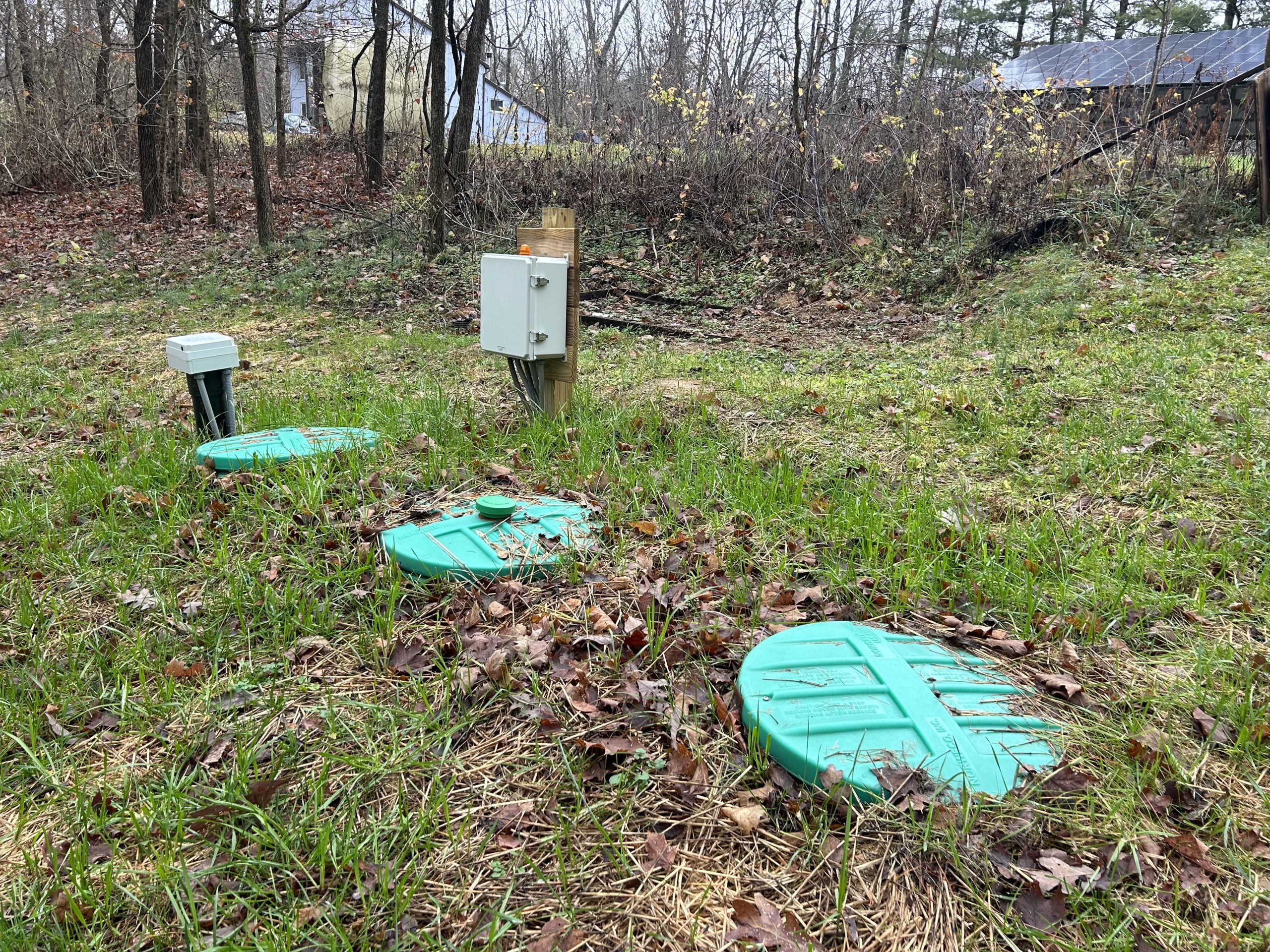
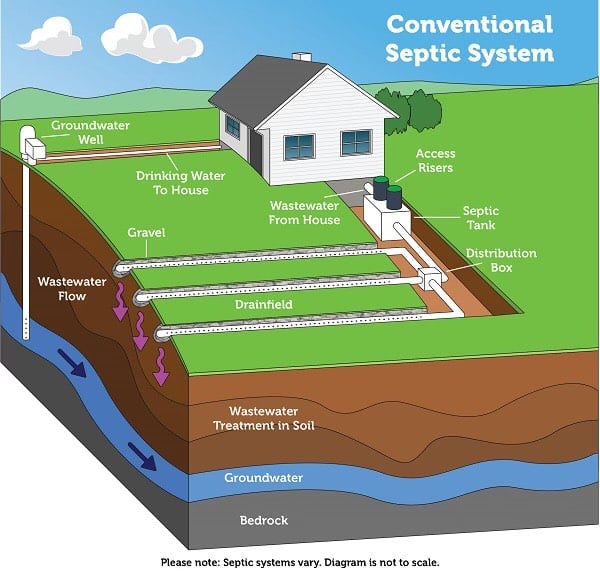
Septic systems include a tank that holds the solids, which turn into sludge; liquids exit the tank into a drain field where the soil naturally accepts and treats the wastewater. More than one in five households in the U.S. depend on individual or small community cluster septic systems, according to the Environmental Protection Agency.
In Athens County, septic haulers take the sludge pumped from individual tanks directly to the Athens Wastewater Treatment plant, where it is treated and then sent to the Rumpke landfill in Nelsonville, according to Lisa Agriesti, operator at the Athens plant. Once at the landfill, the waste is buried.
“These nutrients, right now, are just being lost,” Davis said.
Davis’ study proposes treating the septic sewage with hot compressed water in a process called hydrothermal carbonization, which can also be used for food and yard waste. The final product, hydrochar, is a carbon-rich and nutrient-dense substance that can be used as a soil amendment.
In 2015, U.S. farmers used over 20 million short tons of commercial fertilizers, according to the U.S. Department of Agriculture. And the price of synthetic fertilizers has more than tripled since the 1990s.
Converting septic sludge to fertilizer not only would save farmers money, Davis said, but also reduce greenhouse gas emissions used in manufacturing synthetic fertilizers.
“By using this nutrient (from septic waste), you’re offsetting the energy requirements in the industrial process to produce synthetic fertilizers,” Davis said. Per unit of fertilizer produced, the process would reduce greenhouse gas emissions by 64%, compared to the production of synthetic fertilizers, according to the study.
The reality of failing septic systems
Davis’ discovery also could help to clean up local waterways. Although water quality in the Hocking River and its tributaries has improved for aquatic life, it remains unsafe for people because of dangerously high levels of E. coli.
The bacteria come primarily from private septic systems, many of which drain into creeks around the region. Nate Schlater has seen this firsthand while playing in creeks with his kids, as well as in his job as senior director of ecological restoration at Rural Action.
In 2012, he was monitoring water quality in Snow Fork in Murray City, in Hocking County. “I counted 19 septic outlets that came straight into the creek from people’s houses or aggregated from people’s houses,” Schlater recalled. “Several of them flushed while [we were] looking at them.”
The Ohio Department of Health estimated that in 2012, almost one-third all home sewage treatment systems across the state were experiencing some degree of failure. More of those are located in economically distressed counties like Athens, Schlater pointed out, because “somebody that is very concerned about putting food on the table isn’t as concerned about what’s happening with the water behind their house.”
“It’s just a reality,” Schlater said.
The main cause of septic system failure is age and poor maintenance, said Ben Avery, an environmental health specialist at the Athens City-County Health Department. If the system is not regularly monitored and managed as necessary, the system will not function as intended.
Waste from failing septic systems not only pollutes waterways with pathogens like E. coli, but also floods them with the excess nitrogen and phosphorus that Davis’ research documented.
“In the Hocking River watershed, there’s a substantial amount of those nutrients that are coming from human biosolids, from these home sewage treatment systems,” Davis said.
That can disrupt natural systems, though the damage is not always visible at the source. The contaminants will creep downstream, until they merge into a new larger waterway, such as the Ohio River.
“All of our watersheds are connected,” said Davis.
In the summer of 2015, excess nutrients in surface water triggered a harmful algal bloom along 700 miles of the 981-mile-long Ohio River, which lasted for nearly four months. As a result, 20 of the 32 municipal drinking water treatment plants that operate along the river had to take extra treatment precautions, at an estimated cost of $2 million, according to the Ohio River Valley Water Sanitation Commission.
The nutrient-laden water continues into the Mississippi River, where it picks up even more fertilizer from agricultural runoff and improperly disposed animal manure. As these waters accumulate in the Gulf of Mexico, they create an annual dead zone, where there isn’t enough oxygen in the water to support marine life.
Davis’ proposal would help to mitigate this cycle by turning septic sludge — which currently is either buried in landfills or runs into surface water — into a natural fertilizer that would reduce or replace use of synthetic fertilizer.
“We’re looking at replacing the fertilizer need with this alternative product that would have greater environmental benefits associated with the whole processing,” Davis said.
Creating a circular economy
Turning a waste product into a marketable commodity creates a circular economy that benefits both people and the environment. In this case, profits from the sale of hydrochar separated from sewage sludge would subsidize the work of septic haulers, who would be able to charge homeowners less for those services.
Davis’ research estimated that the nitrogen and phosphorus from Athens County septic systems was worth $1.8 million at 2022 market prices.
“If the average cost of pumping is around $400, then it could be possible to use the value of the nutrient to reduce maintenance costs for landowners and increase the profit margins of hauling companies,” Schlater said.
Davis’s and Schlater’s team has two ideas for pilot projects to prove that the process would work.
One option involves creating a centralized facility, built on site of an existing wastewater treatment plant, where septic haulers could discharge their trucks into holding tanks. Those contents would undergo hydrothermal carbonization to separate the nutrients from the sludge. The nutrients would be sold for fertilizer; the leftover liquid from the hydrothermal carbonization process would be piped to the wastewater treatment plant.
Schlater applied for a $1 million grant from the EPA to fund a pilot facility in this model, but the wastewater treatment plant would have to commit to permanent installation of the system.
The project may be piloted in the Trimble Township Wastewater Treatment District; district president Kevin Coey said he recently began speaking with Rural Action about the possibility. Using the system to handle sludge removal would significantly lower costs for the sewer district, Coey said, although he noted that there hasn’t been enough discussion yet to identify drawbacks.
The second pilot option is a mobile unit, similar to a septic hauler truck. The truck would pump the septic tank and process the waste immediately, creating the hydrochar. The unused liquids would be pumped back into the tank.
A single truck could process waste from four houses in a standard 8-hour work day, assuming the houses were an equal distance apart, according to Davis’ initial study published in 2021. But a centralized facility could continuously process the waste and multiple septic haulers could deliver to the facility.
Either way, Davis said, the system could produce more hydrochar than Athens County currently uses for agriculture. While the research is still being developed, Davis and Schlater believe the process could be replicated nationwide. If brought to scale nationally, the process could significantly reduce greenhouse gases from synthetic fertilizer manufacturing and mitigate water pollution all the way from Athens County’s creeks to the Gulf of Mexico.