
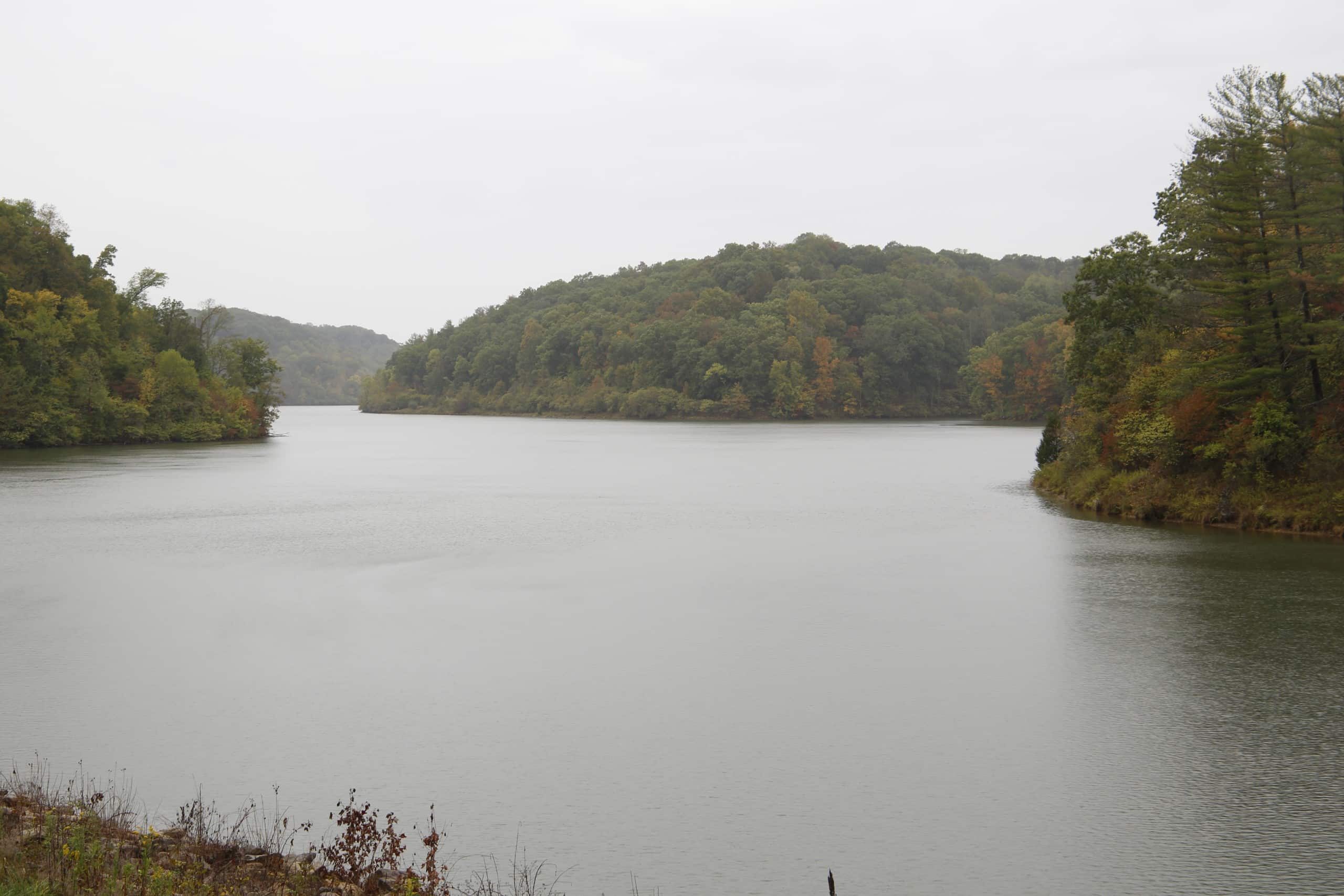
ATHENS COUNTY, Ohio — Water quality tests conducted by the Ohio Department of Natural Resources have shown that Dow Lake and Lake Hope are among the cleanest waters in Ohio.
Natalie Foos, the land and water resources administrator for ODNR’s division of parks and watercraft, told the Independent that the two bodies of water are rarely under a water quality advisory and show low levels of E. coli.
“They are some of the cleanest lakes in the state of Ohio,” Foos said. “They are great places to swim, great places to recreate, and I think a lot of that has to do with the watershed. [The watershed] is fairly small for both Dow Lake and Lake Hope, a lot of forested or buffered streams come into those lakes.”
E. coli is a type of bacteria that is commonly found in human and animal waste. According to the federal Environmental Protection Agency, swimming in water with high E. coli levels can result in diarrhea, vomiting, respiratory issues, and more.
Given the health risk posed by E. coli and its connection to human and animal fecal matter, ODNR routinely tests the water quality of beaches at all of Ohio’s 76 state parks during the summer recreation season.
So far this summer, tests conducted at Lake Hope and Dow Lake have shown very low levels of E. coli, with one test at Dow Lake reporting 0 units of E. coli. The highest test result so far was at Lake Hope, with 39 units of E. coli per 100 milliliters of water.
The federal EPA has established two standards for measuring E. coli levels and recommends water quality advisories be issued if E. Coli levels exceed 100 units or 126 units per 100 milliliters of water, depending on which standard is being used.
There are some years where the lakes have zero advisories issued. When the lakes have come under E. coli advisories, Foos attributed the increase to geese and ducks living around the lakes.
“Usually the culprit is water fowl,” Foos said. “So that that E coli bacteria lives in the intestines of warm blooded animals, and when our geese are out enjoying our beaches, they leave their droppings, and if we get a heavy rain, those droppings wash into the lake, and that’s usually the cause for the spike in bacteria levels at our beaches.”
When an E. coli advisory is in effect the state puts up signs warning beachgoers of the danger but doesn’t actually close the beach, Foos said.
“There will be signs posted at the beach recommending that folks make a good decision about if they should swim or not,” Foos said. “Those who are elderly or maybe have existing medical conditions, we want them to make a good decision about whether they’re going to go swimming or not.”
In addition to the signs posted at the beach, the state also posts updates and test results to Ohio BeachGuard. This website records all test results and allows members of the public to sign up to receive water quality updates for selected bodies of water.
Foos recommended that members of the public sign up for notifications from Ohio BeachGuard and that they follow common safety practices.
“Go with a buddy, don’t go alone, make sure you’re with friends or family and that people know where you’re at,” Foos said. “[ODNR does] put buoys out in the lake, and we request that [members of the public] do not swim past those buoys. Always take sunscreen and water, make sure you stay hydrated and wash your hands before you eat.”
While not done at Dow Lake or Lake Hope, ODNR also tests for cyanobacteria associated with harmful algae blooms, commonly associated with Lake Erie.
