
CHAUNCEY, Ohio — A local nonprofit organization wants to create a “community forest” on land once owned by Sugar Creek Mining Company.
Rising Appalachia hopes to turn 845 acres in Dover Township between Mill Creek Road and Keirns Road off SR 550 into a “community commons and working forest for the benefit of neighbors and the region, ensuring perpetual access to hunting, hiking, foraging, and rural livelihoods.”
A map of the proposed community forest can be found here.
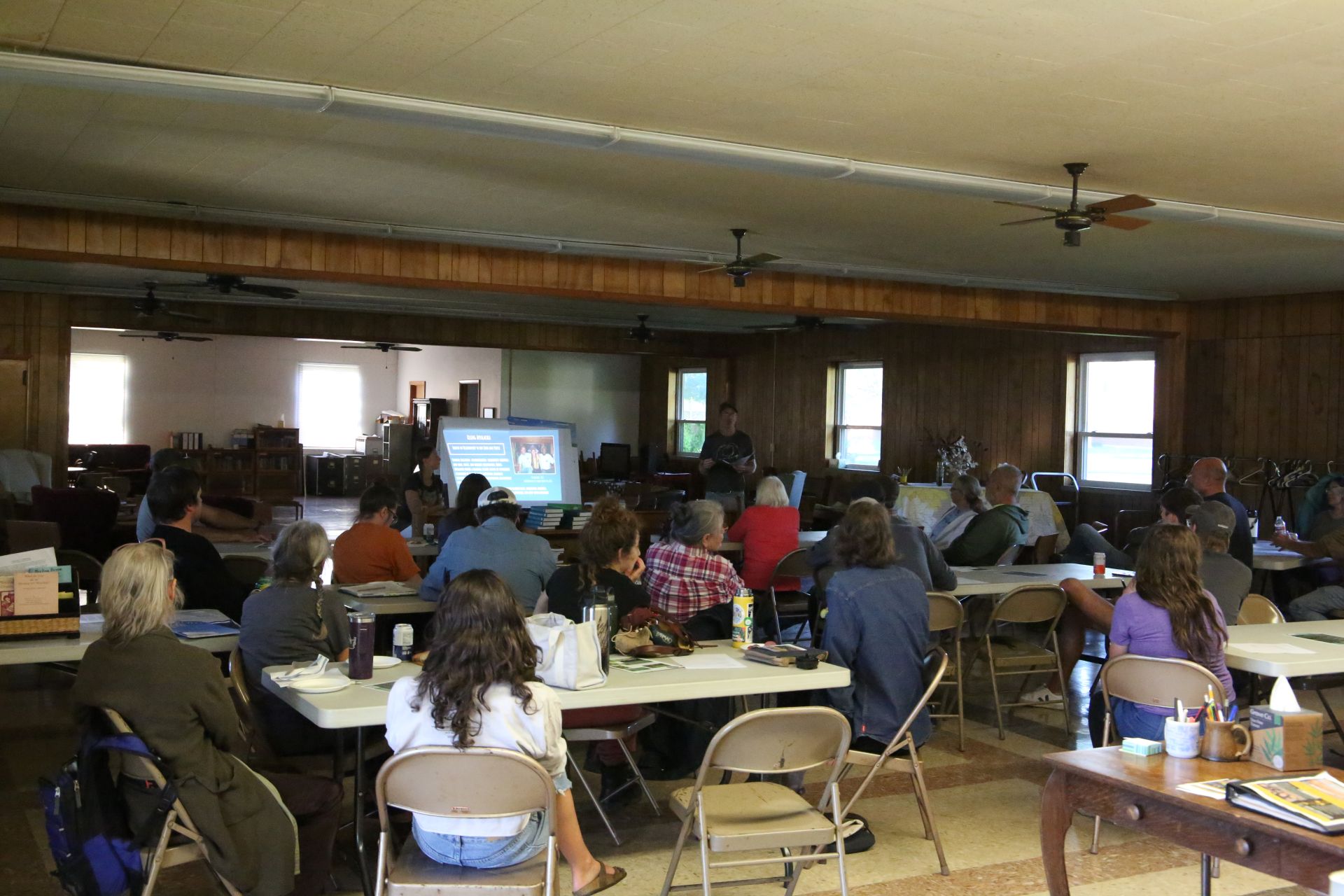
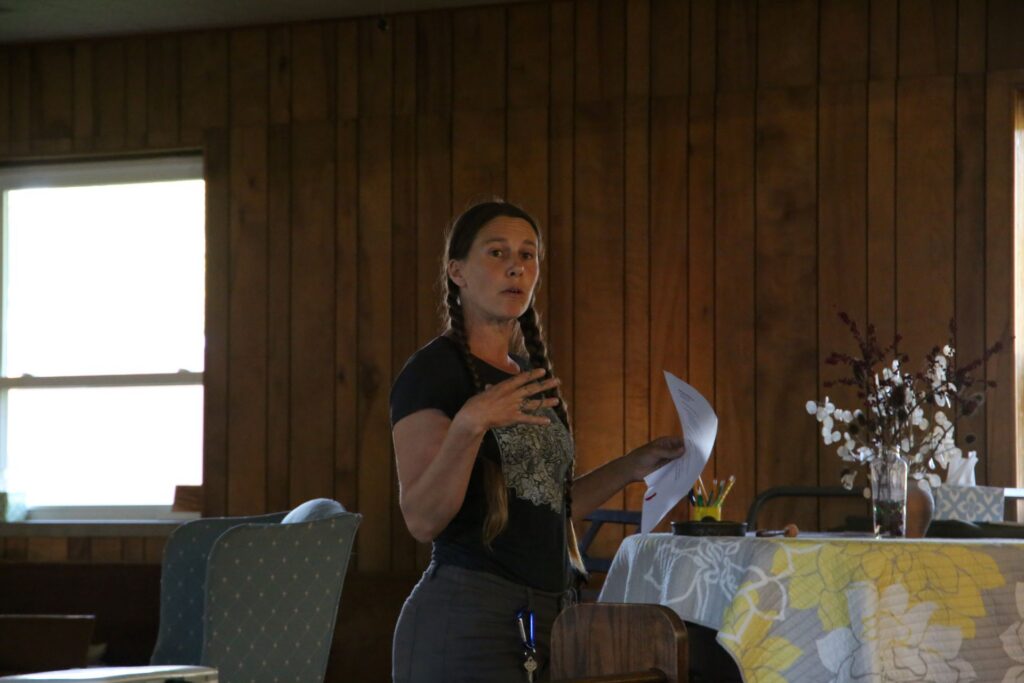
“We need to make sure that the community, the surrounding neighbors are protected, and that the land itself is protected in perpetuity,” Rising Appalachia co-founder Molly Jo Stanley said at a recent public meeting on the project, where over two dozen people squeezed into the Friends Meeting House in Chauncey on Sept. 28.
The proposed community forest would be managed by a board of volunteers, Stanley said. That approach is important to the site’s long-term preservation, she said.
“We’ll have to put parameters in place to make sure that whatever activities get approved by the governance committee fit within the overarching guidelines we have, which is that [the forest] remains land that benefits the community, ecological community included, in perpetuity,” she said.
The forest would connect Strouds Run State Park with the Baileys Trail System, organizers said.
The impetus for the project came from Rising Appalachia co-founder Weston Lombard’s memories of growing up in the area.
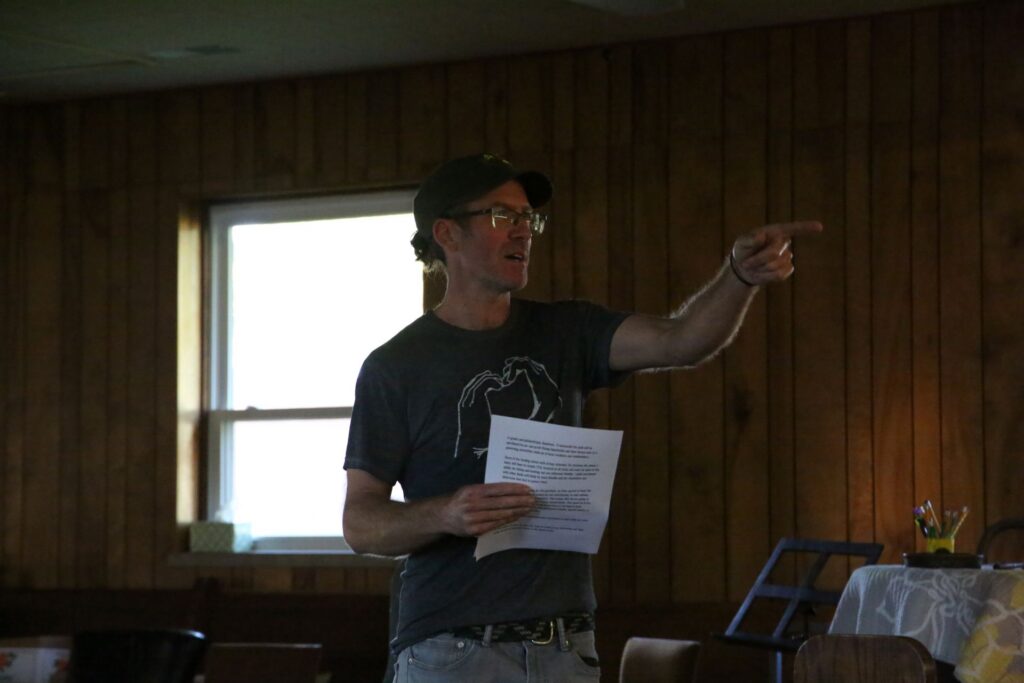
“As kids, we’d go out in the woods and just follow the creek to make it all the way down to Millfield to the general store,” Lombard said. “We just thought this place was this never-ending expansive forest, and we’re really sad when [the land owner] started putting up all the no trespassing signs. We’re really hoping to reinstate that idea of having a common place for [the community] to gather.”
The organizers highlighted the potential economic benefits of the project. Rising Appalachia plans to build a food processing facility on the land focused on native fruits, seeds, fungi and nuts.
“Rising Appalachia is building this forest-products processing facility that will hopefully go a long way to creating [a] basis for economic development and entrepreneurship [in the community forest],” Stanley said.
Lombard suggested that the forest could lease rights for maple syrup harvesting, build a sawmill or even reserve part of the land for a cemetery.
“People in the neighborhood have talked about wanting a natural burial cemetery,” Lombard said.
Stanley said that an important focus of the community forest is finding a middle ground between economic interests and sustainability.
“We will have to have a management plan in place that makes sure that we’re balancing anything that we’re extracting, anything that we’re taking out is regenerating,” Stanley said. “We’re lucky that we have a strong community full of foresters and ecologists, people that know how to balance systems.”
Part of the motivation for this economic development is that the forest is remaining in the taxable property base for Dover Township and Athens County. As such, the community forest will need to find a way to pay its annual property taxes.
“We’ve promised the county and the township that we’re going to keep the land in the tax base,” Lombard said. “We’re going to continue to pay the annual land tax bill. There will be some revenue generation that needs to happen.”
Following an initial presentation about the project, town hall attendees gathered in groups to share both their praise and concerns with representatives of the community forest. Attendees asked how community forest rules would be enforced, if any historic preservation would be done on company homes and how hunting would be regulated.
Multiple attendees raised questions about infrastructure related to the forest, including impact on local roadways, access for horses and off-road vehicles, logging infrastructure, accessible bathrooms, and trails or accurate trail maps. Overall, attendees voiced support for the project and expressed interest in attending future planning sessions for the community forest.
Nine months to raise $1.5 million
The town hall also kicked off a $1.5 million capital campaign to buy 487 acres of former mine land from the Sugar Creek Coal Company.
The project has already purchased 20 acres using $85,000 from the Great Lakes Thriving Communities Grantmaking Program. Lombard told the Independent that the landowner agreed to sell the property at a rate of $4,550 an acre after negotiations — below normal rates for the area.
At that rate, the 487-acre purchase will cost about $2.2 million. Lombard said that the group already raised $700,000 and has nine months to raise the remaining $1.5 million.
“We’re working with some national organizations who are helping us to access philanthropy across the country,” Lombard said. “We’re also going to do a simultaneous regional capital campaign to make up the difference.”
In all, the land purchases would in total cost just over $3.7 million.
Stanley told the Independent that the community forest project began in 2024 after a conversation with members of the Athens Conservancy about the fragmentation of public lands across Ohio. Ohio ranks 39th in the nation for public lands with only 1.2% of the state being public land — about 305,000 acres.
At the same time Rising Appalachia was focused on a workforce development program funded by the U.S. Forest Service. Rising Appalachia later received $600,000 from the U.S. Forest Service Community Forest Grant to help fund the project.
“We had our first community visioning [session], talking about workforce development and what it would look like to create jobs in the region rooted in tending the ecosystems,” Stanley said. “That was when the idea to [find] a way to acquire this land and turn it into a community forest came into our minds.
County support
The Sugar Creek Community Forest has received support from the Athens County Commissioners. The Athens County Commissioners provided a letter of support for the project that Rising Appalachia has used when seeking funding and their office has provided feedback to Lombard and Stanley.
Athens County Planner Connor LaVelle was at the Chauncey town hall and said that the project is aligned with the Athens County Comprehensive Plan on land use, economic development and environmental protection.
“Preventing erosion, protecting streams and allowing sustainable farmland opportunities … are all things that were outlined in that environmental and natural resources section [of the comprehensive plan], and those are things that this project I think could do really well,” LaVelle said.
Mine land reuse and the preservation of local forest are also aspects of the project that coincide with the comprehensive plan, LaVelle said.
The community-run and sustainable harvesting aspects of the project have also garnered support from local leaders. A sawmill, maple syrup operation, new firewood cutting or any other business that springs up in the community forest would inject more activity into the local economy and tax base.
“That kind of local economic development is something that really helps provide a local approach to sustainably being able to use the resources that are available in Southeast Ohio,” LaVelle said.
LaVelle, whose job involves flood monitoring and flood mapping, said the Sugar Creek Community Forest would help reduce the amount of sediment and water entering local waterways during rainstorms.
“When you’re thinking of flood control, even though you might initially just think of the rising water of the streams, you also want to think about how you are going to be able to slow water down,” LaVelle said. “It’s control in the sense that the trees are controlling [the flow of water]. You’re able to help guide that flow of water and prevent it from causing higher risk to residents downhill. That also helps prevent the transportation of silt and sediment into that Sugar Creek that would eventually wind up in the Hocking River.”
