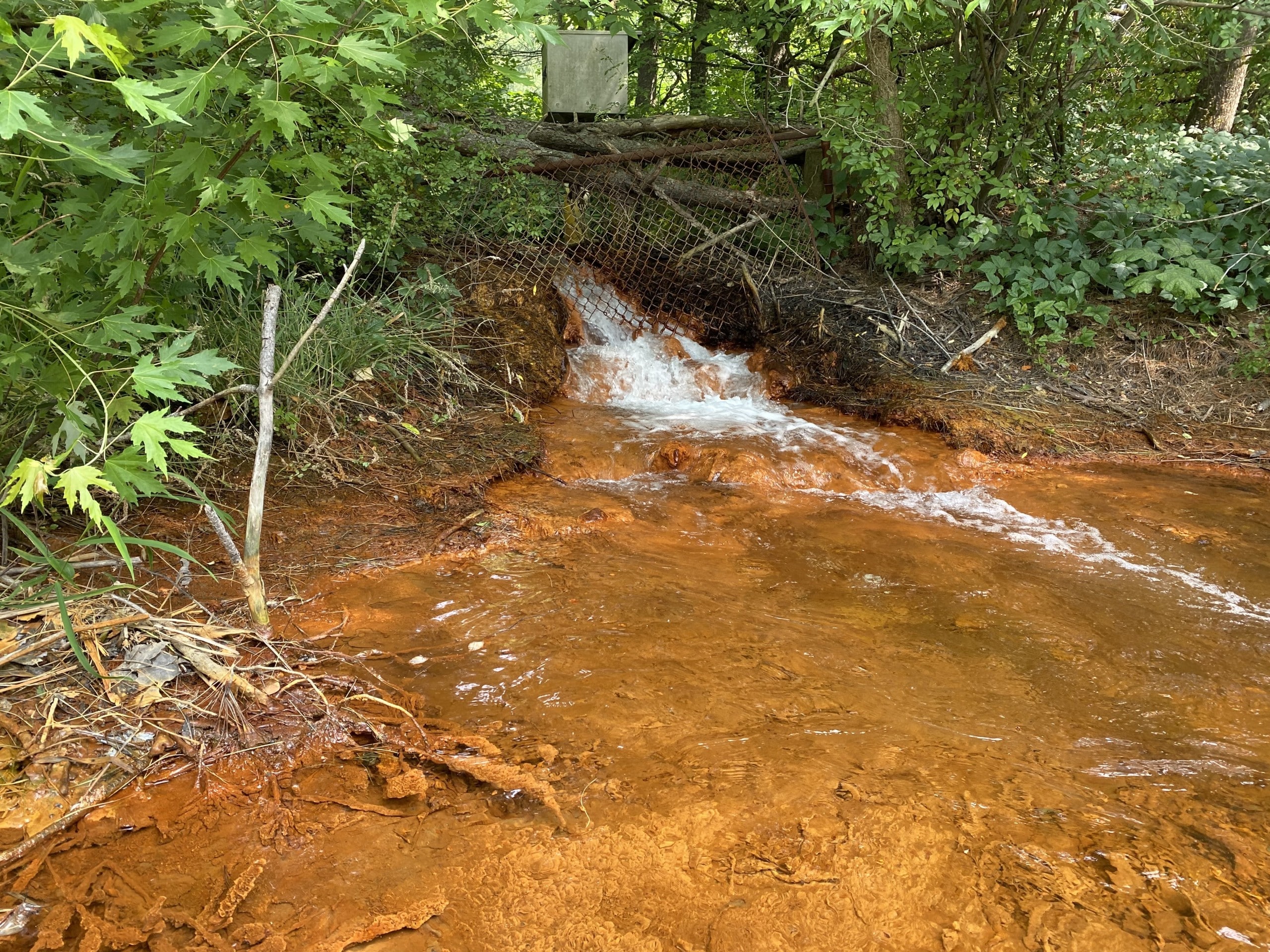
MILLFIELD, Ohio — Before a long-promised project to protect Sunday Creek from toxic mine discharge can come to fruition, the state must determine how to safely dispose of sludge leftover from treatment.
Their answer: Put it back in the mine.
The Ohio Department of Natural Resources is trying to be more specific on where exactly the waste will go.
“We’re going to have some iron and some sludge that we can’t send to the landfill [because doing so would be] cost prohibitive,” said ODNR Abandoned Mine Lands South Region manager Kaabe Shaw. “So, we need to find places to put the sludge back in the mine from which it came.”
Disposing of the treatment waste safely is a vital part of efforts to clean Sunday Creek of acid mine drainage.

Acid mine drainage — formed by water flowing through abandoned mines — is toxic and highly acidic. When it leaves the mine and enters creeks, acid mine drainage can harm the environment and aquatic species.

Truetown Road in Millfield hosts the worst acid mine drainage discharge site in Ohio, which leaves Sunday Creek dead for seven miles. It’s also where True Pigments — a for-profit business operated by Rural Action — is working on a unique treatment facility that would reclaim some of the pollutants to make paint. The project will be the first large-scale acid mine drainage treatment facility in Ohio.
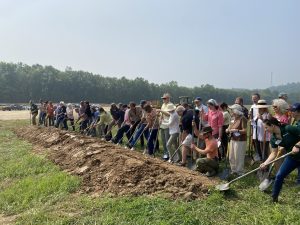
Michelle Shively MacIver, director of project development at True Pigments, said it’s common practice to return waste from treating acid mine drainage into the mine where it originated. One example of that is the Gladden Acid Mine Drainage Treatment Facility near Pittsburgh, she said.
“We’re basing what we are planning for that piece of our project on what they have learned and what they have seen at those sites that have been operating for many years,” Maclver said.
The Truetown treatment facility will divert some waste from going back into the mine, however, by turning it into paint. The paint hues are created using iron oxide.

“We’ll actually harvest as much of that iron as we can, so we’ll actually be pumping back less material than some of these other sites that we’ve looked at,” said Maclver.
In finding a site for disposal, however, “We’re just trying to make sure we do our due diligence and make sure that what we’re doing doesn’t have any unintended consequences,” MacIver said. “That’s been a really high priority. Because, obviously, the whole goal of this project is to clean up Sunday Creek and to treat the water coming out of the Truetown discharge.”
Determining where exactly the waste will be disposed of in the mine is complicated. The Truetown mine complex covers 22 square miles, Maclver said. Most of that is flooded, according to maps shared by the Ohio Department of Natural Resources.

The project partners are working to identify possible disposal sites using information from the old mine maps, a study of the mine pool and new modeling, Maclver said.
ODNR’s Shaw explained that the agency is trying to find a “sweet spot” that is far enough away from the Truetown discharge site that the waste won’t flow right back out of the mine, but that is close enough that “the cost to pump it that far and install the line” would not be prohibitive.
However, Shaw said, “We only know so much, because [the mine maps are] so old.” For example, it can be difficult to know if areas of the mine complex are connected because the mining company may have sealed off parts of the mine before closing it, Shaw said.
The original location ODNR identified for disposing of the treatment waste was located in the Wayne National Forest, just off an existing trailhead, Shaw said. In October 2024, ODNR installed a monitoring well at the location to ensure it would work for disposal.

Map showing the location of the ODNR monitoring well in the Wayne National Forest. Image provided by ODNR.
However, the monitoring well showed that the water level at that site was 15 feet below the elevation at the Truetown discharge site.
“They should be the same if they’re connected,” Shaw said. “So, that means it’s not connected to the larger mine pool, and we don’t have the ability to pump back sludge into that mine without causing potential issues for the sludge coming out at unplanned location, or coming out at a fracture, or if somebody has a well.”
Injecting the waste into the same mine pool that it initially exited ensures the only danger is in waste sludge turning up at the treatment plant, Shaw said.
ODNR installed two other monitoring wells on nearby private properties, and both of those sites proved to be connected to the Truetown mine pool, Shaw said. However, because those two sites are on private property, installing the disposal well would require that the state obtain an easement from the property owners.
Additionally, the state is still collecting additional data to determine whether either of those sites would be the best one for disposal.
“It’s all about safety to make sure that the sludge is going to stay where it gets supposed to in the mine,” Shaw said.
ODNR will install an additional monitoring well on Rural Action’s property along Truetown Road, which Shaw said will most likely be where they end up disposing of the waste.
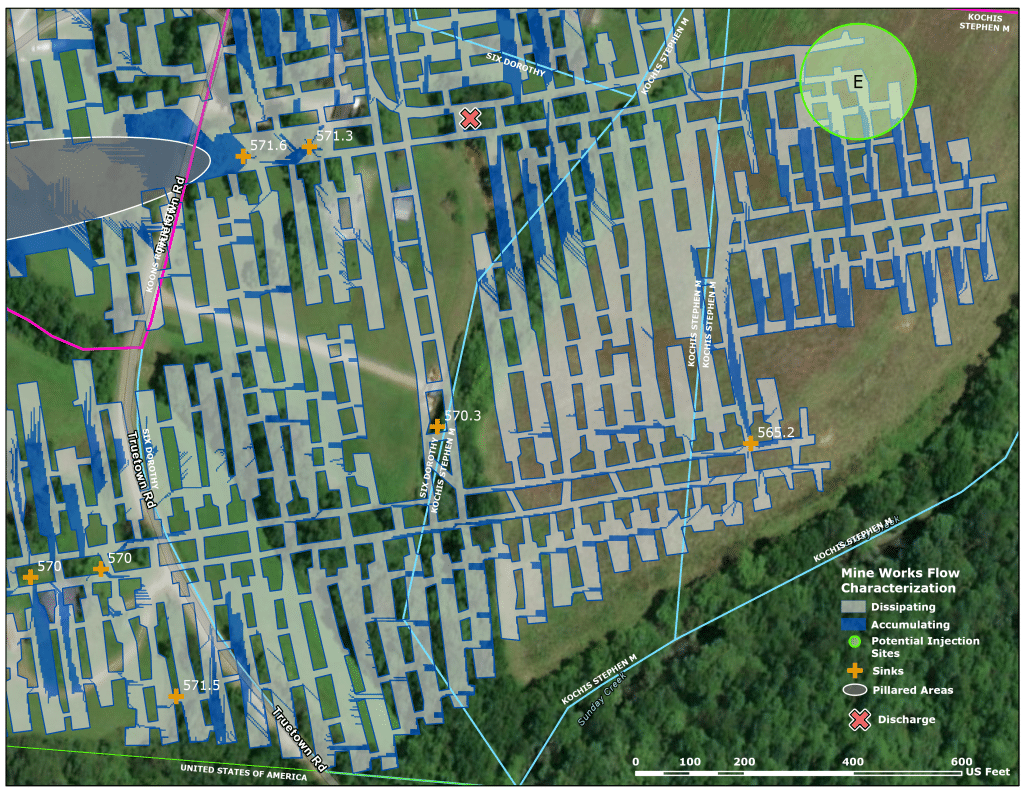
Shaw is concerned that the injection site at the Rural Action property would be too close to the Truetown discharge.
“You want to make sure you have enough storage at the location in the mine that you know that the sludge is not going to want to come right back to the Truetown discharge and mess with our treatment,” Shaw said.
So, the sites on private property are still in the running for the primary disposal location.
After the location is selected and the project partners begin injecting waste back into the mine, Shaw said the ODNR will use its series of monitoring wells, in addition to monitoring at the disposal site, to ensure everything is going according to plan.
If it doesn’t, Shaw said, “The danger is really to our treatment plan.” Shaw said that if anything did go awry, operators of the treatment plant would be able to pull a lever and divert the flow of waste to a secondary disposal site.
ODNR’s efforts to install the disposal system are just one piece of the puzzle for constructing the Truetown treatment facility.
Maclver said True Pigments and Rural Action are currently working with a consulting firm to develop the final design for the treatment facility, which would then go to bid to find a contractor. Maclver estimated construction would begin on the treatment facility in 2026, and is “hopeful that we’ll begin operation sometime in 2027,” she said.
The project has attracted millions in public funding. It marked a major milestone last summer, when the partners began developing former farm land near the discharge into the future home of the wastewater treatment plan. That followed years of study at a nearby, small scale test site.
Once the project is finished, Maclver said, it will significantly improve the water quality “and bring those fish and aquatic bug communities back in that area.”